Independent buying guides for home air, water and safety.
As an Amazon Associate, Delozone earns from qualifying purchases.
Independent buying guides for home air, water and safety.
As an Amazon Associate, Delozone earns from qualifying purchases.

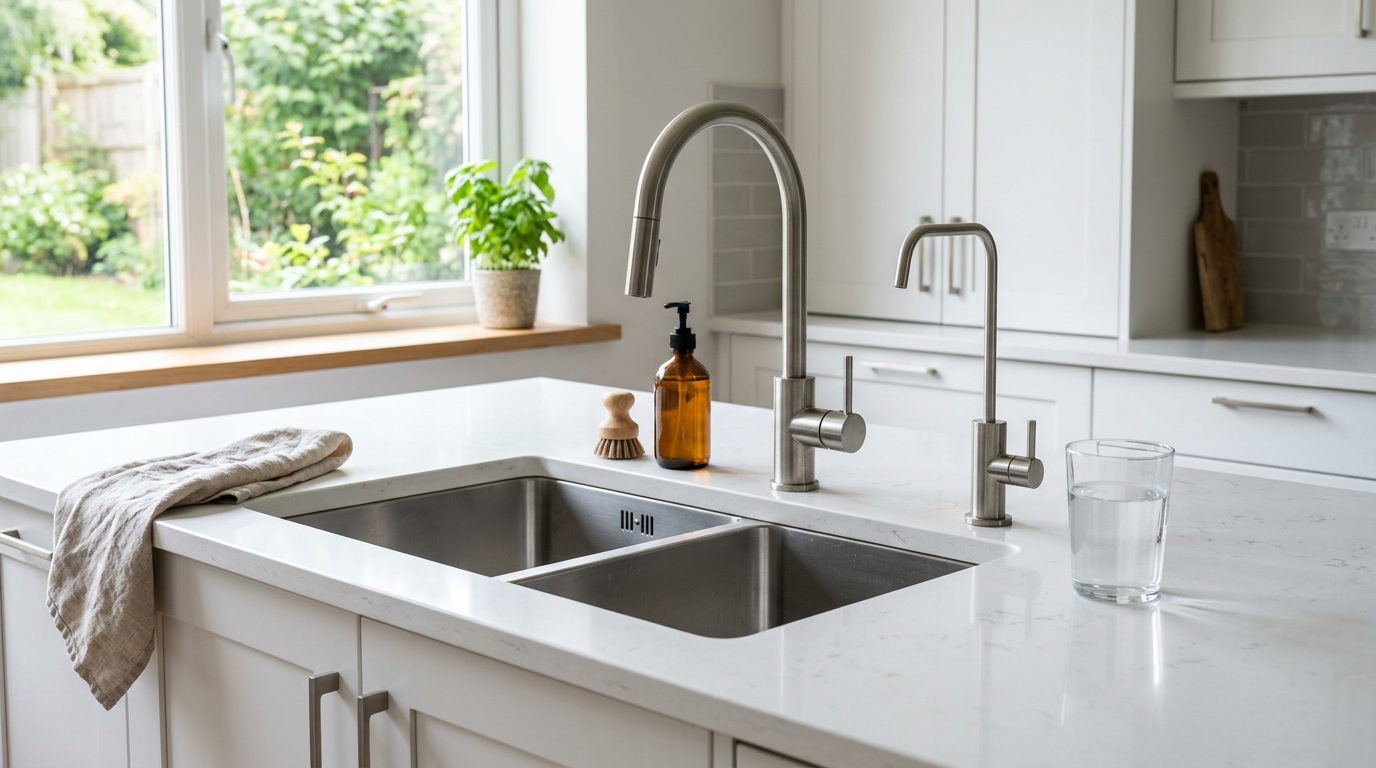
The best under sink water filters of 2026: certified reverse osmosis and carbon systems for lead, PFAS and chlorine, with NSF standards and EPA limits.

The best under sink water filter is one certified to an NSF/ANSI standard for the contaminants in your water, sized for how much drinking and cooking water your household uses, and simple enough that you will actually change the cartridges on time, and for most homes our top pick is the iSpring RCC7AK, a reverse osmosis system certified as a whole system to NSF/ANSI 58 with a published PFAS reduction of 96 to 99% and lead reduction above 98.9%. If you want to keep the minerals in your water and avoid the wastewater of reverse osmosis, a certified carbon system such as the Aquasana AQ-5200 or the A.O. Smith AO-US-200 is the better choice.
Top picks at a glance
Affiliate links: As an Amazon Associate, Delozone earns from qualifying purchases, at no extra cost to you. Full disclosure
Key takeaways
Quick comparison: best under sink water filters for 2026
| Model | Type | Certification (maker) | Capacity or flow | Best for | Buy |
|---|---|---|---|---|---|
| iSpring RCC7AK | RO with tank, 6 stages | NSF/ANSI 58 (whole system) | 75 GPD | Widest contaminant reduction | Check price |
| Waterdrop G3P600 | Tankless RO | NSF/ANSI 58, 42 and 372 | 600 GPD, 2:1 ratio | Small cabinets, faster flow | Check price |
| Aquasana AQ-5200 | 2-stage Claryum carbon | Reduces up to 99% of 78 contaminants (maker) | 0.5 gpm; 500 gal filters | Lead and PFAS, keeps minerals | Check price |
| A.O. Smith AO-US-200 | 2-stage Claryum carbon | NSF/ANSI 42, 53 and 401 (WQA, full system) | 0.5 gpm; 500 gal filters | Fully certified non-RO | Check price |
| Frizzlife MK99 | 2-stage carbon, direct connect | NSF/ANSI 42 and 53 (IAPMO) | Uses existing faucet | No extra faucet or drilling | Check price |
Every useful filter decision starts with a water report. If you are on a public water system, your utility publishes an annual Consumer Confidence Report, which the EPA’s Consumer Confidence Report page helps you find. It lists the contaminants detected in your water and how they compare with federal limits.
A utility report shows water leaving the treatment plant, not water at your tap. Lead, in particular, usually comes from service lines and plumbing inside or near your home, so it may not appear in the report at all. If your home was built before the late 1980s or has a lead service line, test your tap water; our guide on how to test your home water quality explains the options.
Private well owners get no utility report and must test themselves. The contaminants that matter on a well, such as iron, bacteria, nitrate and arsenic, often call for whole-house or specialized treatment rather than only an under sink filter.
According to NSF’s guide to water treatment standards, no federal regulations exist for residential water filters, purifiers and reverse osmosis systems, so voluntary national standards set the minimum requirements for their safety and performance. The numbers in the names reflect the order in which the standards were developed, not a ranking.
NSF/ANSI 42 certifies reduction of aesthetic impurities such as chlorine, taste and odor. NSF/ANSI 53 certifies reduction of contaminants with a health effect, such as lead. NSF/ANSI 58 covers reverse osmosis systems, NSF/ANSI 401 covers up to 15 emerging contaminants such as some pharmaceuticals, and NSF/ANSI 372 confirms lead-free materials. PFAS reduction claims for home filters are certified under NSF/ANSI 53 and, for reverse osmosis, NSF/ANSI 58.
NSF adds an important caveat: certification to a standard does not mean a filter reduces every possible contaminant. Check that the specific contaminant you care about is listed on the product’s performance data sheet, and that the certification covers the whole system, not just the filter media.
“Certification to an NSF/ANSI standard or protocol does not mean that a filter, purifier or treatment system will reduce all possible contaminants.”
NSF, Standards for Water Treatment Systems
PFAS are a family of long-lasting synthetic chemicals. On April 10, 2024, the EPA finalized national drinking water standards for six PFAS, with enforceable limits of 4.0 parts per trillion for PFOA and PFOS and 10 parts per trillion for PFHxS, PFNA and HFPO-DA, known as GenX, according to the EPA’s PFAS drinking water page.
The rules are changing. On May 18, 2026, the EPA proposed keeping the PFOA and PFOS limits while giving water systems the option of 2 more years, to 2031, to comply, and proposed rescinding the limits for PFHxS, PFNA, GenX and the mixture Hazard Index. Until your utility meets the limits, a point-of-use filter is the practical way to reduce PFAS at your kitchen tap.
For PFAS, reverse osmosis systems and certified carbon block filters both work. Look for a PFOA and PFOS reduction claim under NSF/ANSI 53 or 58 on the specific product, as Aquasana, A.O. Smith and iSpring list for the models below. Our PFAS water filter guide covers countertop options if you cannot install under the sink.
Lead enters drinking water when lead-containing plumbing corrodes, especially where the water is acidic or low in minerals. The EPA’s 2024 Lead and Copper Rule Improvements lower the lead action level from 15 to 10 parts per billion and require water systems to replace lead service lines within 10 years.
In the meantime, the EPA’s guidance on reducing lead exposure at home suggests using a drinking water filter evaluated by an accredited third-party certification body to reduce lead, using the filter properly and replacing cartridges on schedule, because an expired filter is less effective. It also says not to run hot water through the filter.
The same EPA page adds three habits that work with any filter: use only cold water for drinking, cooking and making baby formula, run the tap before drinking if water has been sitting in the pipes, and clean the faucet aerator, where lead particles can collect. Boiling water does not remove lead. For countertop options, see our guide to the best water filter for lead.
An under sink filter treats only the water from one faucet, usually for drinking and cooking. It does nothing for water in showers, laundry or other taps, and it does not soften water. If hard water scale is the problem, see our guide to the best water filter for hard water.
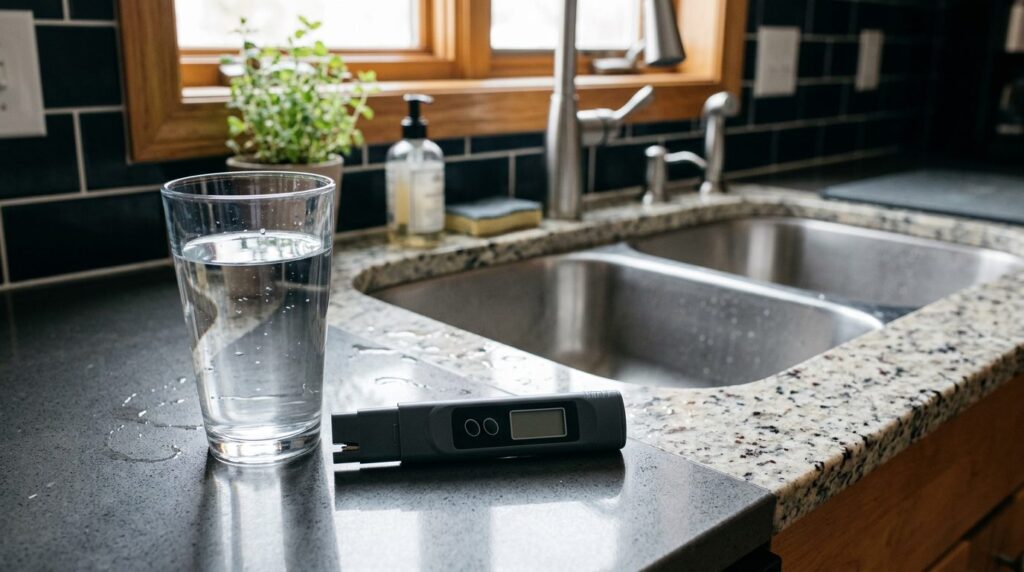
Carbon filters, including the Claryum systems, do not reduce total dissolved solids (TDS), which is why a TDS meter shows little change after them. That is not a failure; TDS mostly reflects harmless minerals, and the certification data sheet is the right way to judge a carbon filter.
For whole-home problems such as sediment, iron, sulfur smell or chlorine in every tap, a point-of-entry system is the better tool; our guide to whole house water filter systems covers those.
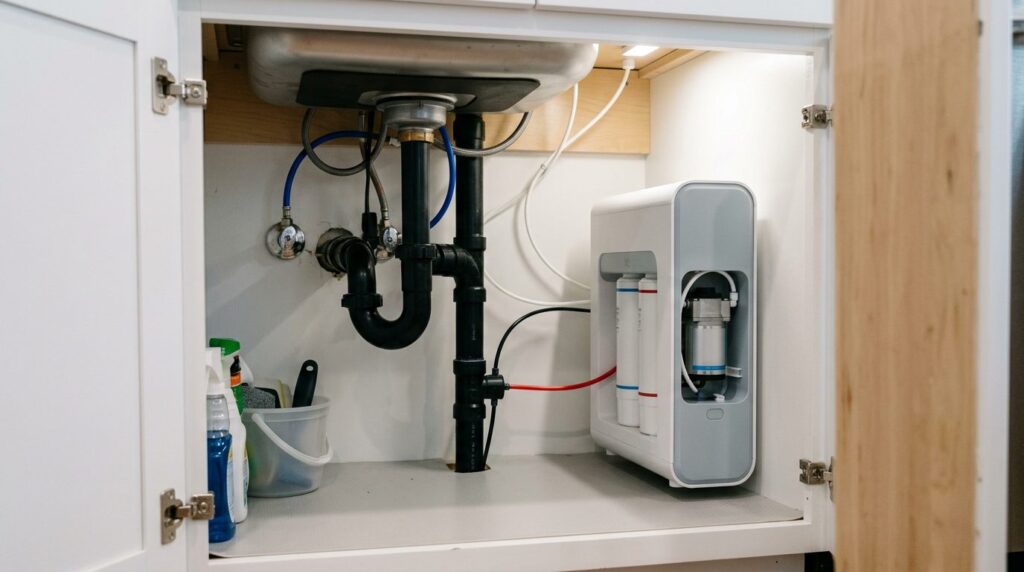
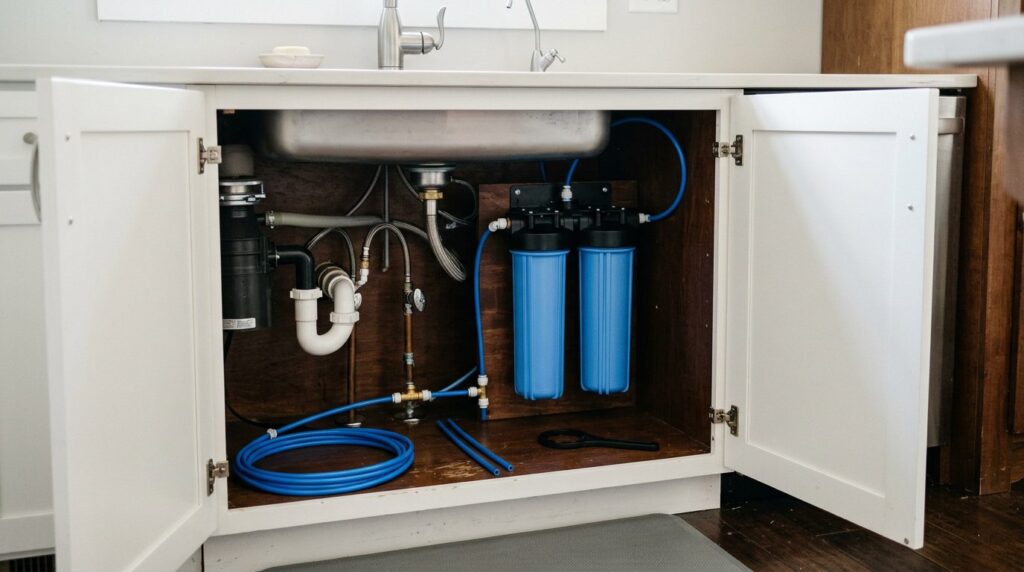
NSF describes reverse osmosis as using pressure to force water through a semi-permeable membrane, with one or more additional filters on either side. In a typical under sink RO system, sediment and carbon pre-filters protect the membrane, the membrane removes dissolved solids and many contaminants, and a post-filter polishes taste.
RO reduces the widest range of contaminants of any common home system, including dissolved salts, fluoride and nitrate, which carbon cannot reduce. iSpring, for example, lists reductions of 93 to 98% for TDS, 96 to 99% for PFAS and more than 97.4% for fluoride for the RCC7AK.
Because RO also removes minerals such as calcium and magnesium, many systems add a remineralization stage. The iSpring RCC7AK has an alkaline mineral stage, and the Waterdrop G3P600 bundle includes a separate remineralization filter.
Every RO system sends some water down the drain to flush the membrane. The ratio varies by model and by water pressure and temperature, so rely on each manufacturer’s published figure rather than a general rule. Waterdrop, for example, lists a 2:1 pure to drain ratio for the G3P600, meaning one cup of wastewater for every two cups of filtered water.
Tank-based systems like the iSpring RCC7AK rely on household water pressure, and low pressure reduces output and efficiency. Tankless systems like the Waterdrop use an electric pump, which raises flow and efficiency but needs an outlet under the sink.
If your home has low water pressure, check each manufacturer’s minimum pressure before buying, and consider a tankless model or a booster pump kit where the manufacturer offers one.
Carbon block filters work by adsorption, which NSF describes as contaminants adhering to the surface of, or in the pores of, the filter media. Specialized carbon blocks and added media can reduce lead, chlorine, chloramine, many pesticides and PFOA and PFOS, depending on the certification.
The Claryum systems from Aquasana and A.O. Smith, which share the same filter technology, list reductions of up to 99% of 78 contaminants, including lead and PFAS, while keeping calcium, potassium and magnesium. They waste no water and need no tank, pump or drain connection.
The trade-off is range: carbon does not reduce dissolved salts, nitrate or fluoride to a meaningful degree, and it does not change TDS. For municipal water with lead or PFAS concerns, that is usually fine. For well water with nitrate or high TDS, RO is the better choice.
Choose reverse osmosis if your report shows nitrate, arsenic, fluoride, high TDS or several contaminants at once, or if you want the broadest reduction available at one tap. Choose a certified carbon system if your main concerns are lead, PFAS, chlorine taste and odor, and you want to keep minerals and waste no water.
Space matters too. Tank RO systems need room for the storage tank, while tankless RO and 2-stage carbon systems fit in tighter cabinets. Aquasana says its AQ-5200 needs 12 inches of space under the sink plus clearance.
Budget for ongoing costs, not just the purchase. RO systems need several filters and a membrane replaced on different schedules, while 2-stage carbon systems usually replace both cartridges every 6 months or 500 gallons.
| Factor | Reverse osmosis | Certified carbon (for example Claryum) |
|---|---|---|
| Contaminant range | Widest, including TDS, nitrate, fluoride | Lead, PFAS, chlorine, many chemicals; not TDS |
| Minerals | Removed (remineralization stage optional) | Kept |
| Wastewater | Yes, ratio varies by model | None |
| Space and power | Tank or pump; tankless needs an outlet | Compact, no power |
| Typical certification | NSF/ANSI 58 (plus 42, 53, 372) | NSF/ANSI 42, 53, 401 |
Most public water systems disinfect with chlorine or chloramine, and the most common complaint is taste and smell rather than safety. A filter certified to NSF/ANSI 42 for chlorine, taste and odor solves that, and chloramine needs a filter that specifically lists chloramine reduction, as the A.O. Smith AO-US-200 does.
For taste alone, a direct-connect filter like the Frizzlife MK99 is enough and costs the least to run. If your utility report also lists disinfection byproducts or other regulated contaminants, step up to a system certified under NSF/ANSI 53 for those.
Keep in mind that chlorine is there for a reason: it protects water on its way through the pipes. Filter at the tap you drink from, not at the point where water enters the house, unless you have a specific whole-house need.
If your home was built before lead pipes and lead solder were banned, or your utility has identified a lead service line, lead is the contaminant to plan around. The EPA recommends a filter evaluated by an accredited third-party certifier to reduce lead, and our certified picks list lead reduction: the iSpring RCC7AK, the Aquasana AQ-5200, the A.O. Smith AO-US-200 and the Frizzlife MK99.
Use the filtered faucet for all drinking, cooking and baby formula, and follow the EPA’s habits: cold water only, run the tap after water has been sitting, and clean the aerator. Replace cartridges on schedule, since the EPA warns that an expired filter is less effective at removing lead.
Ask your utility about its lead service line inventory and replacement plans under the 2024 Lead and Copper Rule Improvements. A filter reduces exposure at one tap; replacing the lead line removes the source.
If your utility report shows PFOA or PFOS near or above the 4.0 parts per trillion limits, or your area has known PFAS contamination, choose a system with PFAS reduction certified under NSF/ANSI 53 or 58. Both reverse osmosis and certified carbon block systems can do the job.
Reverse osmosis gives the widest safety margin, reducing PFAS alongside other dissolved contaminants, while a certified carbon system like the Aquasana AQ-5200 or A.O. Smith AO-US-200 reduces PFOA and PFOS without wastewater. Replace carbon cartridges on time, because a saturated carbon filter stops removing PFAS.
Because the EPA proposed in 2026 to let utilities take until 2031 to meet the PFOA and PFOS limits, households in affected areas may rely on point-of-use filtration for several more years.
Well water is not regulated by the EPA, so testing is the owner’s job, and the right treatment depends entirely on the results. Iron, manganese, hardness, sulfur and bacteria are usually handled at the point of entry, before the water reaches any tap.
An under sink RO system is a good final stage for drinking water on a well, because it reduces nitrate, arsenic and dissolved solids that carbon cannot. Make sure the well water is microbiologically safe first, or add a UV system; our guide to UV water purifiers for well water covers that.
Test again after installing any system to confirm it works on your specific water, since well chemistry varies widely from one property to the next.
Families that cook with filtered water and fill bottles daily go through cartridges faster. Check both the time and gallon limits: a 500-gallon cartridge used at 3 gallons a day lasts about 5 and a half months, but at 5 gallons a day it lasts closer to 3 months.
Tankless RO systems like the Waterdrop G3P600, rated at 600 gallons per day, keep up with heavy use without waiting for a tank to refill. Tank systems store a limited amount of water, so a large pot can empty the tank.
A.O. Smith recommends the AO-US-200 for families of 1 to 4. Larger households should choose higher-capacity systems or plan on more frequent cartridge changes.
If you cannot drill a countertop or modify plumbing, a direct-connect filter that uses your existing faucet is the simplest option. The Frizzlife MK99 connects to the cold water valve with standard fittings that come out cleanly when you move.
In very small cabinets, measure carefully. Two-canister carbon systems need about a foot of height plus clearance to change cartridges, and tank RO systems need room for the tank beside the filters.
If an under sink install is not possible at all, a certified countertop filter or pitcher is the fallback. Our guides to the best countertop water filters and the best faucet-mounted water filters cover those.
All 5 picks list a third-party certification to an NSF/ANSI standard or a WQA or IAPMO certification, and were in stock on Amazon with a working buy box when we checked in September 2026. We ranked them on certification scope, contaminants reduced, installation, running costs and the pattern of verified owner feedback.
The Waterdrop G3P800 had no working buy box when we checked, and APEC systems were available only as replacement filter sets, so they are not on the list. We note each pick’s type, so you can match it to your water report and cabinet space.
The iSpring RCC7AK is a 6-stage reverse osmosis system with a storage tank and an alkaline remineralization stage, and iSpring says the entire system is certified to NSF/ANSI 58, not just individual parts. It produces up to 75 gallons per day.
iSpring lists reductions of 93 to 98% for TDS, 96 to 99% for PFAS, more than 98.9% for lead, more than 97.4% for fluoride, more than 99.2% for chromium and more than 97.8% for copper, among others. The mineral stage adds calcium and magnesium back and raises pH, which many owners say improves taste after RO.
A transparent first-stage housing shows when the sediment filter is dirty, and iSpring sells replacement sets for 6-month, 1-year, 2-year and 3-year intervals. The patented top-mounted faucet fastener lets you install the faucet from above the counter. It needs space for the tank and a drain connection, so it suits standard kitchen cabinets best.
Check iSpring RCC7AK price on Amazon
The Waterdrop G3P600 is a tankless RO system that produces up to 600 gallons per day, and Waterdrop says it is certified against NSF/ANSI 58 for TDS reduction, NSF/ANSI 42 for chlorine, taste and odor, and NSF/ANSI 372 for lead-free materials. This bundle includes Waterdrop’s MNR35 remineralization filter.
Waterdrop lists a 2:1 pure to drain ratio, or one cup of wastewater for every two cups of filtered water, which is more efficient than many older tank systems. A smart faucet shows the TDS of filtered water and the remaining filter life, so you know when to change cartridges.
Waterdrop says third-party SGS testing showed reductions of PFAS, fluoride, arsenic, chromium and radium, but the NSF certifications it lists are for TDS, chlorine and lead-free materials, so treat the other claims as manufacturer testing. It needs an electrical outlet under the sink. For small cabinets and households that want fast flow without a tank, it is our pick.
Check Waterdrop G3P600 price on Amazon
The Aquasana AQ-5200 is a 2-stage Claryum carbon system that Aquasana says reduces up to 99% of 78 contaminants, including lead, PFOA and PFOS, chlorine and pesticides, while leaving healthy minerals such as calcium, potassium and magnesium. It has been a popular under sink filter on Amazon for years.
It delivers about half a gallon per minute, much faster than a pitcher, and its filters last 6 months or 500 gallons. Replacement is a twist-off with no need to disconnect lines. It needs 12 inches of cabinet space plus clearance and connects to the cold line with the included tee.
Aquasana is clear that the system does not reduce TDS, so do not judge it with a TDS meter. Check Aquasana’s performance data sheet for the certification of each claim. For municipal water with lead, PFAS or chlorine taste concerns, it is the best non-RO choice we found.
Check Aquasana AQ-5200 price on Amazon
The A.O. Smith AO-US-200 uses the same Claryum 2-stage technology and states that the full system is WQA tested and certified to NSF/ANSI 42, 53 and 401, covering structural integrity as well as filtration. A.O. Smith lists reduction of 99% of 78 contaminants, including lead, mercury, asbestos, pesticides, pharmaceuticals, chlorine and chloramine.
It connects to the 3/8-inch cold water line with the included tee and feeds a dedicated faucet, and A.O. Smith says installation takes a few minutes without a plumber. It filters at 0.5 gallons per minute and suits families of 1 to 4, with filters lasting 6 months or 500 gallons.
This listing includes an extra replacement filter set, which covers the first year of filters. Like the Aquasana, it keeps minerals and does not reduce TDS. If you want a certified carbon system with the certification scope spelled out on the listing, it is our pick.
Check A.O. Smith AO-US-200 price on Amazon
The Frizzlife MK99 is a 2-stage compound filter that Frizzlife says is certified by IAPMO against NSF/ANSI 42 and 53, including lead and chlorine reduction, with a 0.5-micron rating. It connects directly to the cold water line and sends filtered water to your existing faucet, so there is no extra faucet or countertop hole.
Direct-connect hoses fit standard 3/8-inch feed valves, with a converter for 1/2-inch lines, and Frizzlife says installation and cartridge changes take less than 3 minutes with a twist-in design. Only the core cartridge is replaced, which cuts plastic waste. This bundle includes an ice maker installation kit and an extra cartridge.
Because it filters the whole cold side of the kitchen faucet, cartridges are used faster than with a dedicated drinking faucet. It keeps minerals and does not reduce TDS. For renters and anyone who does not want to drill the counter, it is a practical choice; our water filters for apartments guide covers other renter-friendly options.
Check Frizzlife MK99 price on Amazon
We started with the under sink systems most often recommended by specialist reviewers and the best-selling models on Amazon, then required a third-party certification to an NSF/ANSI standard, through NSF, WQA or IAPMO, for at least one claim. Where a maker’s certification covers only some of its claims, we say so.
Whole-system certification counted for more than media-only certification, because NSF and WQA test the structural integrity of the system as well as its filtration performance.
Unknown brands with claims but no verifiable certification were excluded, even when their specifications looked impressive, following NSF’s advice to check the certification for the contaminants you care about.
We compared published contaminant reductions, flow rate or daily output, wastewater ratio for RO systems, filter life and the number of cartridges that need replacing.
Installation mattered too: dedicated faucet or direct connect, tank or tankless, need for an outlet or drain connection, and cabinet space. These decide whether a system suits a renter, a small cabinet or a family kitchen.
We did not assign scores or star ratings. Each pick is labeled with the situation it fits best, because the right filter depends on your water report and your kitchen.
We read verified owner reviews for patterns rather than star averages: leaks at fittings, faucet quality, taste after installation, pressure drop and ease of filter changes. Models with recurring leak complaints were ranked lower or dropped.
Every product was checked on Amazon in September 2026 for a working buy box. Prices and filter costs change, so we link to current prices rather than printing numbers that go stale.
We did not run our own water tests. Our choices rely on manufacturer specifications and performance data, NSF, WQA and IAPMO certification claims, EPA guidance and verified owner feedback, and we update the guide when products or regulations change.
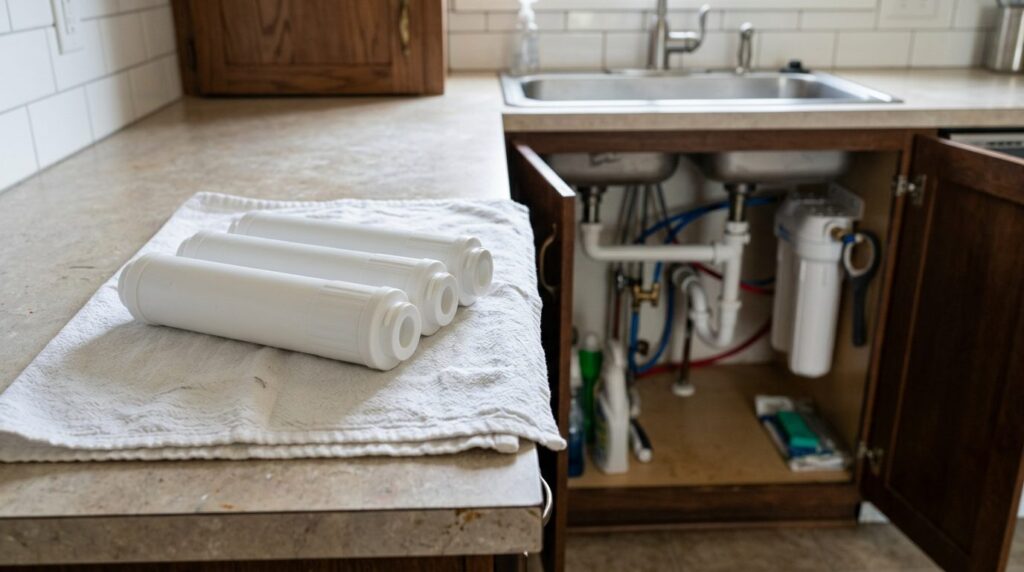
Measure the cabinet before you buy: width, depth and height, and where the drain and cold water valve sit. Garbage disposals, dishwashers and pull-out bins often take much of the space.
Most systems connect to a 3/8-inch cold water supply valve with a tee adapter, and some include converters for 1/2-inch lines. RO systems also need a drain saddle on the drain pipe, and tankless RO systems need an electrical outlet.
Connect filters only to the cold water line. Hot water can damage filter media, and the EPA advises against running hot water through a filter used for lead.
Systems with a dedicated faucet, like the iSpring, Waterdrop G3P600, Aquasana and A.O. Smith, need a hole in the sink deck or countertop. Many sinks have a spare hole for a soap dispenser or sprayer; otherwise, drilling a stone countertop is a job for a professional.
Direct-connect systems, like the Frizzlife MK99, filter the cold water going to your existing faucet. There is no extra faucet, but all cold water from that faucet passes through the filter, including water for dishes, so cartridges wear faster.
Renters usually prefer direct connect, since it removes cleanly when you move. Check your lease before changing plumbing.
Follow the manufacturer’s flushing instructions after installation and after every cartridge change. New carbon filters can release fine carbon particles, and RO manuals usually tell you to discard the first tanks of water.
Check every fitting for drips after installation, again after an hour and again the next day. A small tray or leak sensor under the sink catches slow leaks before they damage the cabinet.
Write the installation date on each cartridge. It makes filter changes easy to track and helps with warranty claims. A phone reminder set for the manufacturer’s interval, or the filter life indicator on smart faucets like the Waterdrop G3P600, makes it much harder to forget a change.

The EPA warns that using a filter after it has expired can make it less effective at removing lead. Change cartridges on the manufacturer’s schedule, such as 6 months or 500 gallons for the Claryum systems, even if the water still tastes fine.
RO systems have several parts on different schedules. iSpring, for example, sells sets for 6-month, 1-year, 2-year and 3-year intervals, with the membrane lasting longest.
Our guide on how often to change water filter cartridges explains why schedules vary and the warning signs of a spent filter.
When changing cartridges, wash your hands, avoid touching the ends of new filters and wipe the housings. Sanitize RO systems as the manufacturer directs.
Clean the faucet aerator regularly, as the EPA recommends, because sediment and lead particles can collect there after the filter.
If you are away for several weeks, flush the system for a few minutes before drinking, since water that has been standing in the lines and tank tastes stale.
Persistent leaks, sudden pressure loss, a TDS reading on an RO system that climbs soon after a filter change, or a bad taste that returns quickly are signs that something is wrong with the installation or the membrane.
If your water report or a lab test shows high levels of a regulated contaminant, talk to your utility or a water treatment professional certified by the Water Quality Association. Some problems need treatment at the point of entry rather than at one tap.
For contaminants that come and go, such as lead after plumbing work, retest after installing a filter to confirm it is working.
Keep your filter records together: the model, the certification data sheet, the installation date and each cartridge change. If you ever sell the home or file a warranty claim, that record answers the first questions a buyer, inspector or manufacturer will ask, and it makes it easy to check whether a problem started after a missed filter change.
A certification covers a specific system and its specific replacement cartridges, listed by model number. When you buy a cheaper cartridge from another company that says it fits your housing, that cartridge is usually not part of the certified system, even if it screws in perfectly. The housing may be certified, but the filter doing the work is not.
Before you buy replacements, look up the cartridge model number in the certifier’s online listing, or check the manufacturer’s page for the replacement part numbers that belong to your system. If a compatible cartridge lists its own certification to the same NSF/ANSI standard, that listing should name the cartridge model, not only the brand.
Buying from the manufacturer’s own store or its official Amazon storefront also lowers the risk of ending up with a counterfeit cartridge. Keep the packaging until the first change is done, so you can match the model number, the lot code and the installation date if you ever need to contact the maker about a problem.
Every RO system uses some water to flush the membrane, and that water goes down the drain. Manufacturers publish their own ratios, such as 2:1 pure to drain for the Waterdrop G3P600, and actual performance depends on your water pressure, temperature and TDS.
If wastewater concerns you, choose a system with a low published ratio, keep the pre-filters fresh so the membrane works efficiently, and consider a tankless model with a pump. Some owners also collect RO drain water for cleaning or plants, which the drain line layout usually makes awkward, so plan it before installing.
Certified carbon systems like the Claryum models waste no water at all. For households whose main concerns are lead, PFAS and chlorine, that is a strong reason to choose carbon over RO.
Tank RO systems and carbon systems use no electricity; they run on household water pressure. Tankless RO systems use an electric pump to push water through the membrane and power their smart faucets and displays.
The pump only runs while you draw water, so energy use is modest, but it does require an outlet under the sink. If there is none, factor in the cost of having an electrician add one.
Some systems also offer optional UV stages, which use power continuously or on demand. They are useful for well water but usually unnecessary on disinfected city water.
An under sink filter replaces a large amount of bottled water. Aquasana says each AQ-6200 filter set replaces the equivalent of 3,750 plastic water bottles, a useful illustration of the scale even if your household’s numbers differ.
Cartridges themselves are plastic waste. Designs that replace only the inner core, like the Frizzlife MK99’s cartridge, reduce what goes in the trash, and some manufacturers run recycling programs for used filters.
Long-life cartridges reduce waste too, but only if they are certified for that life. Stretching a cartridge past its rated gallons to save plastic defeats the purpose of filtering.
For the broadest reduction, a certified reverse osmosis system like the iSpring RCC7AK, which is certified to NSF/ANSI 58 as a whole system. If you want to keep minerals and avoid wastewater, a certified carbon system such as the Aquasana AQ-5200 or A.O. Smith AO-US-200 is the better choice.
Yes, if your water has a contaminant you want to reduce, such as lead, PFAS or chlorine taste, and you use tap water for drinking and cooking. It filters more water, faster, than a pitcher, and it costs less per gallon than bottled water over time.
Many do. Look for PFOA and PFOS reduction certified under NSF/ANSI 53 or, for reverse osmosis, NSF/ANSI 58 on the specific product. Both RO and certified carbon block systems can reduce PFAS.
Filters certified for lead reduction under NSF/ANSI 53, or RO systems certified under NSF/ANSI 58 with a lead claim, reduce lead. The EPA recommends a filter evaluated by an accredited third-party certifier, used properly and replaced on schedule.
RO reduces a wider range of contaminants, including TDS, nitrate and fluoride, but wastes some water and removes minerals. Certified carbon filters handle lead, PFAS and chlorine well, waste no water and keep minerals.
Follow the manufacturer’s schedule, often every 6 months or a set number of gallons for carbon filters, with RO membranes lasting 2 years or more. The EPA warns that expired filters are less effective at removing lead.
Most systems are designed for DIY installation on a standard 3/8-inch cold water valve. RO systems also need a drain connection and sometimes an outlet, and drilling a stone countertop for a faucet is best left to a professional.
Some reduction is normal. Carbon systems like the Claryum models deliver about half a gallon per minute to their faucet, and tank RO systems depend on household pressure. Tankless RO systems use a pump for faster flow.
For drinking water on a well, a reverse osmosis system is usually the best final stage because it reduces nitrate, arsenic and dissolved solids. Test the well first, treat iron, hardness or bacteria at the point of entry, and make sure the water is microbiologically safe before RO.
Reverse osmosis systems reduce fluoride; iSpring lists more than 97.4% reduction for the RCC7AK. Standard carbon filters do not reduce fluoride meaningfully, so choose RO if fluoride reduction is your goal.
It is optional. RO removes minerals along with contaminants, and a remineralization stage adds calcium and magnesium back, which many people prefer for taste. Carbon systems like the Claryum models keep minerals without an extra stage.
A TDS meter measures total dissolved solids, mostly minerals. It is a useful check on reverse osmosis systems, where a rising reading suggests the membrane or filters need attention, but it says little about carbon filters, which are not designed to reduce TDS. Judge carbon systems by their certification data sheet instead.
The EPA recommends using only cold water for drinking, cooking and making baby formula, and a filter certified for lead reduction if lead is a concern. Follow your pediatrician’s advice on water for formula, and keep the filter within its rated life.
For other ways to filter your water, see our guides to the best countertop water filters and whole house water filter systems.
Written by the Delozone Editorial Team. We research products using manufacturer specifications and performance data, NSF, WQA and IAPMO certification claims, EPA guidance and verified owner feedback, and we update guides when products or regulations change. How we work.
The Delozone Editorial Team researches water treatment, pool and spa, and indoor air products for independent buying guides. We compare products using manufacturer specifications, certification listings such as NSF/ANSI, UL, AHAM and Energy Star, published third-party test data and verified owner feedback. We do not sell products, and affiliate commissions never decide what we recommend.