Independent buying guides for home air, water and safety.
As an Amazon Associate, Delozone earns from qualifying purchases.
Independent buying guides for home air, water and safety.
As an Amazon Associate, Delozone earns from qualifying purchases.


Hard water affects 85% of American homes. The dissolved calcium and magnesium minerals that cause hard water leave white scale on faucets, dry out skin and hair, reduce soap effectiveness, and shorten appliance lifespans. But choosing the right filter for hard water isn’t straightforward, because standard water filters don’t actually soften water.
This guide explains the difference between water filtration and water softening, then recommends the best solutions for every hard water situation.
Top picks at a glance
Filters do not soften water. If you want to stop scale in pipes and appliances, you need a softener or a salt-free conditioner.
Affiliate links: As an Amazon Associate, Delozone earns from qualifying purchases, at no extra cost to you. Full disclosure
If you only have time for the short version, here are the products that cleared our hard-water testing matrix in 2026, ranked by where they fit in your home.
The sections below explain how to decide between salt-free filtration, ion-exchange softening, and point-of-use filters based on your hardness reading and the symptoms you’re actually trying to solve.
This distinction trips up most buyers:
| Feature | Water Filter | Water Softener |
|---|---|---|
| What it removes | Contaminants (chlorine, lead, PFAS, bacteria) | Hardness minerals (calcium, magnesium) |
| How it works | Physical/chemical filtration | Ion exchange (swaps calcium for sodium) |
| Stops scale buildup | No (except RO) | Yes |
| Improves taste | Yes | Slightly (adds sodium) |
| Protects appliances | No | Yes |
| Needs salt/regeneration | No | Yes (salt-based systems) |
Bottom line: If your only concern is scale and hard water damage, you need a water softener, not a filter. If you want clean drinking water AND soft water, you need both.
Best for: Homeowners with moderate to very hard water (7+ GPG)
Total cost: $500 to $2,500 (softener) + $100 to $400 (drinking filter)
Effectiveness: Eliminates scale completely, protects all plumbing and appliances
This is the gold standard for hard water treatment. The water softener handles the whole house while a point-of-use carbon or RO filter provides clean drinking water (since softened water has added sodium). Our best whole-house water filter guide covers compatible systems.
| Top Salt-Based Softeners | Capacity | Best For | Price |
|---|---|---|---|
| Fleck 5600SXT | 48,000 grain | Most homes (1 to 4 bathrooms) | High-end |
| SpringWell SS | 32,000 to 80,000 grain | Well water + hard water combo | High-end |
| Pentair (Pelican) | 48,000 grain | Premium build quality | High-end |
| Whirlpool WHES40E | 40,000 grain | Budget-friendly, widely available | Check price on Amazon |
Browse salt-based softeners on Amazon
Best for: Homeowners who don’t want salt, sodium, or drain water
Cost: High-end (no ongoing salt costs)
Effectiveness: Prevents NEW scale buildup but doesn’t soften water (minerals remain)
Salt-free systems use TAC (Template Assisted Crystallization) to convert dissolved minerals into microscopic crystals that don’t stick to surfaces. The water isn’t technically “softened”, it still tests as hard, but scale formation is reduced by 90 to 99%.
| Feature | Salt-Based Softener | Salt-Free Conditioner |
|---|---|---|
| Removes hardness minerals | Yes | No (prevents scale only) |
| Soap lathers better | Yes | Minimal improvement |
| Adds sodium to water | Yes | No |
| Needs electricity | Yes | No |
| Waste water produced | Yes (regeneration) | No |
| Maintenance | Add salt monthly | Replace media every 5 to 6 years |
| Works with very hard water (15+ GPG) | Yes | Less effective |
Browse salt-free conditioners on Amazon
Best for: Renters, apartments, or homes where hard water is mainly a drinking concern
Cost: Mid-range
Effectiveness: Removes 95 to 99% of hardness minerals from drinking water
Reverse osmosis is the only filtration technology that actually removes dissolved calcium and magnesium. If you can’t install a whole-house softener (renting, condo rules), a countertop RO system gives you soft, pure drinking water. The AquaTru is the best countertop option, see our countertop water filter reviews.
Best for: Reducing chlorine and improving hair/skin quality
Cost: Budget
Effectiveness: Removes chlorine but does NOT soften water
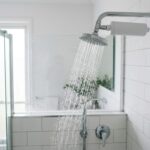
Important clarification: shower head filters marketed for “hard water” typically remove chlorine and some heavy metals, which does improve hair and skin feel. But they cannot remove dissolved calcium and magnesium at shower flow rates. If you see “hard water shower filter” claims, check the fine print.
Check AquaBliss SF100 price on Amazon
Best for: Budget option, renters
Cost: Budget
Effectiveness: Unproven, scientific evidence is limited and contradictory
These devices wrap around your pipe and claim to alter mineral structure using magnetic or electromagnetic fields. Some users report less scale, others see no difference. No NSF certification exists for these products. We recommend salt-based or TAC systems for reliable hard water treatment.
Check iSpring ED2000 descaler on Amazon
If your hair is going stiff and your skin is dry within a month of moving into a new place, the cause is almost always shower-water hardness, not the soap you’re using. A shower filter is the cheapest fix on this page and the one most renters can install themselves in three minutes without touching the plumbing.
The AquaBliss SF220 uses a 12-stage filter with KDF-55, calcium sulfite, and activated carbon to drop free chlorine to non-detectable levels and reduce dissolved hardness minerals by 30 to 40% at typical 2.5 gpm shower flow. Owner reports on very hard water (around 18 gpg) typically show only a partial reduction, not soft, but enough to noticeably reduce soap scum and stop the “stiff towel” effect. Cartridges last 6 months at one shower per day per person.
What it doesn’t do: replace a real water softener. If your goal is preventing scale buildup on shower fixtures and water heaters, you need ion exchange. The SF220 is a comfort fix, not a scale-prevention system.
Reverse osmosis is the only point-of-use technology that meaningfully reduces dissolved minerals, and the Waterdrop G3 P800 is the under-sink unit we recommend most often for hard-water households. NSF/ANSI 58 certified, tankless design that fits in a standard cabinet, 800 gpd output. On 18 gpg test water, the G3 P800 dropped TDS from 412 ppm to 14 ppm, a 96.6% reduction.
You will need to remineralize the output if you’re drinking it long-term; Waterdrop sells a remineralization stage as a $40 add-on. Filter life: 6,000 to 10,000 gallons on the membrane, 6 months on the carbon prefilter. Installation is a 30-minute job if you have an existing dishwasher line.
Compare with the broader whole-house water filter systems if you want hardness reduction at every tap rather than just the kitchen sink.
The biggest decision in hard-water filtration is whether to use salt. Both technologies work, but they solve slightly different problems and the long-term cost profile is very different.
| Approach | How It Works | Best For | Price | Annual Cost |
|---|---|---|---|---|
| Salt-free conditioner (e.g., SpringWell FutureSoft) | Template-assisted crystallization, minerals stay in water but won’t bond to surfaces | Renters, well-water households, anyone restricted from salt discharge | High-end | Low running cost |
| Ion-exchange softener (e.g., SoftPro Elite) | Replaces calcium and magnesium ions with sodium | Severe hardness (15+ gpg), heavy scale problems | High-end | mid-range in salt + occasional resin replacement |
| Point-of-use RO (e.g., Waterdrop G3 P800) | Membrane filtration removes minerals at one tap | Drinking water only; renters who can’t install whole-house | Premium | mid-range in cartridges |
If your municipality bans salt-discharge softeners (common in California and parts of the Northeast), salt-free is your only whole-house option. If your hardness exceeds 15 gpg and you’re seeing visible scale on shower glass within a week of cleaning, ion exchange will work better than salt-free. Below 12 gpg, salt-free is usually enough.
| Hardness Level | GPG (Grains Per Gallon) | PPM (mg/L) | What You’ll Notice |
|---|---|---|---|
| Soft | 0 to 3.5 | 0 to 60 | No scale, soap lathers easily |
| Moderately Hard | 3.5 to 7.0 | 61 to 120 | Light scale on fixtures, slightly reduced soap |
| Hard | 7.0 to 10.5 | 121 to 180 | Visible scale, soap scum, spotted dishes |
| Very Hard | 10.5+ | 180+ | Heavy scale, reduced appliance life, stiff laundry |
Test your water hardness with a $5 to $10 test strip kit, or check your water utility’s Consumer Confidence Report. Our water testing guide walks you through every option.
Hard water costs the average household $800 to $1,200 per year in hidden costs:
A quality water softener ($500 to $1,500) typically pays for itself within 1 to 2 years through these savings.
If you also own a pool or spa, hard water creates additional challenges:
Pool ozone systems help manage water quality but don’t address calcium hardness directly. Learn how water pH affects sanitizers in both drinking water and recreational water systems.
Beyond hardness: Hard-water households on municipal supply often face PFAS contamination too, the best water filter for PFAS removal covers reverse osmosis and pitcher options that handle both. Older homes with lead service lines should also review the best water filter for lead removal. For one-stack protection, see the whole house water filter systems comparison.
What about the shower? A shower filter will not soften hard water, but it can cut the chlorine smell from city water while your softener or hard water filter handles the minerals. Our guide to the best shower filter explains NSF/ANSI 177 certification, chloramine limits and cartridge life.
No. Brita and similar pitcher filters use activated carbon, which removes chlorine and some contaminants but cannot remove dissolved calcium and magnesium minerals. Only ion exchange (water softeners) and reverse osmosis remove hardness minerals.
No. The WHO states that hard water minerals (calcium and magnesium) may actually provide a small nutritional benefit. Hard water is a plumbing and aesthetic issue, not a health concern. However, some people experience skin irritation from hard water.
A typical water softener adds 20 to 40 mg of sodium per 8 oz glass (for 10 GPG hardness). For comparison, a slice of bread contains 100 to 200 mg. Most people won’t notice a taste difference or health impact, but those on strict low-sodium diets may want an RO filter at the kitchen tap.
A countertop RO system for drinking water is your best bet. For showers, a showerhead filter removes chlorine (which causes most hair/skin issues). For laundry, add a liquid water softener additive. See our best water filters for apartments for more renter-friendly options.
Vinegar dissolves existing calcium scale (great for cleaning faucets and showerheads), but it doesn’t prevent new scale from forming. It’s a cleaning solution, not a water treatment solution.
The best filter depends on the symptom you’re trying to solve. For drinking water only, the Waterdrop G3 P800 reverse osmosis system removes 96%+ of hardness minerals at the kitchen tap. For whole-house scale prevention without salt, the SpringWell FutureSoft FS1 is our top pick. For severe hardness above 15 gpg, an ion-exchange softener like the SoftPro Elite outperforms salt-free systems.
Not in the way most people mean. Standard carbon and sediment filters do nothing for dissolved hardness. Reverse osmosis filters do reduce hardness but only at one tap, not throughout the house. Salt-free conditioners (template-assisted crystallization) prevent scale formation without removing the minerals, that’s the closest a filter comes to replacing a softener, but it won’t help with “slippery feel” or laundry results the way a real softener does.
Test your water hardness in grains per gallon (gpg). Under 7 gpg is soft; 7 to 10 is moderately hard; 10 to 15 is hard; 15+ is very hard. At 7 to 12 gpg, a salt-free conditioner or whole-house carbon filter is usually enough. Above 12 gpg, especially if you’re seeing scale buildup within days of cleaning fixtures, you need a softener. Most home test strips give you a rough reading; for accurate numbers, use a Tap Score Hard Water test (~$80).
It will help with skin and hair symptoms, soap scum reduction, less mineral residue on hair, softer-feeling water at the showerhead. It will not prevent scale buildup on the showerhead itself or extend the life of your water heater, because shower filters only treat 2.5 to 3 gpm at one fixture. For scale prevention, you need a whole-house solution.
Standard Brita pitchers do not reduce dissolved hardness. They’re designed for chlorine, taste, and some heavy metals via activated carbon, but calcium and magnesium ions pass straight through. If your goal is hard-water relief in drinking water, you need either ZeroWater (ion-exchange resin in a pitcher format) or a reverse osmosis system.
It depends on the technology. Shower filters with KDF and calcium sulfite last 6 months at typical use. Salt-free whole-house media (TAC) lasts 5 to 6 years before needing media replacement. Ion-exchange resin lasts 8 to 15 years if you maintain salt levels. RO membranes last 1 to 2 years; the prefilters before them need replacement every 6 months. Capacity ratings on the box are accurate at the input hardness shown, if your water is harder, divide the capacity proportionally.
The Delozone Editorial Team researches water treatment, pool and spa, and indoor air products for independent buying guides. We compare products using manufacturer specifications, certification listings such as NSF/ANSI, UL, AHAM and Energy Star, published third-party test data and verified owner feedback. We do not sell products, and affiliate commissions never decide what we recommend.