Independent buying guides for home air, water and safety.
As an Amazon Associate, Delozone earns from qualifying purchases.
Independent buying guides for home air, water and safety.
As an Amazon Associate, Delozone earns from qualifying purchases.

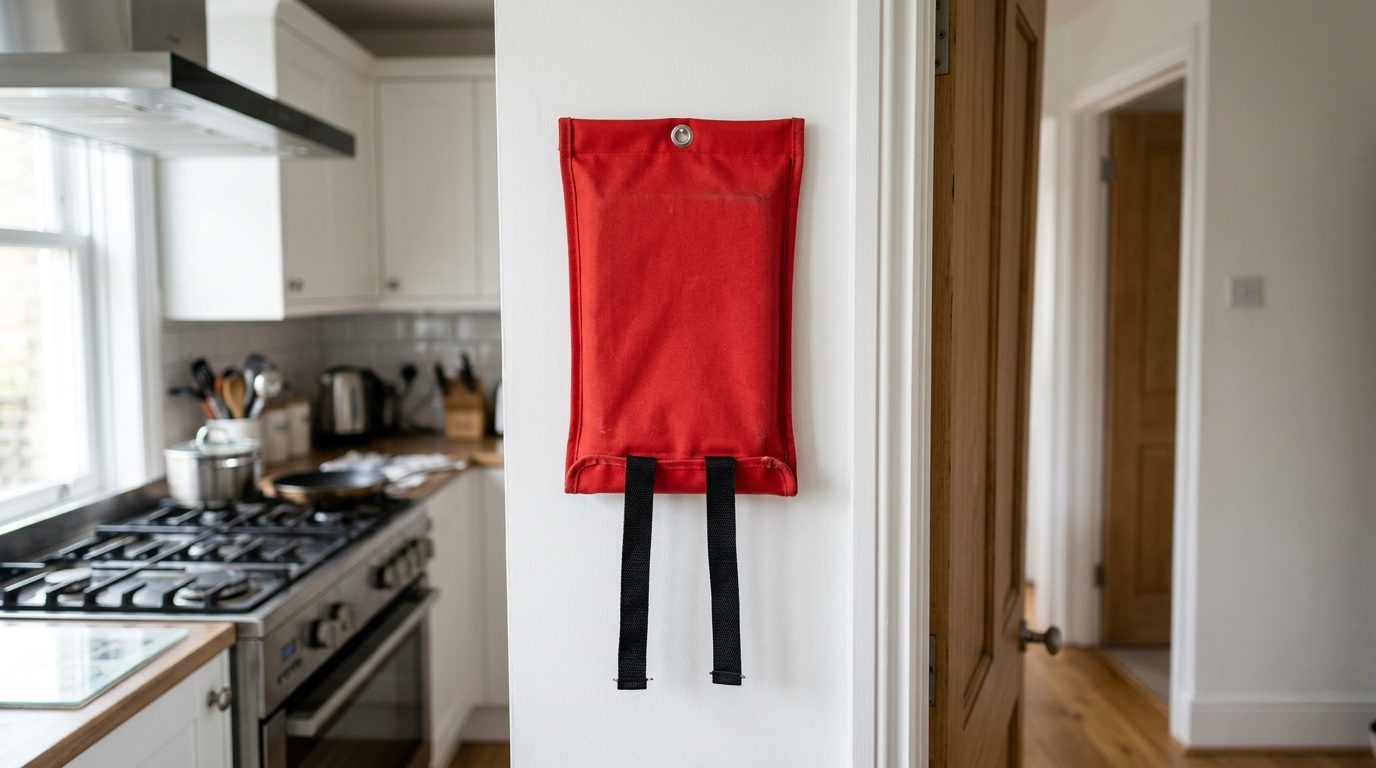
The best fire blankets of 2026 compared by size, material and standards (ASTM F1989, EN 1869), plus where to mount one and how to use it on a grease fire.

The best fire blanket for most homes is a fiberglass pull tab blanket of about 40 by 40 inches that hangs on the kitchen wall, such as the Prepared Hero Emergency Fire Blanket, the most reviewed option we found on Amazon with more than 32,000 ratings. If you also want a blanket large enough to wrap around a person whose clothes catch fire, add an extra large 47 by 71 inch model, which matches the 1.2 by 1.8 meter size that the Fire Industry Association recommends for clothing fires. A fire blanket is a first response tool for small, contained fires such as a burning pan of oil. It does not replace a fire extinguisher, a working smoke alarm or the rule to get out and call 911 when a fire grows.
Below we compare 5 fire blankets that were in stock on Amazon with a working buy box when we checked in October 2026, explain the standards behind the labels (and why the U.S. standard is two decades old), and show how to mount, use, inspect and replace a blanket so it works the one time you need it.
Top picks at a glance
Affiliate links: As an Amazon Associate, Delozone earns from qualifying purchases, at no extra cost to you. Full disclosure
Key takeaways
Quick comparison: best fire blankets for 2026
| Blanket | Size | Pack | Material (listing) | Notable | Buy |
|---|---|---|---|---|---|
| Prepared Hero Emergency Fire Blanket | 39 x 39 in | 1 | 2 layers woven fiberglass plus fire retardant film | Hanging slot, rated to 1,076°F by the maker, 32,000+ ratings | Check price |
| Prepared Hero Emergency Fire Blanket XL | 47 x 71 in | 1 | 2 layers woven fiberglass plus fire retardant film | Clothing fire size, rated to 1,022°F by the maker | Check price |
| JJ CARE Fire Blanket | 40 x 40 in | 2 | Dual layer fiberglass plus fire retardant film | Hooks and gloves included, cites EN 1869:1997 | Check price |
| WUERLI Fire Blanket | 40 x 40 in | 4 | Fiberglass, 0.5 mm thick, 500 g | Cites EN 1869:2019, hanging hook | Check price |
| Mart Cobra Emergency Fire Blanket | 40 x 40 in | 2 | 100% fiberglass fabric | Soft pouch for drawers, cars and RVs, 5,800+ ratings | Check price |
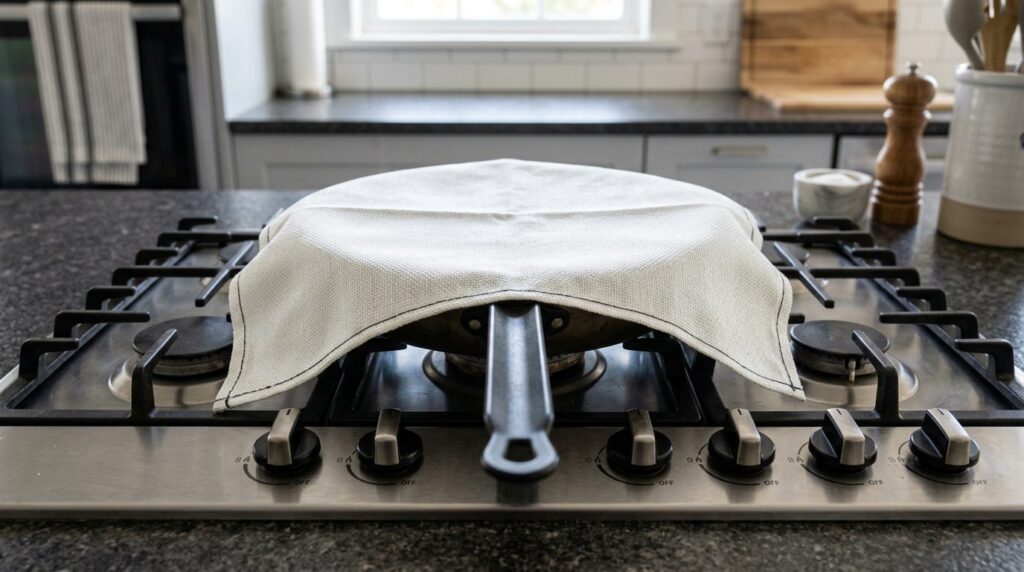
Every flame needs three things: fuel, heat and oxygen. A fire blanket attacks the oxygen. When you lay a sheet of fire resistant fabric over a burning pan, the fabric seals the surface, the fire uses up the little air trapped underneath, and the flames die. The Fire Industry Association describes a fire blanket as a safety device designed to extinguish small incipient, or starting, fires by being placed over the fire to smother it.
That simple mechanism is also the reason a blanket works so well on a stovetop. A pan of oil that has ignited has a defined edge. If the blanket covers that edge completely, the fire has nowhere to draw fresh air from. You do not need to aim a nozzle, read a gauge or worry about powder spreading across your kitchen.
The same mechanism sets the limits. A blanket can only smother what it can cover. A fire that has climbed into the cabinets, spread across a countertop full of paper or reached the curtains is no longer something a 40 inch square of fabric can seal off. At that point the plan changes to closing the door behind you, getting everyone out and calling 911.
“Keep a pan lid or baking sheet nearby. Use it to cover the pan if it catches on fire. This will put out the fire.”
U.S. Fire Administration, Cooking Fire Safety
Fire blankets for kitchens and homes are usually made of either fiberglass or woven nylon coated with a silicone based flame retardant, according to the Fire Industry Association code of practice for fire blankets. They are folded into a quick release container, pouch or tube with two tabs hanging out so you can pull the blanket free with one motion.
Every pick in this guide uses fiberglass. Prepared Hero and JJ CARE describe a sandwich of two woven fiberglass layers around an inner fire retardant film. WUERLI lists a 0.5 mm thick fiberglass sheet weighing 500 grams. Mart Cobra lists 100% fiberglass flame retardant fabric. Some newer blankets add a silicone coating on the outside, which mainly improves handling, because raw fiberglass can feel scratchy and shed fibers on skin.
The temperature figures on listings, such as 1,022°F or 1,076°F, describe how much heat the fabric resists before it fails. They are useful for comparing materials, but they are maker claims rather than results from an independent lab, and a higher number does not mean the blanket can handle a bigger fire. Coverage, fast deployment and leaving it in place long enough matter far more.
For a small pan fire, the U.S. Fire Administration’s first advice is low tech: turn the burner off and slide a pan lid or a baking sheet over the pan. A lid that fits the pan is the cheapest smothering tool you own. A blanket does the same job when the lid is out of reach, when the pan is too large for any lid, or when the fire is on a surface rather than in a container.
A portable extinguisher covers a wider range of fires and can reach a fire from a few feet away, which a blanket cannot. Our guide to the best fire extinguisher for home explains which ratings to look for. The trade off is cleanup: dry chemical extinguishers coat the whole kitchen in powder, while a blanket leaves only the pan to deal with.
The practical answer for most households is to own both. Hang the blanket at the kitchen exit for the most common emergency, a burning pan, and keep a rated extinguisher nearby for anything the blanket cannot cover. Neither replaces working smoke alarms, which give you the warning time to act at all.
In the United States, the reference document is ASTM F1989, Specification for Cooking Fire Suppression Blankets. ASTM’s summary says it covers the physical and performance requirements for blankets used to extinguish accidental fires during cooking. The blanket must meet requirements for size and shape, mass, hand holding devices, appearance and bilateral use, and resistance to fraying or tearing, and it should pass tests for flexibility, ease of removal, electrical resistance and fire performance.
The specification also excludes some designs. It does not apply to blankets made from asbestos, blankets whose two sides look different or perform differently, or blankets of metallic construction. The bilateral rule makes sense in an emergency: you should never have to work out which side faces the flames.
The catch is age. The current version is still F1989-05, reapproved in later years but originally issued in 2005. At a November 2024 meeting on non-conventional fire extinguishers convened by UL Standards and Engagement, with CPSC staff participating, the meeting log records that ASTM F1989 had not been updated since 2005 and that there were no other known standards for fire blankets in the U.S. and Canada.
Most blankets sold on Amazon cite EN 1869, the European fire blanket standard, often with a CE mark. The UK Fire Industry Association code of practice for blankets made to BS EN 1869 lists three common sizes: 1.1 by 1.1 meters, 1.2 by 1.2 meters and 1.8 by 1.2 meters. For comparison, 1.1 meters is about 43 inches, so the popular 39 to 40 inch kitchen blankets are smaller than the smallest size on that list.
Two editions show up on listings. JJ CARE cites EN 1869:1997, while WUERLI cites EN 1869:2019, the newer edition. Prepared Hero’s listing says its blankets conform to CE safety standards and cites “EN 1896:1997”, which we read as a typo for EN 1869, the fire blanket standard. We could not verify certificates for any of the picks, so we treat these references as maker claims.
What a standard reference tells you is that the seller knows which rules apply to the product. What it does not tell you is that an independent lab has checked the specific blanket in your cart. That is why our picks lean on sellers with long track records and large numbers of verified owner reviews, plus clear deployment instructions.
No standard can make up for a blanket that is stored in the wrong place, pulled out too late or lifted off too early. The Fire Industry Association code spends as much space on positioning, inspection and replacement as on selection, and for good reason. A blanket in a drawer behind the stove is worse than no blanket, because it tempts you to reach across the flames.
A standard also cannot change what kind of fire you are facing. Blankets are made for small fires at the starting stage. Even the FIA code notes that when a blanket is used as a lid on a small container, a portable extinguisher may still be necessary to fully put the fire out.
Finally, a standard does not cover the newer lithium battery and electric vehicle fire blankets. The 2024 CPSC meeting log notes that blankets being developed for EV and micromobility incidents would have different qualities from consumer blankets. A kitchen blanket is not an e-bike battery solution.
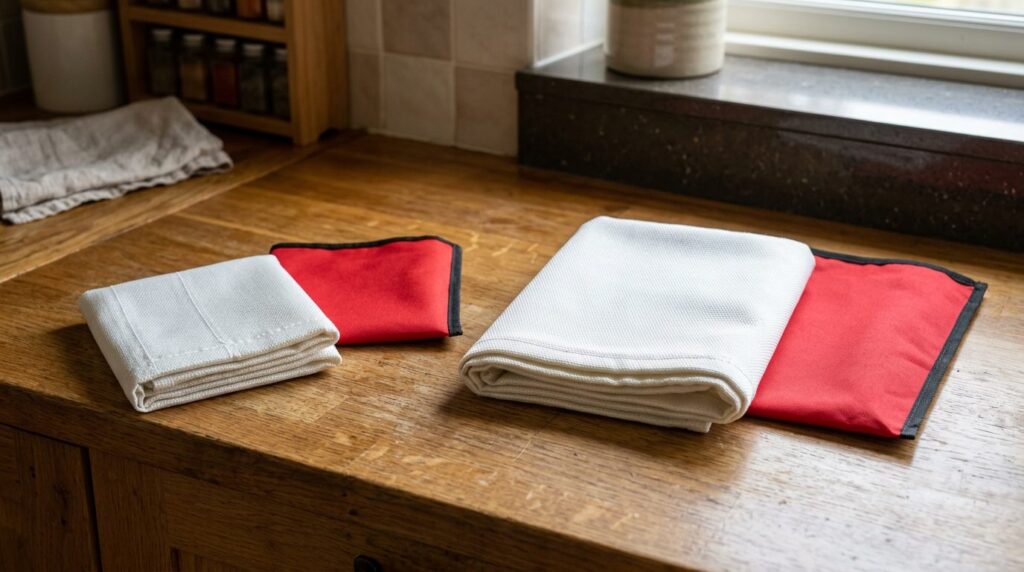
Start with the job. For pans, pots, a baking tray or a small grill flare up, a blanket of about 40 by 40 inches is the norm and is easy to handle in a small kitchen. The FIA code recommends smaller blankets for small fires on a surface, such as spilled candle wax on a counter or food in a frying pan, and for small containers, such as a sauce pan or a waste bin.
For clothing fires, size up. The FIA code says that to smother fires involving clothes being worn, a 1.8 by 1.2 meter blanket should ideally be selected. In inches that is about 71 by 47, which is exactly the size of the Prepared Hero XL in our list. A 40 inch blanket cannot wrap around an adult’s body.
Many families end up with one of each: a standard blanket by the stove and an extra large one in a hallway, garage or near a fire pit, wherever clothing fires are a realistic risk. If you have a large wok, a deep fryer or a very wide griddle, measure it and make sure the blanket overlaps the edges with room to spare.
The pull tabs are the part you touch first in an emergency, so they need to be easy to find and grip. Look for two long tabs that hang below the container. Several listings, including Prepared Hero, tell you to deploy the blanket by pulling down on the tabs, which is the motion you want: down and toward you, so the blanket opens in front of your body.
Container type changes where you can store the blanket. Rigid or semi rigid pouches with a hanging slot, like Prepared Hero’s, are designed for wall mounting. Soft pouches, like Mart Cobra’s, also suit car trunks, RV cabinets and camping bins. If the blanket will live on a wall, make sure there is a slot, a loop or a hook kit, such as the adhesive hooks in the JJ CARE pack.
Material choice is mostly about comfort and durability. Plain fiberglass works but can irritate skin, which is why some kits include gloves and why silicone coated versions exist. If someone in the house has sensitive skin, the gloves in the JJ CARE kit are a small but real plus.
Listings make strong claims about longevity, such as “does not expire” or “never needs replacing.” The Fire Industry Association takes a more cautious line. Its code says that if the manufacturer gives no instructions, a blanket that is more than 7 years past its commissioning date should be considered for replacement, and that any blanket with wear, contamination, damage to the hand holds or fire damage should be condemned.
Some sellers also describe their blankets as reusable. We would not rely on that after a real fire. Heat and grease can weaken the fabric and contaminate it in ways you cannot see, and the FIA code lists fire damage to the blanket or its container as a reason to take it out of service. Replace any blanket that has been used on an actual fire.
Practice is a different story. Many families buy a multipack, mount one and keep one sealed, then use a spare to practice pulling and folding so the motion is familiar. The JJ CARE 2 pack, the WUERLI 4 pack and the Mart Cobra 2 pack make that easy.
The minimum is one in the kitchen. Because cooking causes most home fires, that single blanket covers the biggest risk in the house. The FIA code recommends placing blankets in the room where they are likely to be needed and no further than 10 meters, about 33 feet, from the hazard.
After the kitchen, think about the other places where small fires start: a garage workshop, a grill or smoker area, a fire pit, a boat, an RV or a camper van. Each of these is a space where a burning pan of oil or a flare up can happen far from the nearest extinguisher.
Multipacks make the most sense for larger homes and for families who split time between home and a vehicle or cabin. If you only need one blanket, a single Prepared Hero is the cleanest choice. If you need several, the per blanket count of the JJ CARE and WUERLI packs adds up fast.
The Prepared Hero Emergency Fire Blanket is the most reviewed fire blanket we found on Amazon, with more than 32,000 ratings at the time of our check. The single blanket measures 39 by 39 inches and, according to the listing, is made of two layers of woven fiberglass fabric with an inner layer of fire retardant film. Prepared Hero rates it to isolate temperatures up to 1,076°F (580°C).
The design is simple in the right ways. You deploy it by pulling down the two tabs, and the pouch has a hole slot so it can hang on a wall, which is exactly where the Fire Industry Association wants a blanket to live. The listing says it is effective on liquid and grease fires and can also act as a thermal or heat shield. Prepared Hero states that the blanket does not expire.
Two notes before you buy. The listing cites “EN 1896:1997”, which appears to be a typo for EN 1869, and it does not reference ASTM F1989, so treat the standard claim as the maker’s word. And the 39 inch size suits pans and surface fires, not clothing fires. For most kitchens it is the easiest blanket to recommend: well known, widely reviewed and built for wall mounting. Prepared Hero also sells the same blanket in 2, 4, 8 and 12 packs.
The XL version scales the same construction up to 47 by 71 inches. That matches the roughly 1.2 by 1.8 meter size the FIA code recommends for smothering fires involving clothing being worn. The listing describes the same two layers of woven fiberglass with an inner fire retardant film and rates the material to 1,022°F (550°C).
A blanket this size is meant to be wrapped around a person, or held up as a shield while you move past a small fire. It is also a better fit for a large griddle, a smoker, a fire pit area or a garage bench where a standard square blanket would leave edges uncovered.
The trade off is bulk. A larger blanket takes a little more room on the wall and a little more arm span to deploy. We would not make it the only blanket in a small apartment kitchen, but as a second blanket in a hallway near the bedrooms, in the garage or by the back door to the grill, it fills the gap the standard size leaves. A 4 pack is also listed.

The JJ CARE pack gives you two 40 by 40 inch blankets plus adhesive hooks and protective gloves, which covers both the kitchen and a second spot such as the garage or grill. The listing describes dual layer fiberglass with a fire retardant film, cites EN 1869:1997 and gives a heat rating of 1,076°F (580°C).
The hooks solve the most common storage mistake: leaving the blanket in a drawer. Stick a hook by the kitchen exit and the blanket hangs where you can see it. The gloves add a layer of protection for your hands while you lay the blanket over a pan, and they help with the scratchy feel of fiberglass.
JJ CARE’s instructions include an important line we want every reader to follow: turn off the heat source for complete fire control. The listing also calls the blanket non-expiring and portable. As with every pick, we would replace a blanket after it has been used on a real fire. The pack had more than 1,300 ratings when we checked, and a 4 pack version is also sold.
The WUERLI pack includes four 40 by 40 inch blankets, enough for a kitchen, a garage, a vehicle and a spare for practice. It stands out for giving more construction detail than most listings: each blanket is 0.5 mm thick and weighs 500 grams, and the full blanket weighs under 2 pounds, which the maker says makes it easier for seniors and people with limited strength to deploy.
WUERLI cites EN 1869:2019, the current edition of the European standard, and rates the fabric to 1,076°F (580°C). Each blanket comes with a hanging hook for storage in a cabinet, a car or beside a grill. The listing had about 2,400 ratings at the time of our check.
WUERLI is a less familiar name than Prepared Hero, so the value here is in quantity and in the specific, checkable claims rather than brand history. If you want to put a blanket everywhere small fires can start, this is the most economical way to do it while keeping a recognizable standard reference on each blanket.
Mart Cobra’s 2 pack comes in soft protective pouches rather than wall boxes, which makes it a good fit for places a wall mount is not practical: a car trunk, an RV cabinet, a boat locker or a camping bin. The listing describes 40 by 40 inch blankets of 100% fiberglass flame retardant fabric, 0.5 mm thick, and the pack had more than 5,800 ratings when we checked.
The listing pitches the blanket for kitchen grease fires, BBQ flare ups and fireplaces, and as a first response item for the home, car, garage or RV. It also says the blanket needs no maintenance and has no expiration date, which, as with the others, we would balance against the FIA advice to inspect regularly and replace damaged or aged blankets.
Mart Cobra also markets the blanket for electrical fires. Our advice is to cut the power first wherever you can, the way the FIA code describes switching off a toaster or griddle before using a blanket, and to leave any fire involving wiring inside walls or appliances to the fire department. For a drawer or vehicle blanket that is easy to grab, it is a solid, widely reviewed choice.
We started with the documents that define what a fire blanket should do: the ASTM F1989 specification summary, the Fire Industry Association code of practice for EN 1869 blankets and the U.S. Fire Administration’s cooking fire guidance. From those we built a short list of requirements: a size suited to the job, two clear pull tabs, a container designed for quick release, fiberglass or coated construction and clear instructions.
We then compared every candidate’s Amazon listing against those requirements, reading the material description, size, heat rating, standard references and included accessories. We favored products with large numbers of verified owner reviews over a long period, because a fire blanket needs to deploy cleanly every time and owner feedback is one of the few public signals on that.
Every pick had a working Amazon buy box when we checked in October 2026. We did not set fires or deploy these blankets ourselves, so our recommendations rest on published specifications, standards and owner experience rather than our own trials.
We passed on blankets that market themselves as reusable after a real fire, because that conflicts with the inspection and condemnation guidance in the FIA code. We also skipped listings that claim a blanket can put out almost every type of fire, including fuel fires, without telling readers about size and coverage limits.
Very new listings with only a handful of reviews did not make the cut, even when their descriptions were careful. Fire safety products need a track record. We will revisit those as owner feedback builds up.
We also left out large welding blankets and fire pit mats. They use similar materials but are designed to protect surfaces from sparks and heat, not to be pulled from a wall pouch and laid over a burning pan in seconds.
We recheck availability and listing details for every pick when we update this guide and replace any product that loses its buy box or changes its specifications in a way that matters. We also watch for revisions to ASTM F1989, which the 2024 CPSC meeting log suggested could be the subject of future standards work.
If a manufacturer publishes a certificate for EN 1869 or a test against ASTM F1989, we will note it. Until then, we report standard claims as claims and tell you which listings make them.
Prices change often, so we do not list them here. Use the Check price buttons to see the current offer on Amazon.
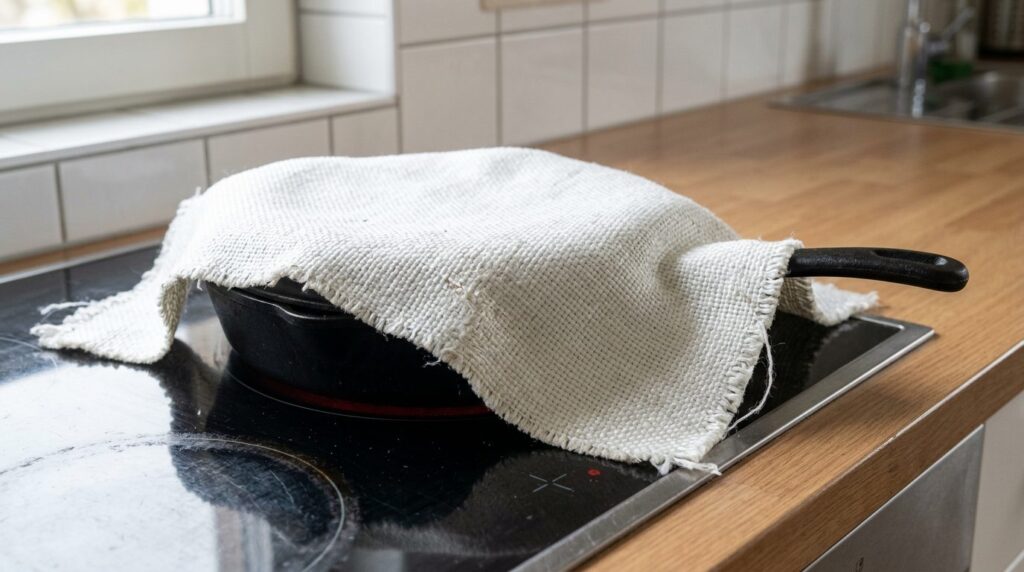
A fire blanket is for a fire you can fully cover, in a room you can leave. If the fire is confined to a pan, a pot or a small spot on a counter, and you have a clear path to the exit behind you, using the blanket is reasonable. If flames are reaching the cabinets or the range hood, if the room is filling with smoke, or if you would have to reach over the fire to get the blanket, get out, close the door and call 911.
Unattended cooking is the leading factor in home cooking fires that spread beyond the pan, accounting for 37% of ignitions in those fires according to the U.S. Fire Administration. Staying in the kitchen is the best way to catch a fire while it is still small enough for a blanket.
If you are alone with young children, getting them out comes first. A burning pan that is covered a few seconds later is still a small fire. A child who is left behind in a smoke filled room is the emergency you cannot undo.
Turn off the burner or the appliance first if you can reach the control safely. Heat feeding the pan is what keeps the oil above its ignition point, and switching it off is the advice repeated in the U.S. Fire Administration’s cooking fire safety messages.
Grab both tabs and pull them down firmly. The blanket drops out of its pouch already partly unfolded. Hold it by the top corners and fold the top edge back over your hands so the fabric shields your fingers and wrists from the heat.
Never throw water on burning oil. Water sinks below the oil, flashes into steam and throws burning oil across the stove and onto you. Do not try to carry the burning pan to the sink or outside either. Covering it where it sits is far safer.
Hold the blanket up in front of you like a shield and lay it over the pan by moving it away from your body, so the far edge lands first and the flames are pushed away from you rather than toward your face. Cover the whole top of the pan and let the edges drape down the sides so air cannot get in.
Do not throw the blanket at the fire or flick it, because the draft can fan the flames and you may miss. A calm, steady placement works better. Once the pan is covered, step back.
If the fire is on a flat surface, such as spilled wax or food on a countertop, lay the blanket flat over the area and press the edges down only if you can do so without touching the hot center. The aim is to seal the fire off from the room’s air.
The most common mistake is lifting the blanket to check. Oil stays hot long after the flames are gone, and fresh air can relight it in an instant. Leave the blanket over the pan with the heat off until the pan and the oil have fully cooled. That can take a long time with a deep pan of oil, so be patient.
Keep watching the area. If smoke or flames appear around the edges, or the fire spreads, leave the kitchen, close the door and call 911. Even when the fire is out, call the fire department if you are not sure the fire is fully extinguished or if anything near the stove looks scorched.
Once everything is cold, carefully dispose of the oil and the used blanket. Replace the blanket right away so the kitchen is not left without one.
If your own clothing catches fire, do not run. Running fans the flames. Stop where you are, drop to the ground, cover your face with your hands and roll until the fire is out. This is the standard fire service advice for clothing fires, and it works whether or not a blanket is nearby.
A blanket helps when someone else is on fire, or when a person cannot drop and roll because of age, injury or panic. In that case the blanket does the smothering for them. It is also the reason the FIA code singles out the 1.8 by 1.2 meter size for clothing fires.
A standard 40 inch kitchen blanket is too small to wrap an adult. If clothing fires are a realistic risk in your home, such as around a fire pit, a wood stove or a workshop, the XL size is the right tool.
Shield your hands by folding the top edge of the blanket over them. Approach the person and wrap the blanket around them from the neck down, keeping it away from their face, and help them to the ground. Smother the flames by pressing the blanket against the burning areas with flat hands, then roll the person if needed.
Work from the top down so flames are pushed away from the head and face. Keep the blanket in place until you are sure the fire is out, then carefully remove it.
Call 911 after any clothing fire, even if the burns look small, and follow the dispatcher’s first aid instructions while you wait. Do not try to pull away clothing that is stuck to the skin.
Children should know where the blanket hangs but should be taught to leave the room and get an adult rather than fight a fire. The goal for kids is escape, not extinguishing. Practice the household escape plan alongside the kitchen fire plan.
For older adults or people with limited strength, choose a light blanket with long tabs, mount it at a comfortable height, and walk through the motion together. WUERLI’s listing notes a blanket weight under 2 pounds, and all the 40 inch picks are light enough for most adults to handle.
Pets cause a surprising number of kitchen incidents, from knocking items onto a hot burner to bumping stove knobs. Keep counters near the stove clear, and turn pot handles toward the back of the stove as the U.S. Fire Administration recommends.
The FIA code is clear about placement. A blanket should be in the room where it is likely to be needed, mounted on the wall where it will be readily seen, with the tabs at roughly 1.5 meters, about 5 feet, from the floor. It should be no further than 10 meters from the hazard, and you should not have to pass through a doorway to reach it.
In a kitchen that usually means the wall near the exit, a few steps from the stove, so you grab the blanket while moving toward your escape route rather than away from it. A side panel of a cabinet near the door, or the wall beside the doorway, works well.
The same code lists places to avoid: anywhere a fire might block access, over or close to heating appliances, hidden behind kitchen furniture or doors, inside cupboards or drawers, deep in recesses, or where the blanket might be damaged. A blanket directly above the stove is the classic wrong answer.
For workplaces the FIA code recommends a visual check at least monthly. At home, a monthly glance when you test your smoke alarms is an easy habit. Make sure the blanket is still in its place and unobstructed, the container is intact, the tabs are visible and undamaged, and the instructions are readable.
Look for signs that someone has opened the pouch, such as a tab that has been pulled partway or a broken tamper strip on models that have one. A blanket that has been pulled out and stuffed back in may not deploy cleanly.
Kitchens are greasy places. If the pouch is coated with grease or the blanket has been splashed, consider replacing it, since the FIA code lists contamination of the blanket material as a reason to take it out of service.
Replace a blanket immediately after it has been used on a fire, if the fabric or tabs are damaged, if the container is crushed or burned, or if the instructions are missing or unreadable. These are the same conditions the FIA code lists for condemning a blanket.
Age is the less obvious trigger. Follow the manufacturer’s instructions where they exist. Where they do not, the FIA code suggests considering replacement once a blanket is more than 7 years past the date it was put into service. Write the install date on the pouch with a marker so you know.
When you replace a blanket, do the swap before you throw away the old one, so the kitchen is never without coverage. A multipack makes this simple.
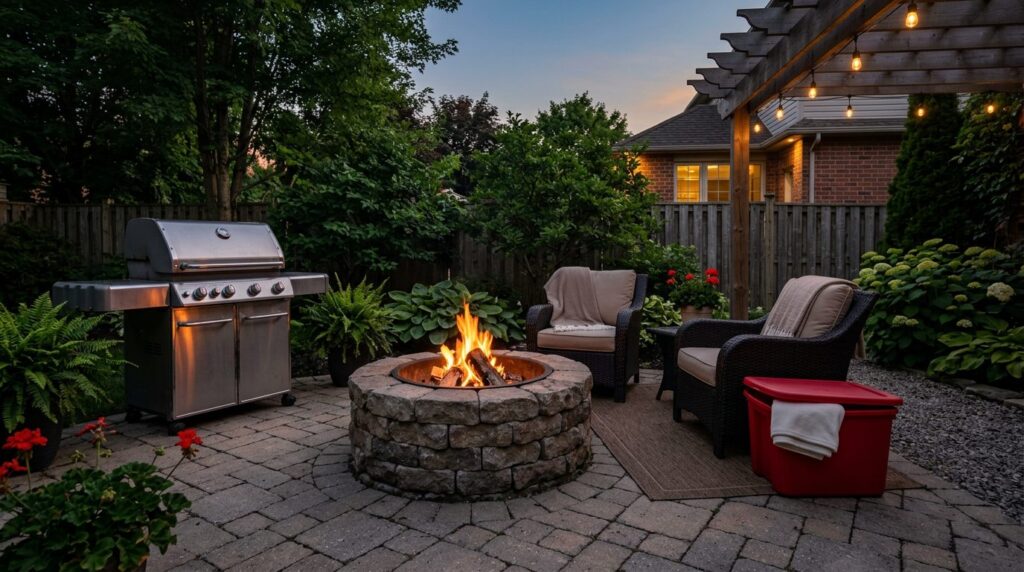
Outdoor cooking brings the same grease fire risk as the kitchen, with more wind. A blanket near the grill can smother a burning drip tray or a pan on a side burner. Turn off the gas at the burner and the tank first if you can do so safely.
Around a fire pit, an XL blanket earns its place, because sparks and loose clothing are the main risks. Keep it in a weatherproof bin near the seating, not inside the house.
Fiberglass blankets are not meant to live outdoors uncovered. Sun, rain and moisture can damage the pouch and the fabric, so store outdoor blankets in a closed container and check them more often.
Vehicles are where soft pouch blankets like the Mart Cobra pack make the most sense. Store the blanket where you can reach it from outside the vehicle, such as the trunk or a rear compartment, rather than under a seat you cannot get to after an accident.
In an RV, mount a blanket near the galley and near the exit, following the same rules as a home kitchen. Space is tight, so the reach from stove to blanket to door is short, which is ideal.
A vehicle fire that involves the engine compartment or fuel is not a blanket job. Get everyone out, move well away and call 911.
Phones, laptops, power tools, e-bikes and scooters use lithium-ion batteries that can burn very hot and reignite. The 2024 CPSC meeting log notes that some manufacturers are developing blankets specifically for electric vehicle and micromobility fires, with different qualities from consumer kitchen blankets.
A kitchen fire blanket is not designed for a burning e-bike battery. If a battery starts smoking, hissing or burning, get away from it, get everyone out and call 911.
The best defense is prevention: use the charger that came with the device, charge on hard surfaces away from exits, and do not leave large batteries charging overnight unattended. Working smoke alarms near charging areas buy you warning time.
The U.S. Fire Administration’s first cooking safety message is “Stand by your pan.” If you leave the kitchen, turn the burner off. Most cooking fires start when food is left on the heat, and the 37% figure for unattended equipment in fires that spread beyond the pan shows how much a few minutes away can matter.
Watch the heat. The USFA advises that if you see any smoke or the grease starts to boil, you should turn the burner off. Oil that is smoking is a sign that it is close to igniting.
Keep the area around the stove clear of towels, paper, oven mitts and food packaging. Anything that can burn should be at least a few feet from the cooktop.
The cheapest fire safety tool in the kitchen is a lid that fits your largest frying pan. Keep it out on the counter whenever you fry. A baking sheet works too.
Next comes the fire blanket on the wall near the exit and a rated extinguisher nearby. Then come smoke alarms. See our guide to the best smoke detector for models that reduce nuisance alarms from cooking, which is one of the main reasons people disable alarms.
If you cook with gas, a carbon monoxide alarm is also part of a safe kitchen. Our picks for the best carbon monoxide detectors cover plug-in and battery models.
Every home needs an escape plan with two ways out of every room and a meeting place outside. Upper floor bedrooms may need a ladder as the second exit, and our guide to the best fire escape ladder covers sizing and storage.
Walk every adult in the home through the blanket steps: heat off, pull the tabs, shield your hands, lay it away from you, leave it on, get out if it grows. A minute of rehearsal makes the real moment far less chaotic.
Finally, agree that nobody goes back inside for any reason once they are out. Belongings can be replaced. People cannot.
For most kitchens, a 39 to 40 inch fiberglass blanket with two pull tabs and a wall hanging slot is the best fit. The Prepared Hero Emergency Fire Blanket is our top pick because it is widely reviewed and designed for wall mounting. Add an XL size if you also want protection for clothing fires.
Fire safety bodies treat fire blankets as useful for small, starting fires, especially in kitchens, alongside smoke alarms and extinguishers rather than instead of them. The U.S. Fire Administration’s core advice for a pan fire is to turn off the heat and cover the pan with a lid or baking sheet, which works on the same smothering principle as a blanket.
We did not find a current Consumer Reports rating of fire blankets to cite. Several search results use the Consumer Reports name in promotional pages that are not from Consumer Reports. Judge blankets by size, construction, standard references, clear instructions and verified owner feedback instead.
Yes, on the fires they are designed for. A properly sized blanket laid fully over a small pan or surface fire cuts off the oxygen and smothers the flames. They do not work on fires they cannot cover, on fires that have spread to cabinets or walls, or when they are lifted too early.
A blanket only works on small fires it can fully cover, requires you to get fairly close to the flames, and should be replaced after use on a real fire. Standard 40 inch blankets are too small for clothing fires, and the U.S. standard for cooking fire blankets has not been updated since 2005.
About 40 by 40 inches for pans and small surface fires in a home kitchen. For clothing fires, the Fire Industry Association recommends 1.8 by 1.2 meters, about 71 by 47 inches.
Leave it in place, with the heat turned off, until the pan and its contents have cooled completely. Lifting it early lets fresh air reach hot oil, which can reignite.
Yes. Small grease fires in a pan are the main job of a kitchen fire blanket. Turn off the heat, lay the blanket over the pan away from your body and leave it there. Never use water on a grease fire.
Many sellers say their blankets do not expire. The Fire Industry Association recommends following the maker’s instructions and, if there are none, considering replacement after 7 years in service, or sooner if the blanket or container is damaged, dirty or has been used.
On the wall near the kitchen exit, clearly visible, with the tabs at about 5 feet from the floor. Do not mount it above or right next to the stove, or hide it in a drawer or cupboard.
For more home fire safety gear, see our picks for the best fire extinguisher for home, the best smoke detector and the best fire escape ladder.
Written by the Delozone Editorial Team. We research products using manufacturer listings and specifications, ASTM and EN standards, Fire Industry Association guidance, U.S. Fire Administration safety advice and verified owner feedback, and we update guides when products or guidance change. How we work.
The Delozone Editorial Team researches water treatment, pool and spa, and indoor air products for independent buying guides. We compare products using manufacturer specifications, certification listings such as NSF/ANSI, UL, AHAM and Energy Star, published third-party test data and verified owner feedback. We do not sell products, and affiliate commissions never decide what we recommend.