Independent buying guides for home air, water and safety.
As an Amazon Associate, Delozone earns from qualifying purchases.
Independent buying guides for home air, water and safety.
As an Amazon Associate, Delozone earns from qualifying purchases.


how does an ozone generator work We explore the science, the technology, and the practical choices that shape today’s ozone systems. Our goal is to give you a clear map from raw oxygen to a powerful oxidizer that can freshen air, treat water, and sanitize surfaces.
Tools for checking an ozone system
Compare options in our hot tub ozone generator guide →
Affiliate links: as an Amazon Associate, Delozone earns from qualifying purchases. We do not show prices because they change daily.
When a high‑energy spark or photon strikes an oxygen molecule, the O to O bond breaks, releasing a free oxygen atom. This atom races to collide with another O₂ molecule, forming the tri‑atomic O₃ we call ozone. The reaction is reversible; ozone will decompose back to O₂ when it meets a catalyst or a warm surface.
In the laboratory, the process is measured in parts per million (ppm) and is a dance of electrons that can be visualized as a flash of lightning in a bottle. The resulting ozone carries a strong oxidative potential, roughly 2.5 times that of chlorine, making it a fierce disinfectant. Because ozone is heavier than air, it tends to settle in low‑lying areas, which is why placement of the generator matters.
We treat ozone as a temporary messenger that delivers a burst of energy before fading away, leaving no harmful residues. This fleeting nature is what allows us to use it safely in food‑grade water treatment and indoor air purification. The chemistry also explains why ozone must be generated on‑site; it cannot be stored for long periods without degrading.
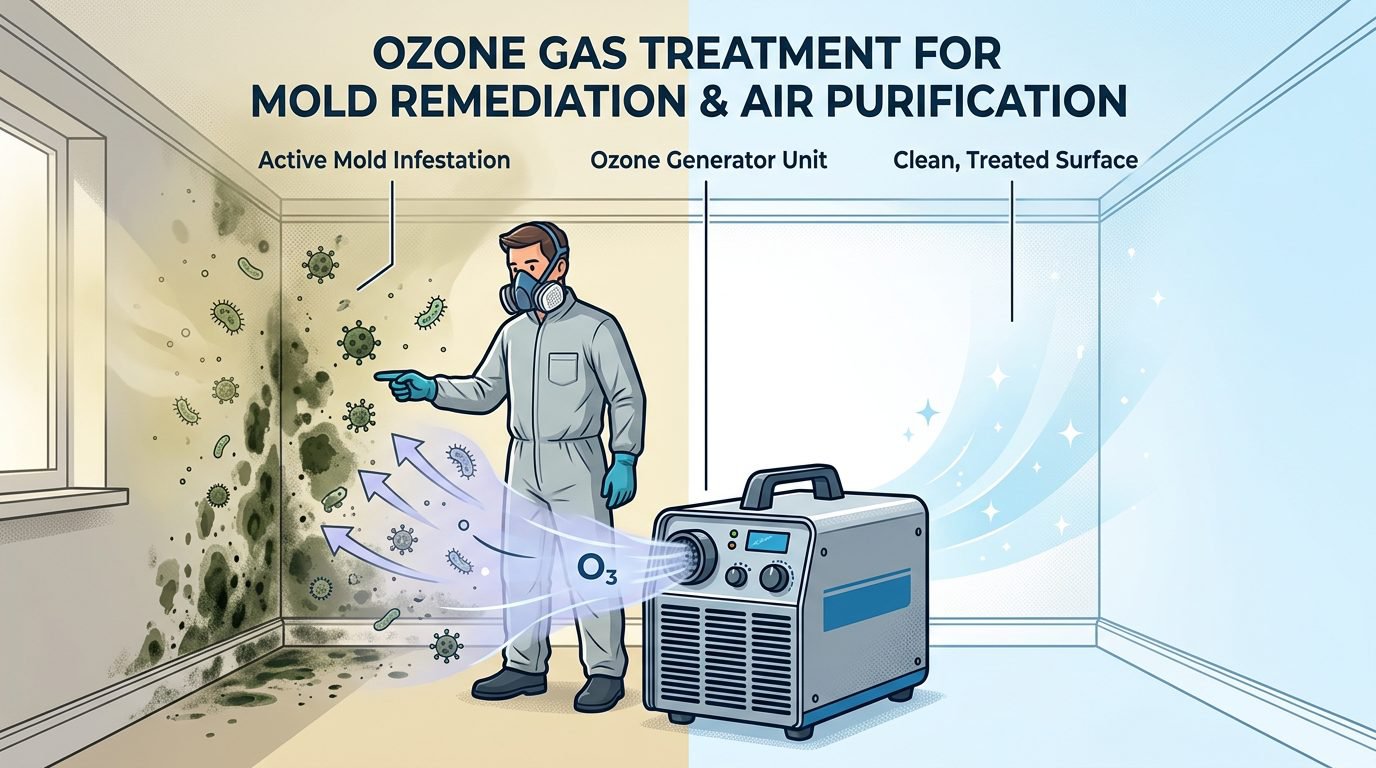
Ozone’s ability to oxidize organic compounds makes it a versatile tool for eliminating odors, killing microbes, and breaking down pollutants. In water, it can inactivate viruses, bacteria, and protozoa without forming chlorinated by‑products. In air, it neutralizes volatile organic compounds (VOCs) and mold spores, creating a fresher environment.
Think of ozone as a superhero that swoops in, disarms the villainous contaminants, and then disappears without a trace. Its rapid action reduces the need for chemical additives, which aligns with growing consumer demand for greener solutions. Moreover, ozone’s by‑product is simply oxygen, a welcome addition to any breathing space.
We have observed that facilities that adopt ozone technology often report lower operational costs and fewer maintenance interruptions. The technology’s scalability, from a countertop unit to a plant‑scale generator, means it can grow with a business or a home. This adaptability is a cornerstone of our design philosophy.
Corona discharge works by applying a high voltage across a gap filled with dry air or oxygen. The electric field accelerates electrons, which collide with O₂ molecules and split them into atomic oxygen. These atoms then recombine with other O₂ molecules to form ozone, a process that can be visualized as a storm of invisible lightning bolts.
The output of a corona system is measured in grams per hour, and it can reach concentrations of 10 to 30 ppm in a closed chamber. Because the reaction is driven by electricity, the system can be tuned by adjusting voltage, frequency, and gap distance. This flexibility allows us to tailor the generator for specific applications, from water treatment to large‑scale air sanitization.
We have found that corona generators excel in environments where high ozone levels are required quickly, such as in commercial kitchens or industrial water loops. However, the high voltage creates ozone and ozone that can be mitigated with proper shielding and grounding. Regular inspection of the electrode plates helps maintain efficiency and prolongs the unit’s life.
Ultraviolet ozone at a wavelength of 185 nm provides just enough energy to split O₂ without the need for a high‑voltage gap. The UV lamp emits photons that strike oxygen molecules, freeing an atom that then joins another O₂ to become ozone. This method is quieter and often more compact than corona discharge.
UV‑based generators typically produce lower concentrations, ranging from 0.5 to 5 ppm, which makes them ideal for residential spaces where a gentle, continuous ozone supply is desired. The lamp’s lifespan, usually 9,000 to 12,000 hours, determines the maintenance schedule, and the quartz tube must be kept clean for optimal output.
We appreciate the UV approach for its simplicity and the absence of high‑voltage components, which reduces the risk of electrical hazards. The technology also aligns well with indoor air quality standards that limit ozone exposure. When paired with a proper ventilation strategy, UV generators can maintain a healthy balance between disinfection and safety.
| Feature | Corona Discharge | UV Light |
|---|---|---|
| Typical Output | 10 to 30 ppm (high‑volume) | 0.5 to 5 ppm (low‑volume) |
| Power Consumption | 150 to 500 W | 30 to 80 W |
| Installation Cost | Higher (due to high‑voltage components) | Lower (simple lamp assembly) |
| Maintenance Frequency | Electrode cleaning every 6 to 12 months | Lamp replacement every 9,000 hours |
| Noise Level | Moderate hum | Quiet |
| Best Use Case | Commercial water treatment, large‑scale air sanitization | Residential air purification, small‑scale water treatment |
For a deeper dive into water‑focused applications, we recommend our Ozone Water Treatment Guide. To address safety concerns, see Is Ozone Water Treatment Safe?. And for a step‑by‑step walkthrough of the purification process, visit How Ozone Purifies Water.
The power supply converts mains electricity into the high voltage needed for corona discharge or the precise low‑voltage current for UV lamps. It includes a transformer, a rectifier, and a control circuit that regulates frequency and amplitude. This module is the heart of the system, dictating how aggressively oxygen molecules are split.
We design our power supplies with built‑in protection against overloads, short circuits, and temperature spikes. These safeguards not only protect the hardware but also ensure consistent ozone output over long operating periods. The efficiency of the power supply directly influences the overall energy cost of the generator.
When troubleshooting, we first check the input voltage, then verify that the output matches the specifications printed on the unit’s label. A multimeter can reveal whether the transformer is delivering the correct high‑voltage ripple. Replacing a faulty power supply is often the quickest way to restore full performance.
The ozone cell, also called the reaction chamber, houses the electrodes (for corona) or the quartz tube (for UV). Its geometry determines the residence time of oxygen molecules, which affects how much ozone is produced per pass. Materials such as stainless steel, titanium, or ceramic are chosen for their resistance to oxidation.
We pay close attention to the gap distance between electrodes, as a narrower gap intensifies the electric field but may increase the risk of arcing. In UV cells, the quartz tube must be free of deposits that could block the 185 nm wavelength. Regular inspection of the cell interior prevents efficiency loss caused by fouling.
When the cell shows signs of wear, such as pitting on metal electrodes or clouding of the quartz, we schedule a replacement. This preventive step avoids sudden drops in ozone output that could compromise treatment quality. Keeping a spare cell on hand reduces downtime during critical operations.
Ozone output is commonly expressed in milligrams per hour (mg/h) or grams per hour (g/h) for industrial units, while residential devices often list parts per million (ppm) for a given volume. The EPA’s National Ambient Air Quality Standards (NAAQS) set a maximum of 0.070 ppm for ozone exposure in occupied spaces, a benchmark we respect in all designs.
For water treatment, the CDC recommends a residual ozone concentration of 0.5 to 1.0 mg/L to achieve effective disinfection without excessive oxidation. These guidelines help us size the generator appropriately for the intended flow rate. We also provide calibration kits that allow users to verify output against a certified reference.
When measuring, we use UV‑absorption meters, electrochemical sensors, or colorimetric test kits, each offering a different balance of accuracy and convenience. Selecting the right tool depends on the application’s scale and regulatory requirements. Consistent monitoring ensures that the system remains within safe and effective limits.
Our preferred technique for continuous monitoring is a digital ozone analyzer that samples the gas stream in real time. The device displays concentration, flow rate, and total ozone delivered, allowing operators to adjust settings on the fly. We integrate the analyzer with a PLC for automated control.
For spot checks, we employ handheld probe meters that can be placed directly in the treatment chamber. These meters use a photodiode to detect ozone’s characteristic absorption at 254 nm. The reading is quick, typically within a few seconds, and provides a reliable snapshot of current performance.
We also recommend periodic verification with a certified laboratory, especially for critical applications such as food‑grade water treatment. Laboratory analysis can detect trace by‑products and confirm that ozone levels meet the required specifications. This extra step adds confidence for regulatory audits.
Residential generators usually produce 0.5 to 5 g/h of ozone, sufficient for a single household or a small office. Commercial units, on the other hand, can generate 10 to 200 g/h, enabling treatment of large water tanks, industrial air handling systems, or multi‑room facilities. The scaling factor is not linear; larger units often incorporate multiple cells to maintain uniform output.
We design residential models with compact footprints, quiet operation, and simple plug‑and‑play controls. Commercial models feature rugged enclosures, redundant power supplies, and advanced diagnostics. Both families share a common core technology, but the engineering details diverge to meet different performance targets.
Choosing the right size hinges on the volume of air or water to be treated and the desired contact time. A rule of thumb is to aim for an ozone concentration of at least 2 ppm for air and 0.5 mg/L for water, adjusted for temperature and humidity. Oversizing can waste energy, while undersizing may fail to achieve the intended disinfection level.
| Aspect | Residential Unit | Commercial Unit |
|---|---|---|
| Initial Purchase Price | $300 to $1,200 | $3,000 to $15,000 |
| Annual Energy Cost | $30 to $120 | $500 to $2,000 |
| Typical Lifespan | 5 to 8 years | 10 to 15 years |
| Return on Investment | 2 to 4 years (via reduced chemicals) | 1 to 3 years (via higher throughput) |
We have seen homeowners save up to 40 % on chemical cleaners after switching to ozone‑based air purifiers. In industrial settings, the reduction in downtime and the ability to meet stringent water quality standards translate into faster ROI. Financing options and energy‑efficiency incentives further improve the financial picture.
When evaluating cost, we also factor in maintenance expenses such as electrode replacement or lamp swaps. A well‑maintained unit can exceed its projected lifespan, delivering additional value. Transparent pricing and clear service contracts help our customers plan budgets with confidence.
Regular maintenance begins with a visual inspection of the power supply and ozone cell. We look for signs of corrosion, loose connections, or accumulated dust that could impede airflow. Cleaning the exterior with a soft cloth and a mild detergent removes contaminants that might otherwise infiltrate the internal components.
Next, we verify the output using a calibrated sensor. If the reading deviates by more than 10 % from the baseline, we clean the electrodes or replace the UV lamp as needed. This step ensures that the generator continues to meet the performance specifications outlined in the user manual.
Finally, we check the ventilation pathways to confirm that ozone can be safely vented or captured. Blocked vents can cause pressure buildup and reduce ozone delivery. Keeping the surrounding area clear of obstructions is a simple yet effective safety measure.
Ozone is a powerful oxidant, and exposure above regulatory limits can irritate the respiratory tract. We install built‑in ozone sensors that shut down the generator if concentrations exceed the safe threshold. This automatic interlock protects occupants and complies with EPA and CDC recommendations.
When servicing the unit, we always disconnect power and allow the chamber to purge for at least five minutes. This waiting period lets residual ozone decompose back to oxygen, reducing the risk of inhalation. Personal protective equipment, such as gloves and eye protection, is advised during electrode cleaning.
We also provide clear signage and user manuals that describe proper placement, away from occupied spaces and direct sunlight, to minimize unintended exposure. By following these guidelines, users can enjoy the disinfecting benefits of ozone without compromising health.
The same two technologies show up when you shop for a hot tub instead of a room: spa ozonators use either a small corona discharge cell or a UV lamp, and their output has to suit the volume of water in the tub. If that is the job you have in mind, our guide to the best hot tub ozone generators compares spa models side by side and explains how to match one to your tub and its plumbing.
If you are reading this because you want ozone for a swimming pool, the corona discharge versus UV choice above is most of the decision: match the unit to your pool volume and daily pump run time, and check that the manufacturer lists replacement parts and an operating hour rating for the ozone cell or lamp. We compare current pool units on exactly those points in our pool ozone generator comparison.
Q1: Can ozone generators be used in occupied rooms?
A: Yes, but only when the device is equipped with a reliable ozone sensor and a timer that limits exposure to safe levels. We recommend operating the generator in unoccupied spaces or using a low‑output setting for continuous, low‑level treatment.
Q2: How long does it take for ozone to disinfect water?
A: Typically, a contact time of 5 to 10 minutes at a concentration of 0.5 to 1.0 mg/L is sufficient to inactivate most pathogens. The exact time depends on water temperature, turbidity, and the type of microorganisms present.
Q3: What is the difference between ozone and chlorine for water treatment?
A: Ozone is a stronger oxidant and leaves no residual chemicals, whereas chlorine can form harmful by‑products such as trihalomethanes. Ozone also works faster, often achieving disinfection in seconds rather than minutes.
Q4: How often should the UV lamp be replaced?
A: Most UV lamps maintain optimal output for about 9,000 to 12,000 hours of operation. We advise checking the manufacturer’s specifications and scheduling replacement before the lamp’s output drops below 80 % of its original level.
Q5: Are there any certifications that validate ozone generator performance?
A: Our units are tested according to ISO 9001 quality standards and comply with EPA ozone emission limits. For water applications, we also meet the NSF/ANSI 61 certification for health‑based drinking water components.
Q6: Can ozone damage electronics?
A: At high concentrations, ozone can corrode metal contacts and degrade polymer insulation. We recommend placing generators at a safe distance from sensitive electronics and using proper ventilation to disperse ozone after treatment.
For more detailed guidance, feel free to explore our additional resources or contact our technical support team. We are committed to helping you harness the power of ozone safely and efficiently.
The Delozone Editorial Team researches water treatment, pool and spa, and indoor air products for independent buying guides. We compare products using manufacturer specifications, certification listings such as NSF/ANSI, UL, AHAM and Energy Star, published third-party test data and verified owner feedback. We do not sell products, and affiliate commissions never decide what we recommend.