Independent buying guides for home air, water and safety.
As an Amazon Associate, Delozone earns from qualifying purchases.
Independent buying guides for home air, water and safety.
As an Amazon Associate, Delozone earns from qualifying purchases.


Ozone is one of the most powerful water disinfectants available , but is it safe? The short answer is yes, when used correctly. Ozone water treatment is approved by the EPA, WHO, FDA, and EU for drinking water and food contact. However, like any powerful tool, it requires proper handling. This guide explains exactly what’s safe, what’s not, and how to use ozone responsibly.
The biggest source of confusion about ozone safety is the difference between ozone dissolved in water and ozone gas in the air. These are very different safety profiles:
| Factor | Ozone in Water | Ozone in Air |
|---|---|---|
| Safety status | FDA/EPA approved | EPA air pollutant |
| Human exposure | Safe to drink after treatment | Harmful above 0.1 ppm |
| Residual | Reverts to oxygen in minutes | Can accumulate in enclosed spaces |
| Regulation | Approved for food contact, drinking water | OSHA limits: 0.1 ppm (8-hr TWA) |
| Risk level | Very low | Moderate (requires ventilation) |
Key point: Ozone-treated water is completely safe. The safety concerns relate to ozone gas exposure during the treatment process , and these are easily managed with proper equipment design.
Tools for checking an ozone system
Compare options in our hot tub ozone generator guide →
Affiliate links: as an Amazon Associate, Delozone earns from qualifying purchases. We do not show prices because they change daily.
Yes. Ozone-treated drinking water is safe and has been used worldwide for over 100 years:
After treatment, ozone naturally decomposes back into oxygen (O₂) within minutes. By the time treated water reaches your tap or glass, there is virtually no ozone remaining , just clean water with dissolved oxygen. There are no chemical residuals to worry about, unlike chlorine which remains in the water.
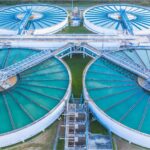
Over 3,000 municipal water treatment plants worldwide use ozone, including facilities serving major cities like Los Angeles, Paris, Moscow, Singapore, and Amsterdam. Learn more in our complete guide to ozone water treatment.
Yes. Ozone-treated pools are safe , and many swimmers find them more comfortable than traditional chlorine pools. Here’s why:
The health benefits of ozone pools include:
See our pool ozone system guide for complete details on how these systems work.
The primary safety concern with ozone is inhalation of ozone gas. Ozone is a respiratory irritant, and prolonged exposure at elevated concentrations can cause health effects.
| Standard | Concentration | Duration |
|---|---|---|
| OSHA PEL (Permissible Exposure Limit) | 0.1 ppm | 8-hour time-weighted average |
| OSHA STEL (Short-Term Exposure Limit) | 0.3 ppm | 15-minute average |
| NIOSH REL (Recommended Exposure Limit) | 0.1 ppm | 8-hour ceiling |
| EPA Outdoor Air Standard | 0.070 ppm | 8-hour average |
| Odor detection threshold | 0.01-0.02 ppm | Immediate |
If you can smell ozone strongly (beyond the faint fresh scent), you may be exposed to elevated levels:
Important context: These exposure levels apply to ozone gas in the air you breathe, not to ozone dissolved in water. A properly installed water treatment system keeps airborne ozone well below all safety limits.
Well-designed ozone water treatment systems include multiple safety features:
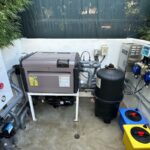
Any ozone that doesn’t dissolve in water (off-gas) passes through a destruct unit , typically a heated catalyst or activated carbon filter that converts O₃ back to O₂ before it can enter the surrounding air. This is standard equipment on all professional-grade ozone systems.
Commercial and industrial installations use ambient ozone monitors that continuously measure airborne ozone levels. If levels approach 0.1 ppm, the monitor triggers an alarm and can automatically shut down the ozone generator.
Equipment rooms housing ozone generators are designed with adequate ventilation , typically 6-12 air changes per hour. This prevents any ozone accumulation even if a small leak occurs.
Ozone-compatible tubing (typically Kynar, PTFE, or silicone) and check valves prevent ozone gas from escaping the treatment system. Proper installation with ozone-resistant materials is essential.
Quality ozone generators include flow switches and pressure sensors that shut down ozone production if water flow stops or if system pressure drops , preventing uncontrolled ozone release.
For homeowners with pool ozone systems or spa ozone generators, the safety requirements are straightforward:
For troubleshooting, see our guide on common pool ozone generator problems.
Residential ozone drinking water systems (point-of-use or point-of-entry) are designed with safety in mind:
Compare ozone with other home water treatment methods to find the right system for your needs.
Ozone is a strong oxidizer and can degrade certain materials over time:
For pool owners concerned about equipment: ozone and pool cover compatibility depends on maintaining proper residual levels and using ozone-compatible materials.
While ozone produces far fewer byproducts than chlorine, it’s not completely byproduct-free:
When water contains bromide (naturally occurring in some water sources), ozone can convert it to bromate , a regulated contaminant with an EPA maximum of 10 µg/L. This is primarily a concern for municipal water treatment, not residential pools or point-of-use systems.
Municipal plants manage bromate through:
Ozone breaks down large organic molecules into smaller biodegradable fragments. In municipal systems, this can promote bacterial regrowth in distribution systems if not followed by proper filtration and secondary disinfection. This is why ozone is used as a primary disinfectant with chlorine or chloramine as a secondary residual.
Ozone-treated water is safe for everyone. However, certain groups should be more aware of airborne ozone exposure near treatment equipment:
Again, these precautions relate to airborne ozone gas, not ozone-treated water. Swimming in an ozone pool, drinking ozone-treated water, and bathing in ozone-treated spa water are safe for all populations.
| Treatment Method | Chemical Storage Risk | Byproduct Risk | Residual Risk | Inhalation Risk |
|---|---|---|---|---|
| Ozone | None (generated on-site) | Low (bromate) | None (reverts to O₂) | Low (with proper system) |
| Chlorine gas | High (toxic gas storage) | High (THMs, HAAs) | Moderate (persistent) | High (very toxic) |
| Sodium hypochlorite | Moderate (corrosive liquid) | Moderate (THMs, HAAs) | Moderate (persistent) | Low |
| Chlorine dioxide | High (explosive precursors) | Moderate (chlorite) | Low | Moderate |
| UV | None | None | None | None (eye protection needed) |
Overall, ozone has a strong safety profile , especially when compared to chlorine gas, which poses severe chemical storage and inhalation hazards. Ozone is generated on-site from air, eliminating chemical transportation and storage risks entirely.
If you are shopping for a spa ozonator, the safety points above make a short checklist: a check valve on the injection line, ozone-resistant tubing, and a unit that only runs while the circulation pump is on. Our guide to the best hot tub ozone generators covers current models and what to check before you buy one.
You should not smell ozone from a properly installed pool system. The ozone reacts in the plumbing and any excess is destroyed before reaching the air. If you detect a strong ozone smell near your pool equipment, check for a disconnected off-gas line or failed destruct unit.
Yes. Pool ozone systems are designed to be safe for immediate swimming. Ozone reacts in the plumbing before water returns to the pool. Residual ozone in pool water is kept well below safe limits (typically under 0.1 mg/L).
Ozone-treated water cannot make you sick. Inhaling concentrated ozone gas can cause respiratory irritation, but properly designed water treatment systems prevent this. If you ever feel respiratory discomfort near ozone equipment, ventilate the area and inspect the system for leaks.
In many respects, yes. Ozone produces fewer disinfection byproducts, leaves no chemical residual, and eliminates the need for hazardous chemical storage. The main chlorine advantage is that it provides ongoing residual protection in distribution systems, which ozone cannot do alone.
Look for ozone generators that are UL, NSF, or CE certified. For pool systems, NSF/ANSI Standard 50 certification confirms the unit meets safety standards for pool/spa equipment. Reputable manufacturers like DEL Ozone and ClearWater Tech provide certified products.
The Delozone Editorial Team researches water treatment, pool and spa, and indoor air products for independent buying guides. We compare products using manufacturer specifications, certification listings such as NSF/ANSI, UL, AHAM and Energy Star, published third-party test data and verified owner feedback. We do not sell products, and affiliate commissions never decide what we recommend.