Independent buying guides for home air, water and safety.
As an Amazon Associate, Delozone earns from qualifying purchases.
Independent buying guides for home air, water and safety.
As an Amazon Associate, Delozone earns from qualifying purchases.

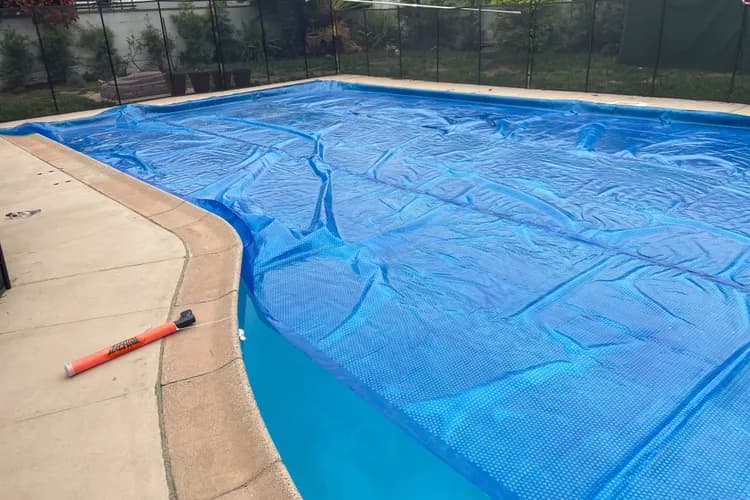

Ozone pool systems are widely praised for reducing chlorine use, improving water clarity, and eliminating chloramine odors. As ozone adoption grows, many pool owners ask an important and valid question: Can ozone damage pool covers?
The short answer is yes—but only under specific conditions. When properly designed and operated, ozone systems are safe for pool covers. However, poor system design, incorrect sizing, or improper cover use can expose materials to ozone concentrations that may accelerate wear.
This article explains the science behind ozone and materials, identifies real risk scenarios, and outlines best practices to protect pool covers while benefiting from ozone pool sanitation.
Ozone (O₃) is a powerful oxidizer used in pools to destroy bacteria, viruses, and organic contaminants. Unlike chlorine, ozone works rapidly and breaks down quickly into oxygen.
In properly designed pool systems, ozone is generated, injected into circulating water, reacts with contaminants, and is neutralized before water returns to the pool. When ozone remains confined to this closed-loop process, it should not come into contact with pool covers at damaging concentrations.
Problems arise only when ozone escapes into the air or remains dissolved at elevated levels near the water surface. Understanding ozone concentration levels helps you determine if your system is within safe limits.
Ozone is highly reactive with organic polymers. Many pool covers are made from materials such as vinyl, polyethylene, polypropylene, or rubberized compounds. These materials can degrade when exposed to high ozone concentrations over extended periods.
Ozone attacks double bonds in polymers through a process called ozonolysis, leading to:
This process is well-documented in materials science and is the same reason rubber bands become brittle over time — ambient ozone in outdoor air slowly degrades rubber.
| Cover Type | Material | Ozone Resistance | Risk Level |
|---|---|---|---|
| Solar/bubble covers | Polyethylene | Moderate-Good | Low-Medium |
| Automatic covers | Reinforced vinyl | Low-Moderate | Medium-High |
| Safety covers | Woven polypropylene/polyester | Good | Low |
| Winter covers | Polyethylene/polypropylene | Moderate | Low (seasonal use) |
| Liquid solar covers | Alcohol-based monolayer | N/A | None (no solid material) |
Solar covers are typically made from polyethylene. While relatively ozone-resistant, prolonged exposure to ozone gas trapped beneath the cover can accelerate aging. The bubble side (which faces the water) is most vulnerable. Typical lifespan with ozone: 2-4 years (vs 3-5 years without ozone under similar conditions).
Automatic covers often use reinforced vinyl, which is the most ozone-sensitive common pool cover material. Vinyl contains plasticizers that ozone attacks, causing the material to stiffen, crack, and eventually fail. These covers are also the most expensive to replace ($5,000-$15,000), making protection essential.
Safety covers are usually woven polypropylene or polyester mesh. These materials are generally more ozone-resistant due to their chemical structure (fewer double bonds for ozone to attack). They also don’t trap gas beneath them (mesh allows air flow), significantly reducing ozone exposure.
Insulated thermal covers use foam cores with vinyl or polyethylene shells. The foam interior is highly ozone-resistant, but the outer shell can degrade. Quality thermal covers from manufacturers who account for ozone exposure tend to use higher-grade materials.
If an ozone system lacks proper degassing, contact chambers, or destruct units, excess ozone may return to the pool. This increases the likelihood of ozone gas collecting beneath a closed cover. Proper installation with destruct units prevents this.
An oversized ozone system can produce more ozone than the water can absorb and neutralize. Excess ozone may off-gas at the pool surface, particularly when circulation is low. This is one reason why proper sizing matters — more ozone is not always better.
When a pool cover remains closed for days while the ozone system runs, any ozone off-gassing becomes trapped between the water surface and the cover. This creates a microenvironment with higher ozone concentration near the cover material. Even small amounts of off-gassing become significant when accumulated over days or weeks.
If the ozone generator runs when the pump is off or at very low speed, ozone may not dissolve properly in the water. Instead, it bubbles to the surface and off-gasses directly — right into the space beneath a closed cover.
Indoor pools are more susceptible to ozone accumulation due to restricted air exchange. Without proper ventilation, ozone gas can build up beneath covers and throughout the pool room. Indoor pool ozone systems require special attention to safety and ventilation.
The off-gas destruct unit converts excess ozone back to oxygen. If this component fails, is bypassed, or was never installed, undissolved ozone has nowhere safe to go and may accumulate under the cover.
In modern ozone pool systems, ozone is fully consumed during the oxidation process. Properly engineered systems include:
When these components are in place, ozone residual levels returning to the pool are well below 0.1 mg/L — far too low to cause material damage. The short half-life of ozone (10-15 minutes in pool water) means any residual disappears quickly.
Many pool owners assume ozone is harsher on materials than chlorine. In reality, chlorine and chloramines often cause more consistent material degradation over time.
| Damage Factor | Ozone (Properly Managed) | Chlorine (1-3 ppm) |
|---|---|---|
| Bleaching/fading | Minimal | Significant over time |
| Vinyl drying/cracking | Risk only with off-gassing | Consistent chemical attack |
| Rubber seal degradation | Low with proper system | Moderate — chlorine attacks rubber |
| Stitching/thread damage | Minimal | Moderate — bleaching weakens threads |
| Metal hardware corrosion | Low (ozone is in water, not air) | Moderate — chlorine vapors corrode |
Low-chlorine pools using ozone often experience less overall material stress, provided ozone is properly controlled. The 60-90% reduction in chlorine achieved with ozone means significantly less chemical exposure for all pool materials, not just covers.
If ozone exposure is excessive, early warning signs include:
If you notice these signs, inspect your ozone system immediately — check the troubleshooting guide for potential issues.
Correct sizing is the single most important factor. The system should be matched to pool volume, bather load, and circulation rate—not oversized “for safety.” An oversized system doesn’t clean better — it just wastes ozone and creates off-gassing risk.
Destruct units neutralize excess ozone before water returns to the pool, preventing off-gassing. Verify your system has one installed and that it’s functioning. Replace destruct media per manufacturer schedule (typically every 2-5 years).
Never run the ozone generator without the circulation pump running. This is the most common cause of excessive off-gassing. Most quality systems have flow switches that enforce this automatically.
Good circulation ensures ozone is fully consumed in the plumbing and prevents localized concentration buildup at the water surface.
If you use a pool cover regularly, consider timing your ozone cycles to finish 30-60 minutes before covering the pool. This allows any minimal residual to decompose to oxygen before the cover traps it.
Proper ventilation disperses any residual ozone gas, protecting both materials and swimmers. Indoor pool rooms should have 6-12 air changes per hour when ozone systems are operating.
If your pool stays covered for extended periods, open the cover briefly (even 15-30 minutes) daily to allow any trapped gas to dissipate.
When purchasing a new pool cover for an ozone pool, ask about ozone compatibility. Some manufacturers offer ozone-rated covers with enhanced polymer stabilizers. Polypropylene mesh safety covers are inherently more ozone-resistant than vinyl automatic covers.
Many pool cover manufacturers specify acceptable ozone exposure levels. Some warranties exclude damage caused by improperly controlled ozone systems.
Best practices for warranty protection:
Replacing a damaged pool cover is expensive — $500-$2,000 for solar covers, $5,000-$15,000 for automatic covers. However, avoiding ozone altogether to “protect” covers means higher chemical costs, more chlorine damage to ALL pool materials, and the health and comfort benefits you lose.
The math is clear: proper ozone system design paired with cover-aware operation is the most cost-effective approach. You get better water quality, lower chemical costs, and longer life for all pool components — including covers.
Not if your ozone system is properly sized and maintained. However, some warranties specifically exclude “chemical damage.” Keep documentation of your ozone system’s specifications and maintenance history.
No. Pool covers provide significant energy savings and debris protection. The solution is proper ozone system design, not removing the cover. With a correctly sized system and destruct unit, your cover is safe.
A very faint ozone scent when opening a cover is not alarming — you can detect ozone at concentrations far below harmful levels. However, a strong, persistent ozone smell indicates excess off-gassing that should be addressed by checking your system.
Polypropylene mesh safety covers are the most ozone-resistant. If you prefer a solid cover, look for manufacturers that offer ozone-compatible vinyl formulations with enhanced UV and oxidation stabilizers.
Higher ozone residual in the pool water itself (above 0.1 mg/L) increases off-gassing risk, which increases cover exposure. Properly sized systems maintain residual well below this level. Check ozone concentration guidelines for your application.
Ozone damage typically shows on the underside of the cover (water-facing side) as cracking, stiffening, or discoloration. Normal UV aging shows on the top side (sun-facing). If the underside is degrading faster than the top, ozone exposure may be a factor.
The Delozone Editorial Team researches water treatment, pool and spa, and indoor air products for independent buying guides. We compare products using manufacturer specifications, certification listings such as NSF/ANSI, UL, AHAM and Energy Star, published third-party test data and verified owner feedback. We do not sell products, and affiliate commissions never decide what we recommend.