Independent buying guides for home air, water and safety.
As an Amazon Associate, Delozone earns from qualifying purchases.
Independent buying guides for home air, water and safety.
As an Amazon Associate, Delozone earns from qualifying purchases.

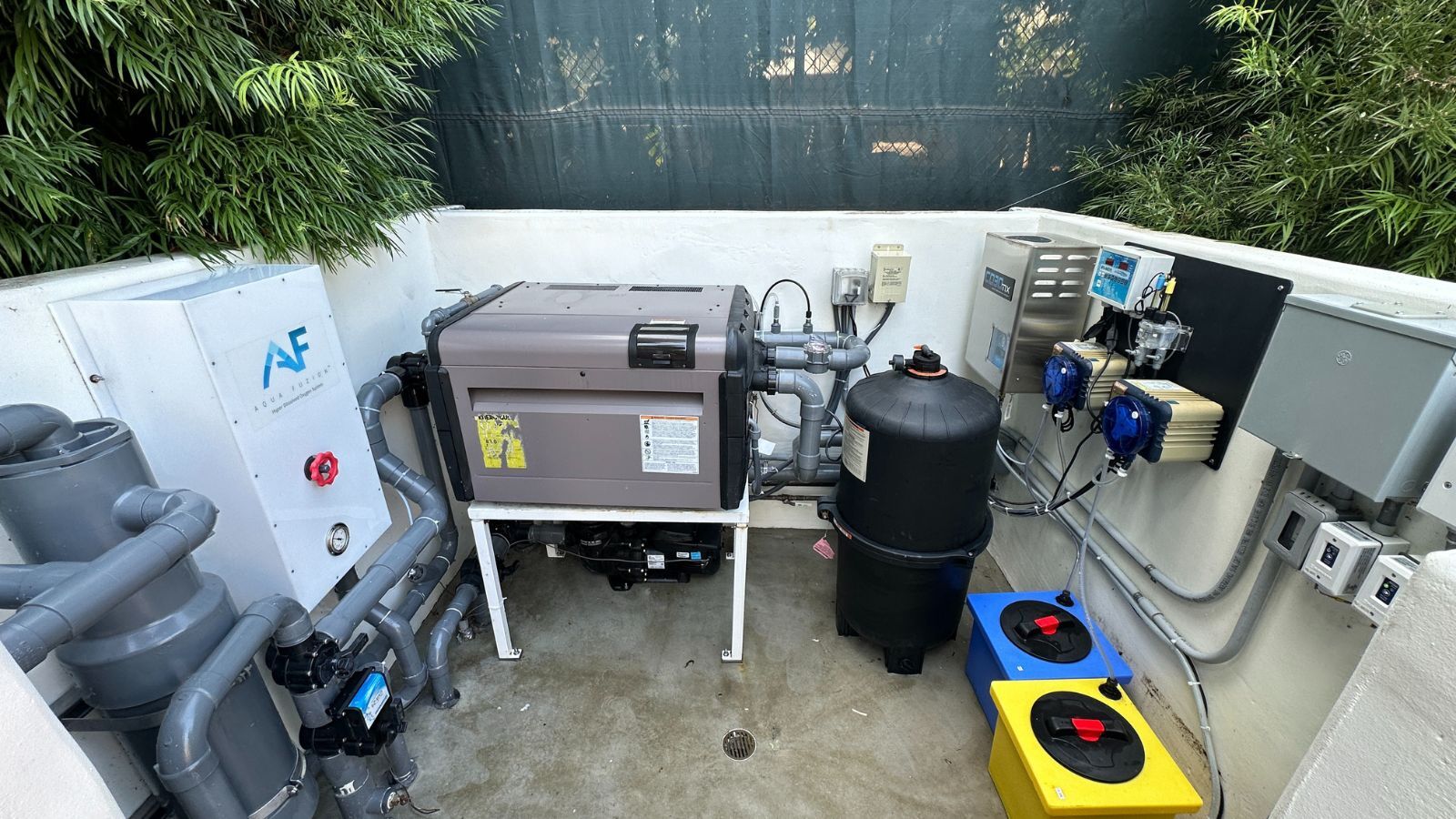

The best pool ozone generator is the one that is sized for your pool, runs on your pump schedule and can be serviced where you live. Below we compare 10 corona discharge and UV models by output, pool size and warranty, and explain how to choose between them.
Top picks at a glance
Many pool ozone generators are sold mainly through pool dealers. If a model is not in stock on Amazon, a local dealer can quote and install it.
Affiliate links: As an Amazon Associate, Delozone earns from qualifying purchases, at no extra cost to you. Full disclosure
Key Takeaways
Pool ozone generators produce ozone (O3) using one of two methods: corona discharge (CD) or ultraviolet (UV) light at 185 nanometers. The difference between these two methods affects output, cost, and maintenance in ways that matter for every pool owner.
Corona discharge systems pass dried air or oxygen through an electrical arc, splitting oxygen molecules and reforming them as ozone. These units produce significantly higher ozone concentrations, often 10 to 50 times more than UV-based systems. The trade-off is higher upfront cost and sensitivity to humidity, which is why quality CD units include integrated air dryers.
UV ozone generators use a specific wavelength of ultraviolet light (185nm) to convert oxygen into ozone. These systems are simpler, cheaper, and easier to maintain. However, their ozone output is considerably lower, making them suitable primarily for smaller residential pools under 20,000 gallons.
We recommend corona discharge for any pool over 15,000 gallons or any commercial application. For small above-ground pools or spas, UV-based systems offer a cost-effective entry point.
Generating ozone is only half the equation. Getting that ozone dissolved into pool water efficiently requires a venturi injector, a device that uses water pressure differential to draw ozone gas into the plumbing line and mix it thoroughly with pool water.
Without a proper venturi system, ozone bubbles rise to the surface and off-gas before they can sanitize. The best ozone installations position the venturi injector after the filter and before the return line, giving ozone maximum contact time with the water before it re-enters the pool.
Contact time determines how effectively ozone destroys bacteria, viruses, and chlorine-resistant pathogens like Cryptosporidium and Giardia. A minimum of 2–4 minutes of contact time is recommended for residential pools. Commercial installations often include a dedicated degas vessel or contact chamber to extend this process.
Some pool owners skip the venturi and rely on the suction side of the pump to pull ozone into the plumbing. This works but produces larger bubbles and less efficient mixing. We always recommend a dedicated venturi injector or Mazzei-style injector for best results.
One of the most common misconceptions about ozone pool systems is that they eliminate the need for chlorine entirely. They do not. Ozone is an extraordinarily powerful oxidizer, it destroys organic contaminants, chloramines, bacteria, and viruses on contact. But ozone has no residual value in the water.
Once ozone reacts with contaminants, it breaks down into ordinary oxygen (O2). This means there is nothing left in the water to protect against new contaminants entering between filtration cycles. A low level of residual sanitizer, typically 0.5–1.0 ppm of free chlorine, is still required to maintain safe water between ozone treatment cycles.
The practical benefit is dramatic: pools running ozone generators typically reduce chlorine consumption by 60–90%, resulting in softer water, fewer chloramine odors, less skin and eye irritation, and significantly lower chemical costs over time.
We evaluated each ozone generator across eight performance criteria. Every unit on this list is a real, commercially available product from an established manufacturer with verifiable warranty support and documented specifications.
| Criteria | What We Measured |
|---|---|
| Ozone Output | Rated output in mg/hr or g/hr under standard conditions |
| Generation Method | Corona discharge, UV, or hybrid |
| Pool Size Rating | Maximum pool volume (gallons) the unit can effectively treat |
| Build Quality | Housing material, internal components, corrosion resistance |
| Energy Efficiency | Power draw in watts relative to ozone output |
| Installation | Ease of integration with existing plumbing and filtration |
| Maintenance | Frequency and cost of replacement parts (cells, lamps, air dryers) |
| Warranty | Length and coverage of manufacturer warranty |
We prioritized ozone output per watt, real-world durability reports, and compatibility with common pool filtration setups including salt chlorinator systems.
The DEL Ozone Eclipse-4 remains one of the most trusted names in residential pool ozone treatment. DEL Ozone has manufactured ozone systems for over 40 years, and the Eclipse series reflects that experience. The Eclipse-4 uses advanced corona discharge technology to deliver consistent, high-output ozone rated for pools up to 100,000 gallons. The Eclipse line has since been succeeded by the DEL Ozone 25, 50 and 100 under CMP, so new buyers should look at those first (see our DEL Ozone model guide).
Installation is straightforward with DEL’s quick-mount bracket system, and the unit integrates seamlessly with most standard pool equipment pads.
What sets the Eclipse series apart is reliability. Service technicians and pool builders consistently rate DEL Ozone products among the lowest-maintenance ozone systems available. Replacement corona discharge cells are readily available and last 3–5 years under normal use.
| Spec | Value |
|---|---|
| Method | Corona Discharge |
| Output | Up to 900 mg/hr |
| Pool Size | Up to 100,000 gal |
| Power | 65W |
| Warranty | 2 years |
Best for: Residential pools seeking proven, low-maintenance ozone treatment from an established manufacturer.
Check DEL Ozone Eclipse-4 price on Amazon
Clearwater Tech is a dominant force in the commercial ozone market, and the APEX Series brings that same engineering to pools that demand maximum output. The APEX uses a precision corona discharge chamber that maintains consistent ozone production even in high-humidity environments, a common weak point for lesser CD units.
The modular design allows facility managers to scale ozone output by adding or removing generation modules. Integrated diagnostics display real-time ozone output, cell condition, and system alerts. The APEX is built for pools and aquatic facilities that run 12–16 hours per day and need equipment that never quits.
The initial price point is higher than residential units, but the total cost of ownership over 5–7 years is competitive due to exceptional component longevity and low energy draw relative to output.
| Spec | Value |
|---|---|
| Method | Corona Discharge |
| Output | Up to 4,000+ mg/hr (scalable) |
| Pool Size | 50,000–500,000+ gal |
| Power | Variable (modular) |
| Warranty | 3 years |
Best for: Commercial pools, health clubs, water parks, and municipal aquatic facilities.
Check Clearwater Tech APEX Series price on Amazon
CircuPool has carved out a strong niche as the go-to ozone solution for salt chlorinator pool owners. The INDIGO3-XL is their flagship model, designed specifically to complement salt systems. At $999 (frequently discounted), it offers an aggressive price-to-performance ratio.
The INDIGO3 series claims to reduce chemical demand by up to 85% and destroy chlorine-resistant organisms including Cryptosporidium. CircuPool also claims the ozone treatment extends salt cell lifespan by reducing the organic load the cell must process, a compelling value proposition for salt pool owners spending $400–$800 on replacement cells every 3–5 years.
Installation requires no professional help for most setups, and the unit fits inline with standard 2-inch plumbing.
| Spec | Value |
|---|---|
| Method | Corona Discharge |
| Output | Up to 1,200 mg/hr |
| Pool Size | Up to 50,000 gal |
| Price | $999 |
| Warranty | 2 years |
Best for: Salt chlorinator pool owners looking for a plug-and-play ozone upgrade.
Check CircuPool INDIGO3-XL price on Amazon
The ProZone PZ7-2HO uses a hybrid approach, combining UV and corona discharge ozone production in a single unit. This hybrid design provides stable ozone output across a wider range of environmental conditions than either method alone.
The PZ7 series has long been a favorite of pool professionals for its safety features. Automatic shutoff sensors activate during system anomalies, and the sealed chamber prevents ozone leakage into equipment areas. The unit handles pools up to 40,000 gallons and includes a built-in venturi injector kit.
ProZone products are widely available through pool supply distributors, making replacement parts and service accessible in most markets.
| Spec | Value |
|---|---|
| Method | Hybrid (UV + CD) |
| Output | Up to 850 mg/hr |
| Pool Size | Up to 40,000 gal |
| Power | 55W |
| Warranty | 2 years |
Best for: Pool owners who want redundant ozone production with built-in safety features.
Check ProZone PZ7-2HO price on Amazon
A2Z Ozone produces some of the most affordable high-output ozone generators on the market. The SP-8G delivers up to 8 grams per hour of ozone, an impressive figure for its price point. The unit uses corona discharge with an adjustable output dial, allowing pool owners to fine-tune ozone concentration based on pool conditions.
The latest redesign improved the cooling system, which extends the life of the corona discharge plates. A2Z units are popular on Amazon and through direct sales, with a strong base of DIY pool owners who appreciate the straightforward installation.
The trade-off is build quality. A2Z housing is lighter than competitors like DEL or Clearwater, and long-term durability reports are mixed. For budget-conscious pool owners willing to replace the unit every 3–4 years, the SP-8G offers exceptional value.
| Spec | Value |
|---|---|
| Method | Corona Discharge |
| Output | Up to 8,000 mg/hr |
| Pool Size | Up to 50,000+ gal |
| Price | ~$550 |
| Warranty | 1 year |
Best for: Budget-conscious pool owners who want maximum ozone output per dollar.
Check A2Z Ozone SP-8G price on Amazon
The DEL OZONE 50 is a commercial-grade ozone system designed for pools up to 50,000 gallons. It sits between the residential Eclipse series and full commercial installations, making it ideal for large residential pools, community pools, and boutique swim facilities.
The OZONE 50 uses corona discharge with an integrated air preparation system that removes moisture before it reaches the generation chamber. This air drying step is critical, humidity degrades corona discharge efficiency and produces unwanted nitrogen oxides. DEL’s integrated approach eliminates the need for a separate air dryer.
Priced around $949, the OZONE 50 delivers commercial reliability at a residential-adjacent price point.
| Spec | Value |
|---|---|
| Method | Corona Discharge |
| Output | Up to 2,000 mg/hr |
| Pool Size | Up to 50,000 gal |
| Price | ~$949 |
| Warranty | 2 years |
Best for: Large residential pools and small commercial facilities needing heavy-duty ozone output.
Check DEL OZONE 50 price on Amazon
The AutoPilot CoPilot is built exclusively for AutoPilot salt chlorinator owners who want integrated ozone treatment. The CoPilot connects directly to existing AutoPilot pool automation systems, sharing power and control through a unified interface.
This tight integration means the CoPilot adjusts ozone output based on the salt system’s operating cycle, ozone runs when the pump runs, and shuts down when circulation stops. The result is efficient, synchronized sanitation with no wasted ozone production.
At $942, the CoPilot is not cheap, but for AutoPilot system owners, the seamless compatibility eliminates guesswork and simplifies installation.
| Spec | Value |
|---|---|
| Method | Corona Discharge |
| Output | Up to 1,000 mg/hr |
| Pool Size | Up to 40,000 gal |
| Price | $942 |
| Warranty | 2 years |
Best for: AutoPilot salt system owners who want fully integrated ozone.
Check AutoPilot CoPilot price on Amazon
The Clearwater OZ-50 is a compact corona discharge unit that punches above its size. Clearwater Tech engineered the OZ-50 for residential pools up to 25,000 gallons, with a focus on quiet operation and low maintenance.
At $695, the OZ-50 sits in the mid-range price bracket and delivers solid performance for standard-size residential pools. The unit requires a separate venturi injector (not included), which adds $50–$100 to the total installation cost.
Clearwater’s commercial reputation lends credibility to their residential line, and the OZ-50 benefits from the same engineering standards used in their APEX commercial systems.
| Spec | Value |
|---|---|
| Method | Corona Discharge |
| Output | Up to 600 mg/hr |
| Pool Size | Up to 25,000 gal |
| Price | $695 |
| Warranty | 2 years |
Best for: Mid-size residential pools on a moderate budget.
Check Clearwater OZ-50 price on Amazon
The ProZone PZ4 is a compact UV-based ozone generator designed for above-ground pools and smaller in-ground pools up to 15,000 gallons. Where the PZ7 uses hybrid technology, the PZ4 relies on UV ozone generation alone, keeping the price accessible and maintenance simple.
UV lamp replacement is needed every 12–18 months (roughly $40–$60), making ongoing costs predictable. The PZ4 installs inline with standard 1.5-inch or 2-inch plumbing and requires minimal space on the equipment pad.
Output is lower than corona discharge units, so the PZ4 is not suitable for large or heavily used pools. But for smaller residential setups seeking a gentle ozone boost alongside standard chlorination, the PZ4 does the job reliably.
| Spec | Value |
|---|---|
| Method | UV (185nm) |
| Output | Up to 150 mg/hr |
| Pool Size | Up to 15,000 gal |
| Price | ~$350 |
| Warranty | 1 year |
Best for: Smaller residential and above-ground pools with modest ozone needs.
Check ProZone PZ4 price on Amazon
The A2Z Ozone SP-3G is the entry-level model in A2Z’s swimming pool line. At approximately $375, it is one of the most affordable corona discharge pool ozone generators available. Output reaches up to 3 grams per hour, sufficient for pools up to 20,000 gallons when paired with a proper venturi injector.
Like its larger sibling the SP-8G, the SP-3G features adjustable ozone output and compact housing. Build quality is basic but functional. For pool owners testing ozone for the first time without a large financial commitment, the SP-3G provides a low-risk entry point.
| Spec | Value |
|---|---|
| Method | Corona Discharge |
| Output | Up to 3,000 mg/hr |
| Pool Size | Up to 20,000 gal |
| Price | ~$375 |
| Warranty | 1 year |
Best for: First-time ozone buyers and budget-conscious pool owners with smaller pools.
Check A2Z Ozone SP-3G price on Amazon
| Model | Method | Output (mg/hr) | Max Pool Size | Price | Warranty |
|---|---|---|---|---|---|
| DEL Ozone Eclipse-4 | CD | 900 | 100,000 gal | Check price | 2 yr |
| Clearwater APEX | CD | 4,000+ | 500,000+ gal | Check price | 3 yr |
| CircuPool INDIGO3-XL | CD | 1,200 | 50,000 gal | Check price | 2 yr |
| ProZone PZ7-2HO | Hybrid | 850 | 40,000 gal | Check price | 2 yr |
| A2Z Ozone SP-8G | CD | 8,000 | 50,000+ gal | Check price | 1 yr |
| DEL OZONE 50 | CD | 2,000 | 50,000 gal | Check price | 2 yr |
| AutoPilot CoPilot | CD | 1,000 | 40,000 gal | Check price | 2 yr |
| Clearwater OZ-50 | CD | 600 | 25,000 gal | Check price | 2 yr |
| ProZone PZ4 | UV | 150 | 15,000 gal | Check price | 1 yr |
| A2Z Ozone SP-3G | CD | 3,000 | 20,000 gal | Check price | 1 yr |
The single most common mistake pool owners make is under-sizing their ozone generator. An under-sized unit runs constantly without delivering enough ozone to make a measurable difference in water quality. It is a common story with pool owners who buy the cheapest option and then conclude that “ozone doesn’t work.”
As a general rule, residential pools under 20,000 gallons can use units producing 500–1,000 mg/hr. Pools between 20,000 and 40,000 gallons need 800–2,000 mg/hr. Anything above 40,000 gallons should use units rated at 2,000+ mg/hr or commercial-grade systems.
These figures assume the ozone system runs during normal pump circulation, typically 8–12 hours per day. Pools with variable-speed pumps running at lower RPMs for longer periods may need higher-output ozone generators to compensate for reduced water velocity through the venturi injector.
For a detailed guide on matching ozone output to pool volume, we recommend reading our complete pool ozone sizing guide.
Many modern pools use salt chlorinators as their primary sanitization system. Ozone generators complement salt systems exceptionally well, the ozone handles heavy oxidation and pathogen destruction while the salt cell maintains a low residual chlorine level.
This partnership reduces the workload on the salt cell, potentially extending its lifespan by 1–2 years. Given that replacement salt cells cost $400–$800, the ozone generator can pay for itself in salt cell savings alone.
If your pool already runs a salt chlorinator, look for ozone generators specifically designed for salt system integration. The CircuPool INDIGO3 series and AutoPilot CoPilot were both engineered with this use case in mind.
Most residential ozone generators install inline with existing pool plumbing between the filter and the return line. The typical installation involves:
Professional installation typically costs $200–$400. Experienced DIY pool owners can complete most installations in 2–3 hours.
Commercial installations are more complex and usually require a dedicated contact chamber, degas vessel, and ambient ozone monitoring equipment. We recommend professional installation for any pool above 50,000 gallons.
Pool ozone generators range from $350 to $1,500+ for the unit itself, depending on output capacity and build quality.
| Category | Price Range | Typical Output |
|---|---|---|
| Budget residential | $350–$550 | 150–3,000 mg/hr |
| Mid-range residential | $550–$999 | 600–1,200 mg/hr |
| Premium residential | $699–$1,299 | 900–2,000 mg/hr |
| Commercial | $1,500+ | 4,000+ mg/hr |
Professional installation adds $200–$400 for residential systems. A venturi injector kit (if not included) costs $50–$150 separately. Check-valve and plumbing fittings add another $20–$50.
Annual maintenance costs run $50–$150 for most residential systems. UV-based generators require lamp replacement every 12–18 months (~$40–$60). Corona discharge units need cell replacement every 3–5 years (~$100–$200).
The real savings come from reduced chemical consumption. Pool owners using ozone generators report 60–90% reductions in chlorine purchases, which can save $200–$500+ per year depending on pool size and local chemical prices.
| System Type | Equipment | Install | Maintenance | Chemical Savings | Net 5-Year Cost |
|---|---|---|---|---|---|
| Budget CD unit | $450 | $300 | $500 | -$1,500 | -$250 (net savings) |
| Mid-range CD unit | $800 | $350 | $400 | -$1,750 | -$200 (net savings) |
| Premium CD unit | $950 | $350 | $300 | -$2,000 | -$400 (net savings) |
At every price point, ozone generators pay for themselves within 2–3 years through reduced chemical costs alone. The additional benefits, better water clarity, fewer chloramine odors, softer-feeling water, are a bonus.
We hear this question constantly, and the answer depends on what you value. If you want reduced chemical usage, clearer water, and fewer harsh chlorine byproducts, then yes, a pool ozone generator is one of the best investments you can make in your pool equipment.
Ozone destroys organic contaminants, bacteria, and viruses that chlorine struggles with, including chlorine-resistant pathogens like Cryptosporidium and Giardia. It eliminates chloramines, the compounds responsible for “pool smell” and eye irritation. And it does all of this while breaking down into harmless oxygen, leaving no chemical residue.
The people who regret buying ozone generators are almost always those who bought an under-sized unit or expected ozone to replace chlorine entirely. Size the system correctly, maintain a low chlorine residual, and the results speak for themselves.
For pool owners who struggle with cloudy water in ozone-treated pools, proper pH management and adequate ozone contact time solve the issue in most cases.
Chlorine is effective but produces chloramines (combined chlorine) when it reacts with sweat, oils, and organic matter. These byproducts cause the familiar “pool smell,” eye irritation, and skin dryness. Ozone oxidizes these contaminants before chlorine has to deal with them, dramatically reducing chloramine formation.
Pools using ozone typically maintain free chlorine at 0.5–1.0 ppm, compared to 1.0–3.0 ppm in chlorine-only pools. The difference in swimmer comfort is immediately noticeable.
Salt systems generate chlorine from dissolved salt, which is convenient but still produces chloramines under heavy bather loads. Adding ozone to a salt system creates a powerful one-two combination: ozone handles oxidation and pathogen kill, while the salt cell maintains a gentle chlorine residual.
We break down the differences between pool chemicals that work with ozone systems in a separate guide.
UV-C pool systems use ultraviolet light to inactivate pathogens as water passes through a treatment chamber. Like ozone, UV-C provides no residual protection. The key difference is that ozone actively oxidizes contaminants (destroying them chemically) while UV merely inactivates microorganisms (damaging their DNA).
For maximum pool water quality, some operators combine both technologies into an Advanced Oxidation Process (AOP), a system that produces hydroxyl radicals, the most powerful oxidizer available in water treatment.
For most pool owners, yes. Ozone generators reduce chlorine consumption by 60–90%, improve water clarity, and eliminate chloramine odors. The upfront cost ($350–$1,500) is typically recovered within 2–3 years through reduced chemical purchases. Pool owners who value softer water and less chemical exposure consistently report high satisfaction with ozone systems.
Quality corona discharge ozone generators last 5–7 years with proper maintenance. UV-based units may need lamp replacements every 12–18 months, but the unit itself lasts 4–6 years. Internal components like corona discharge cells degrade over time and should be replaced every 3–5 years to maintain optimal ozone output.
Match ozone output to pool volume. Pools under 20,000 gallons need 500–1,000 mg/hr. Pools from 20,000 to 40,000 gallons need 800–2,000 mg/hr. Pools above 40,000 gallons should use 2,000+ mg/hr or commercial-grade systems. Under-sizing is the most common mistake, an under-powered unit produces negligible results and leads pool owners to wrongly conclude that ozone treatment is ineffective.
Ozone generators pair extremely well with salt chlorinators. Ozone handles oxidation and pathogen kill while the salt cell maintains a low chlorine residual. This reduces the salt cell’s workload, potentially extending its lifespan by 1–2 years. Models like the CircuPool INDIGO3 and AutoPilot CoPilot are designed specifically for salt system integration.
No. Ozone is a powerful oxidizer that destroys contaminants on contact, but it has no residual value, it breaks down into oxygen after reacting. A low level of free chlorine (0.5–1.0 ppm) is still required to maintain sanitizer residual between filtration cycles. Think of ozone as the heavy lifter that handles 80–90% of the sanitation work, while chlorine provides the safety net.
Ozone-treated water is safe for swimmers. Ozone reacts with contaminants and converts back to oxygen (O2) before water returns to the pool. The ozone generator itself should be installed in a ventilated equipment area, concentrated ozone gas can irritate the respiratory system. All properly installed residential systems include check valves and off-gas prevention to keep ozone contained within the treatment loop.
The main drawbacks are upfront cost ($350–$1,500), the inability to fully replace chlorine, and maintenance requirements (cell or lamp replacement every 1–5 years). Corona discharge units are sensitive to humidity and may require air dryers. Improper installation, particularly inadequate venturi injection or insufficient contact time, can make the system underperform. These issues are all preventable with correct sizing, installation, and maintenance.
Most residential ozone generators draw 50–100 watts, roughly the same as a light bulb. Annual electricity cost is typically $15–$40. Add $50–$150 for annual maintenance (filters, occasional cell or lamp replacement). Total operating cost is $65–$190 per year, which is offset by $200–$500+ in annual chemical savings for most pool owners.
About DEL Ozone, We have manufactured ozone water treatment systems for over 40 years, serving residential pools, commercial aquatic facilities, spas, and industrial water treatment applications. Our Eclipse series and OZONE commercial line are installed in thousands of pools across North America. Learn more about EPA water treatment standards.
The Delozone Editorial Team researches water treatment, pool and spa, and indoor air products for independent buying guides. We compare products using manufacturer specifications, certification listings such as NSF/ANSI, UL, AHAM and Energy Star, published third-party test data and verified owner feedback. We do not sell products, and affiliate commissions never decide what we recommend.