Independent buying guides for home air, water and safety.
As an Amazon Associate, Delozone earns from qualifying purchases.
Independent buying guides for home air, water and safety.
As an Amazon Associate, Delozone earns from qualifying purchases.

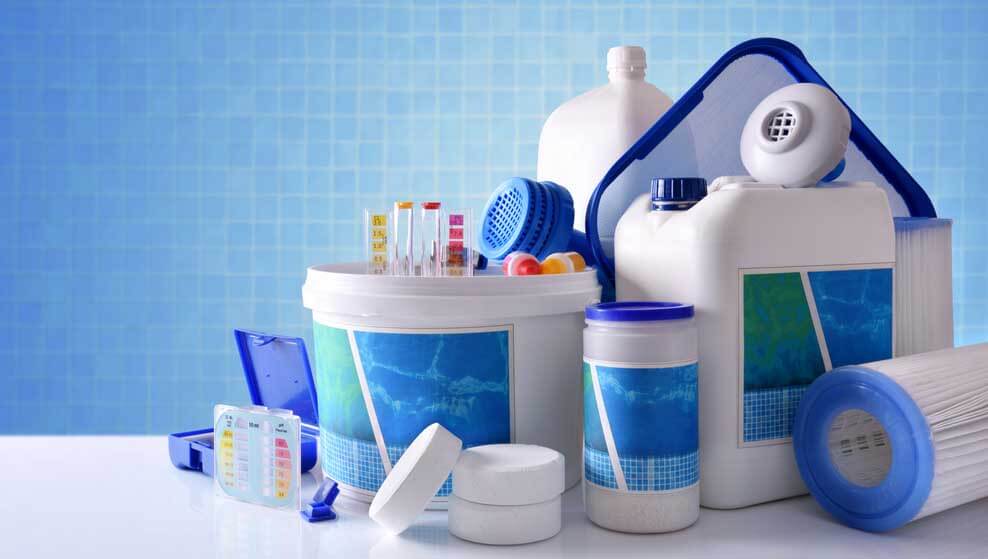

Ozone pool systems are excellent at oxidizing organic matter and reducing sanitizer demand, but they do not eliminate the need for supplementary pool chemicals. The most successful ozone-assisted pool operations use a strategic combination of ozone and targeted chemicals to achieve water clarity, balanced chemistry, and safe disinfection residuals. This guide explains the top chemicals that integrate well with ozone systems, why they matter, and how to use them effectively.
Before diving into specific chemicals, it helps to understand how ozone pool systems change the chemical equation. Ozone’s powerful oxidation provides several advantages:
However, ozone does not eliminate the need for balanced water chemistry. It enhances performance but still depends on sound chemical management. Think of ozone as doing the heavy oxidation work while chemicals maintain the background conditions for optimal water quality. The Pool & Hot Tub Alliance (PHTA) puts it plainly: ozone leaves little or no residual in the pool, so it must be used with an EPA-registered primary sanitizer, and NSF/ANSI Standard 50 requires ozone to be used in conjunction with chlorine (PHTA technical bulletin, Ozone Generating Systems).
| Chemical Parameter | Traditional Pool | Ozone Pool | Why It’s Different |
|---|---|---|---|
| Free chlorine | 1.0-3.0 ppm | 0.5-1.0 ppm | Ozone handles primary oxidation |
| Combined chlorine | Below 0.5 ppm | Below 0.2 ppm | Ozone destroys chloramines |
| pH | 7.2-7.6 | 7.2-7.6 | Same, critical for both ozone and chlorine |
| Total alkalinity | 80-120 ppm | 80-120 ppm | Same, buffers pH |
| Calcium hardness | 200-400 ppm | 200-400 ppm | Same, prevents corrosion/scaling |
| Cyanuric acid | 30-50 ppm | 20-40 ppm | Lower needed, less chlorine to protect |
| Shock frequency | Weekly | Monthly or as needed | Ozone provides continuous oxidation |
These ozone pool targets are for residential pools. Public and commercial pools must hold the sanitizer residual set by state or local code, ozone or not, as the PHTA bulletin notes.
Even in ozone pools, chlorine remains the baseline residual sanitizer to protect water between circulation cycles. Ozone handles oxidation and destroys many contaminants, but it does not last long enough in water to provide persistent protection.
When combined with low levels of chlorine:
For ozone pools, target 0.5-1.0 ppm free chlorine, enough for residual protection but far less than the 1-3 ppm traditional pools require. Learn more about why ozone pools still need some chlorine.
Ozone is most effective when pool pH is optimal (7.2-7.6). pH affects both ozone and chlorine effectiveness:
Pro tip: Ozone gas itself is not what moves pH, but most pools drift upward as aeration drives carbon dioxide out of the water, and a venturi injector adds aeration. Test pH twice a week in an ozone pool and correct small drifts with acid before they become big ones.
Total alkalinity (TA) acts as a buffer for pH, preventing rapid swings that can happen when ozone oxidizes organic material. For ozone systems:
Sodium bicarbonate (baking soda) raises alkalinity without significantly affecting pH. Muriatic acid lowers both alkalinity and pH. Proper TA sets the stage for stable ozone and chlorine performance.
Ozone does not impact mineral content directly, but water chemistry balance still matters. Calcium hardness prevents both corrosion and scaling:
Calcium chloride raises hardness. Lowering hardness requires partial water replacement or a reverse osmosis service. Balanced hardness prevents the milky cloudiness that many ozone pool owners mistake for an ozone system problem. See our guide on fixing cloudy water in ozone pools.
Cyanuric acid (CYA) shields chlorine from UV degradation in outdoor pools. Even in ozone systems:
Important: CYA accumulates over time and doesn’t break down. The only way to lower it is partial water replacement. Use unstabilized chlorine (liquid or cal-hypo) when CYA is already at target levels.
Shock treatments are periodic boosts in oxidation. In ozone systems, shock chemicals help manage organic load when usage spikes or after heavy rain or contamination events.
Potassium peroxymonosulfate (MPS/Potassium monopersulfate):
Calcium hypochlorite or sodium dichlor:
Ozone advantage: Traditional pools need weekly shocking. Ozone pools typically need shocking only monthly or after specific events (heavy use, rain, high temperatures).
Source water with high iron, copper, or manganese can cause staining and discoloration. Metal sequestrants bind minerals to keep them soluble, preventing:
Note: Ozone actually oxidizes dissolved metals (Fe²⁺ → Fe³⁺), which makes them filterable. This is a benefit of ozone treatment, but it means iron-rich water can temporarily cause discoloration as metals are oxidized. Sequestrants help manage this transition.
Ozone breaks down organic contaminants, but very fine particles may remain suspended, causing hazy water. Clarifiers aggregate microscopic particles into filterable clumps.
Best clarifiers for ozone pools:
Flocculants are a different tool: products such as aluminum sulfate floc settle debris on the pool floor so you vacuum it to waste, bypassing the filter. They are a one-off fix for very cloudy water, not a routine ozone pool product. Use clarifiers only as needed, too.
Organic matter such as body oils, lotions, sunscreen, and cosmetics create film and increase both chlorine and ozone demand. Enzyme products break down these compounds at the source, reducing:
Enzymes are especially valuable in high-bather-load pools, pools used by children (sunscreen), and vacation rental pools. They complement ozone’s oxidation by targeting the specific organic compounds that create the most issues. Weekly dosing per manufacturer instructions is typical.
Protecting pool surfaces and equipment is critical in any pool, but especially important in ozone systems where the Langelier Saturation Index (LSI) should be carefully managed:
These chemicals work alongside proper water balance to preserve long-term system integrity and avoid costly equipment damage.
Not all pool chemicals play well with ozone systems:
| Chemical | Concern | Recommendation |
|---|---|---|
| Copper-based algaecides | Ozone oxidizes copper → green staining | Avoid or use with sequestrant |
| Flocculants (floc) | One-off settling product, vacuum to waste | Use a chitosan or enzyme clarifier for routine haze |
| Biguanide (PHMB) sanitizers | Corona discharge ozone may destroy some of the PHMB | Only UV ozone systems are listed as usable with biguanide |
| Bromine in pools | Ozone can turn bromide into bromate | PHTA does not recommend ozone with bromine in pools; use chlorine |
| High CYA (above 50 ppm) | Reduces chlorine effectiveness | Keep CYA at 20-40 ppm |
| Excessive algaecides | Unnecessary with proper ozone + chlorine | Use only for active algae treatment |
| Task | Frequency | Target |
|---|---|---|
| Test free/combined chlorine | 2-3x per week | FC: 0.5-1.0 ppm, CC: below 0.2 ppm |
| Test and adjust pH | 2-3x per week | 7.2-7.6 |
| Test alkalinity | Weekly | 80-120 ppm |
| Test calcium hardness | Monthly | 200-400 ppm |
| Test CYA | Monthly | 20-40 ppm |
| Add enzyme product | Weekly | Per label directions |
| Non-chlorine shock | As needed (monthly typical) | 1 lb per 10,000 gal |
| Metal sequestrant | Monthly (if metals in source water) | Per label directions |
For a complete maintenance routine, see our ozone pool maintenance guide.
| Chemical Category | Without Ozone (Annual) | With Ozone (Annual) | Savings |
|---|---|---|---|
| Chlorine/sanitizer | High running cost | Low running cost | 70-80% |
| Shock treatments | Moderate running cost | Low running cost | 70% |
| pH adjusters | Low running cost | Low running cost | 0% (similar) |
| Algaecide | Low running cost | Low running cost | 70-100% |
| Clarifiers | Low running cost | Low running cost | 70-100% |
| Enzymes | Low running cost | Low running cost | Increase (worth it) |
| Total | High running cost | Moderate running cost | Lower overall |
For a full financial analysis, see our ozone pool vs chlorine pool cost comparison.
For each chemical category in this guide, these are the products we point readers to, chosen from published label directions and how well they fit a low-chlorine, low-stabilizer ozone routine.
Affiliate links: As an Amazon Associate, Delozone earns from qualifying purchases, at no extra cost to you. Full disclosure
For ozone pools targeting 0.5-1.0 ppm free chlorine, liquid chlorine is the easiest residual to fine-tune: it adds no cyanuric acid, so you can hold CYA in the 20-40 ppm range this guide recommends. Stabilized 3-inch tablets (trichlor) are convenient, but every tablet adds CYA, which slowly works against the low-stabilizer goal. If you use tablets, test CYA monthly and switch to liquid once it nears 40 ppm.
The HTH MPS Shock (monopersulfate) is the right shock oxidizer for ozone pools. Adds zero chlorine, swimmer-ready in 15 minutes, fully compatible with ongoing ozone treatment. Use it after a heavy bather load or a thunderstorm, exactly the situation where ozone-alone isn’t enough.
The Taylor K-2006 Complete pool test kit is a drop-count titration kit that covers free chlorine, combined chlorine, pH, alkalinity, calcium hardness, and cyanuric acid. Its FAS-DPD chlorine test reads in 0.2 ppm steps with the larger sample size, which matters when your target window is only 0.5-1.0 ppm. Reagents are sold separately, so you refill rather than rebuy the kit.
If you don’t want to titrate with the Taylor kit for routine daily checks, the AquaChek 7-Way Test Strips deliver fast 60-second readings on the seven core parameters. Less precise than the Taylor kit but accurate enough for “is the pool safe to swim in right now?” decisions. Pair the two: Taylor weekly for full chemistry, AquaChek daily for safety check.
Jack’s Magic The Magenta Stuff is a metal sequestrant specifically formulated for copper, iron, and manganese, the metals that ozone oxidizes and precipitates as stains if not chelated first. Ozone pool owners on well water or with copper plumbing should dose this monthly. The bottle’s bright magenta color makes it impossible to confuse with other chemicals in a busy pool shed.
No. Ozone significantly reduces chlorine demand and shock frequency, but you still need a residual sanitizer (low chlorine), pH management, alkalinity, calcium hardness, and stabilizer (outdoor pools). Think of ozone as doing the heavy lifting while chemicals maintain balance.
Not in a pool. The PHTA ozone bulletin says ozone is appropriate with chlorine but not recommended with bromine in residential or commercial pools, because ozone can turn bromide into bromate. Spas are different: spa ozonators produce low ozone levels, and PHTA lists them as appropriate with all EPA-registered sanitizers, bromine included.
Yes. Ozone takes over most of the oxidation work and destroys chloramines, so chlorine consumption drops, and shock is needed less often. How much you save depends on the generator’s output, how many hours it runs, and bather load, so track your chlorine use for a few weeks before and after installing it.
Use chitosan-based or enzyme-based clarifiers for best compatibility. Avoid aluminum-based flocculants which can clog ozone injectors. Use clarifiers sparingly, ozone pools should rarely need them if properly maintained.
Monthly or as needed, far less than traditional pools that need weekly shocking. Non-chlorine shock (MPS) is preferred for routine use. Use chlorine shock only for specific situations like suspected contamination or algae.
Not strictly necessary, but highly recommended. Enzymes break down oils and organics that even ozone can’t fully eliminate, reducing scum lines, filter clogging, and overall ozone demand. They’re especially valuable for heavily used pools.
No. Ozone breaks down quickly and leaves little or no residual in the pool, so nothing protects the water between passes through the equipment. PHTA states that every ozone generating system must be used with an EPA-registered sanitizer, and NSF/ANSI Standard 50 requires ozone to be paired with chlorine.
The chemical list stays the same, but the doses can shift. Corona discharge units produce a higher concentration of ozone than UV units (River Pools), so a pool on a corona discharge system usually holds its low chlorine target more easily. The type also matters for biguanide: PHTA lists only UV ozone systems as usable with it.
The Delozone Editorial Team researches water treatment, pool and spa, and indoor air products for independent buying guides. We compare products using manufacturer specifications, certification listings such as NSF/ANSI, UL, AHAM and Energy Star, published third-party test data and verified owner feedback. We do not sell products, and affiliate commissions never decide what we recommend.