Independent buying guides for home air, water and safety.
As an Amazon Associate, Delozone earns from qualifying purchases.
Independent buying guides for home air, water and safety.
As an Amazon Associate, Delozone earns from qualifying purchases.


One of the most common questions about ozone water treatment is how long ozone remains active in water. The short answer: ozone typically has a half-life of 15-30 minutes in water at room temperature, meaning it decomposes back to oxygen relatively quickly. But the actual duration depends heavily on water conditions. This guide breaks down the factors that determine ozone persistence and what it means for your specific application.
Ozone (O₃) is inherently unstable: that extra oxygen atom wants to break free. In water, ozone gradually decomposes through a process called autodecomposition, reverting to regular dissolved oxygen (O₂).
The half-life is the time it takes for the ozone concentration to drop by 50%. Starting with 1.0 mg/L of dissolved ozone:
Tools for checking an ozone system
Compare options in our hot tub ozone generator guide →
Affiliate links: as an Amazon Associate, Delozone earns from qualifying purchases. We do not show prices because they change daily.
| Water Condition | Approximate Half-Life | Time to Near-Zero |
|---|---|---|
| Distilled water at 15°C (59°F) | 30-40 minutes | 2.5-3 hours |
| Distilled water at 20°C (68°F) | 20-30 minutes | 1.5-2.5 hours |
| Distilled water at 35°C (95°F) | 8-12 minutes | 40-60 minutes |
| Clean tap water at 20°C | 15-20 minutes | 1-1.5 hours |
| Pool water at 26°C (79°F) | 10-15 minutes | 45-75 minutes |
| Hot tub water at 38°C (100°F) | 5-8 minutes | 25-40 minutes |
| Water with high organic load | 1-5 minutes | 5-25 minutes |
| Wastewater | Under 1 minute | Under 5 minutes |
These are approximate values; actual half-life depends on multiple interacting factors discussed below.
Temperature is the single biggest factor. Higher temperatures accelerate ozone decomposition dramatically:
This is why ozone decomposes much faster in hot tubs and heated pools than in cold drinking water. It’s also why ozone dissolves better in cold water: both solubility increases and decomposition slows.
Water pH significantly affects ozone stability. In alkaline (high pH) water, ozone decomposes faster because hydroxide ions (OH⁻) catalyze the breakdown:
For pool owners, maintaining proper pH (7.2-7.6) helps balance ozone stability with effective disinfection.
Dissolved organic matter in water reacts with and consumes ozone. Water with high organic content, such as untreated source water, heavily used pool water, or wastewater, will consume ozone almost instantly. This consumption is called “ozone demand.”
Before ozone can provide lasting residual, all of the ozone demand must be satisfied first. This is why properly sizing your ozone system requires understanding your water’s ozone demand.
Certain dissolved minerals accelerate ozone decomposition:
Well water with high iron or manganese content has very high ozone demand, and ozone will not persist until these minerals are oxidized and removed.
Ultraviolet light breaks down ozone. Ozone in water exposed to sunlight decomposes faster than ozone in covered or shaded water. This is relevant for outdoor pools and open water treatment tanks.
In a typical pool at 26-28°C, ozone lasts approximately 10-15 minutes. This is why pool ozone systems inject ozone into the return plumbing, giving it time to react with contaminants before water enters the pool. By the time treated water reaches swimmers, most ozone has already decomposed.
This is also why pools still need a small chlorine residual: ozone can’t provide persistent protection throughout the pool volume because it decomposes too quickly.
At 38-40°C, ozone lasts only 5-8 minutes. This means spa ozone systems need to run frequently to maintain effective treatment. The high temperature actually works as a safety feature: any residual ozone decomposes before it could affect bathers.
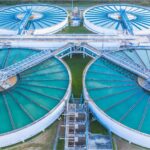
Municipal water plants use ozone contact chambers with 10-20 minutes of contact time at controlled temperatures. This ensures adequate CT (concentration × time) for disinfection before ozone naturally decomposes. By the time water enters the distribution system, ozone is essentially gone, which is why chlorine or chloramine is added as a secondary residual disinfectant.
Bottled water is typically ozonated at 1-2 mg/L. At bottling plant temperatures (15-20°C), ozone persists long enough to sanitize the water and the bottle interior, then decomposes to oxygen before the consumer opens it. This is why many bottled waters list “ozonation” as a treatment method.
Home ozone water treatment units have contact chambers sized to provide 4-10 minutes of ozone contact before dispensing. At typical cold water temperatures (10-15°C), this provides effective treatment with minimal residual at the tap.
In some applications, you may want ozone to persist longer. Strategies include:
Sometimes you want ozone to decompose quickly (for example, before water enters an aquarium):
Ozone that escapes from water (off-gassing) behaves differently in the air around your equipment. Germany’s Institute for Occupational Safety and Health (IFA/DGUV) puts the half-life of ozone in indoor air at roughly 30 minutes, with reactions with other airborne compounds speeding up the breakdown. Ventilation and room conditions change that number, so do not count on it clearing on its own.
That matters because dissolved ozone in water is harmless once it decomposes, while ozone gas irritates the lungs. The OSHA permissible exposure limit is 0.1 ppm averaged over an 8-hour workday. In practice:
Ozone itself never lingers, but one byproduct can. When the source water contains bromide, ozone can oxidize it to bromate. Unlike ozone, bromate does not decompose back into something harmless on its own.
The US EPA lists bromate as a drinking water disinfection byproduct with a maximum contaminant level of 0.010 mg/L. Treatment plants manage this by controlling ozone dose and water chemistry. For a home drinking water setup on well water, a lab test for bromide before adding ozone treatment is a sensible first step.
Two related terms that often cause confusion:
Ozone demand is the amount of ozone consumed by reactive substances in the water before any residual can form. Think of it as the water’s “appetite” for ozone. Until demand is satisfied, no measurable ozone residual exists.
Ozone residual is the measurable dissolved ozone remaining after demand is met. This residual continues to disinfect and then gradually decomposes to oxygen.
For effective treatment, your ozone system must produce enough ozone to satisfy the demand AND provide a useful residual for disinfection. This is why system sizing matters.
If you want to know how much ozone is in your water and how long it lasts, you can test with:
For most pool and spa owners, regular testing of chlorine levels and ORP is sufficient; you don’t need to measure dissolved ozone directly.
No. Ozone always decomposes back to oxygen. Depending on conditions, ozone lasts from a few minutes to about an hour in water. It cannot persist indefinitely.
Almost certainly not. Even if your water utility uses ozone treatment, the ozone decomposes long before water reaches your home through the distribution system. Utilities add chlorine or chloramine as a secondary disinfectant specifically because ozone doesn’t last.
Water is safe to drink immediately after ozone treatment. Ozone-treated water is consumed worldwide: the ozone itself poses no risk in the water, and residual ozone reverts to oxygen within minutes.
Yes, significantly. In cold water (10-15°C), ozone can last 30+ minutes. In warm pool water (28°C), it lasts about 10-15 minutes. In hot tub water (38°C), it lasts only 5-8 minutes. Temperature is the biggest factor in ozone persistence.
Not long. Using the half-life table above, a glass of ozonated water at room temperature loses about half its ozone in 20-30 minutes and has little left after 2 hours. If you use ozonated water for rinsing or cleaning, use it right after it is made, and keep it cold to slow the loss.
Ozone gas is, which is why the OSHA workplace limit is 0.1 ppm over 8 hours. Dissolved ozone in treated water is not a concern, because it reverts to oxygen within minutes. The practical risk for homeowners is breathing ozone that off-gasses near the generator, so keep equipment areas ventilated.
Because ozone decomposes within minutes and cannot provide residual protection throughout the pool. Chlorine provides the persistent residual needed to handle contaminants introduced between filtration cycles. However, with ozone doing the heavy lifting, you only need 0.5-1.0 ppm chlorine instead of the usual 1-3 ppm.
The Delozone Editorial Team researches water treatment, pool and spa, and indoor air products for independent buying guides. We compare products using manufacturer specifications, certification listings such as NSF/ANSI, UL, AHAM and Energy Star, published third-party test data and verified owner feedback. We do not sell products, and affiliate commissions never decide what we recommend.