Independent buying guides for home air, water and safety.
As an Amazon Associate, Delozone earns from qualifying purchases.
Independent buying guides for home air, water and safety.
As an Amazon Associate, Delozone earns from qualifying purchases.


Is an ozone pool system worth the investment compared to a traditional chlorine-only pool? The upfront cost is higher, but the long-term savings are significant. This guide breaks down every cost category — equipment, chemicals, maintenance, energy, and equipment longevity — to give you a real-world comparison over 1, 5, and 10 years.
A traditional chlorine pool requires minimal sanitation equipment beyond the basic pump, filter, and plumbing that every pool has. The ongoing cost is primarily chemical:
| Item | Cost |
|---|---|
| Chlorine feeder (automatic) | $100–$300 |
| Test kit | $20–$50 |
| Chemical storage | Minimal |
| Total upfront | $120–$350 |
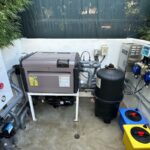
An ozone pool adds a generator, venturi injector, check valve, and ozone-rated tubing to the existing setup:
| Item | Cost |
|---|---|
| Ozone generator (residential CD) | $600–$1,500 |
| Venturi injector | $50–$100 |
| Check valve + ozone tubing | $30–$60 |
| Professional installation (optional) | $200–$500 |
| Total upfront | $880–$2,160 |
Upfront cost difference: An ozone system costs $500–$1,800 more than a chlorine-only setup. This is the number most pool owners fixate on — but it tells only a fraction of the story.
This is where the ozone advantage becomes dramatic.
| Chemical | Annual Cost |
|---|---|
| Chlorine (liquid, tabs, or granular) | $300–$600 |
| Shock treatment (weekly) | $150–$250 |
| Algaecide | $60–$120 |
| pH adjusters (acid/soda ash) | $50–$100 |
| Cyanuric acid (stabilizer) | $30–$50 |
| Clarifier | $30–$60 |
| Total annual chemicals | $620–$1,180 |
| Chemical | Annual Cost |
|---|---|
| Chlorine (reduced 60–90%) | $50–$150 |
| Shock treatment (monthly or never) | $0–$50 |
| Algaecide (rarely needed) | $0–$30 |
| pH adjusters | $40–$80 |
| Cyanuric acid | $20–$40 |
| Clarifier (rarely needed) | $0–$20 |
| Total annual chemicals | $110–$370 |
Annual chemical savings: $400–$800 per year.
At the midpoint ($600/year savings), the ozone generator pays for itself in chemical savings alone within 1.5–3 years.
| Item | Annual Cost |
|---|---|
| Test reagents/strips | $30–$60 |
| Chlorinator cell replacement (salt systems) | $80–$160 (amortized) |
| Equipment corrosion repairs | $50–$200 |
| Total annual maintenance | $160–$420 |
| Item | Annual Cost |
|---|---|
| Test reagents/strips | $20–$40 |
| UV lamp replacement (if UV system) | $30–$80 |
| CD cell replacement (amortized over 4 years) | $40–$100 |
| Ozone tubing replacement | $10–$25 |
| Check valve replacement (amortized) | $5–$15 |
| Air dryer service (CD systems) | $15–$40 |
| Total annual maintenance | $120–$300 |
Maintenance costs are roughly comparable, with ozone pools actually trending slightly lower due to reduced corrosion-related repairs.
Residential ozone generators consume 50–100 watts during operation — roughly the same as a light bulb. Running 10 hours per day:
Annual energy cost: 50–100W × 10 hrs × 365 days = 182–365 kWh × $0.15/kWh = $27–$55 per year
This is a negligible addition to your pool’s energy budget, especially compared to the pump (750–2,000W) and heater (thousands of watts).
One of the least-discussed benefits of ozone pools is reduced equipment wear. High chlorine levels accelerate corrosion of:
These savings are difficult to quantify precisely but are consistently reported by pool professionals and ozone system owners. A conservative estimate is $100–$300 per year in extended equipment life.
Based on a 25,000-gallon residential pool with a mid-range corona discharge ozone system:
| Cost Category | Chlorine Only (10yr) | Ozone Pool (10yr) |
|---|---|---|
| Equipment (upfront) | $235 | $1,300 |
| Chemicals (10 years) | $9,000 | $2,400 |
| Maintenance (10 years) | $2,900 | $2,100 |
| Energy (generator, 10yr) | $0 | $400 |
| Generator replacement (year 8) | $0 | $900 |
| Equipment longevity savings | $0 | -$2,000 |
| 10-Year Total | $12,135 | $5,100 |
10-year savings with ozone: approximately $7,000.
The breakeven point typically falls between 18–30 months after installation, depending on pool size, chemical prices in your area, and how heavily you were dosing chlorine previously.
The financial case for ozone is strong, but many pool owners say the non-financial benefits matter more:
For full transparency, there are situations where the ozone investment makes less sense:
For most pools used regularly throughout the season, ozone pays for itself within 2–3 years and delivers substantial savings over the pool’s lifetime.
For specific product recommendations and current pricing, see our best pool ozone generators comparison. For a full overview of how ozone systems work, visit our ultimate guide to pool ozone systems.
The Delozone Editorial Team researches water treatment, pool and spa, and indoor air products for independent buying guides. We compare products using manufacturer specifications, certification listings such as NSF/ANSI, UL, AHAM and Energy Star, published third-party test data and verified owner feedback. We do not sell products, and affiliate commissions never decide what we recommend.