Independent buying guides for home air, water and safety.
As an Amazon Associate, Delozone earns from qualifying purchases.
Independent buying guides for home air, water and safety.
As an Amazon Associate, Delozone earns from qualifying purchases.


Understanding ozone concentration levels is essential for anyone using ozone water treatment, whether for a swimming pool, hot tub, drinking water, or commercial application. Too little ozone won’t disinfect properly; too much wastes energy or creates off-gassing concerns. This guide explains the units, recommended levels, and how to measure ozone for every common application.
Measuring ozone at home
For pool and spa sizing, see how to size an ozone system.
Affiliate links: As an Amazon Associate, Delozone earns from qualifying purchases, at no extra cost to you. Full disclosure
Ozone concentration is expressed differently depending on whether you’re measuring ozone in water or ozone in air:
| Parameter | Recommended Level | Notes |
|---|---|---|
| Dissolved ozone in return line | 0.2-0.5 mg/L | Where ozone does its work |
| Dissolved ozone in pool water | Less than 0.1 mg/L | Should be near zero in pool |
| Generator output (residential) | 500-2,000 mg/hr | Depends on pool volume |
| Generator output (commercial) | 5-50 g/hr | Based on bather load and volume |
| Chlorine residual with ozone | 0.5-1.0 ppm | Reduced from 1-3 ppm without ozone |
Ozone is injected into the plumbing and reacts with contaminants before water returns to the pool. By the time water reaches swimmers, ozone has decomposed. This is why the pool water concentration is near zero while the contact line concentration is higher. See our pool ozone system guide for complete details.
| Parameter | Recommended Level | Notes |
|---|---|---|
| Generator output | 50-200 mg/hr | Smaller volume, higher temperature |
| Dissolved ozone in spa water | Less than 0.1 mg/L | Decomposes fast at 38°C+ |
| Run time | 4-8 hours/day | During circulation cycles |
Hot tub ozone generators are typically smaller UV-based units. The high water temperature causes rapid ozone decomposition, so the generator needs to run frequently rather than produce high concentrations.
| Parameter | Recommended Level | Notes |
|---|---|---|
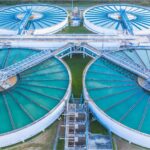
| Applied ozone dose | 1.0-3.0 mg/L | Initial dose before demand |
| Residual after contact | 0.2-0.4 mg/L | After contact chamber |
| CT value for virus inactivation | 0.5-1.0 mg/L·min | EPA Surface Water Treatment Rule |
| CT value for Giardia (99.9%) | 0.5-1.6 mg/L·min | Depends on temperature |
| CT value for Crypto (99%) | 1.0-2.0 mg/L·min | At 15°C |
| Residual at distribution | 0.0 mg/L | Ozone decomposes; chlorine takes over |
Municipal plants carefully control ozone dosing based on source water quality, temperature, and the specific contaminants they need to address. The CT (concentration × time) approach ensures consistent disinfection regardless of varying conditions. Learn more about the science behind ozone water purification.
| Parameter | Typical Level | Notes |
|---|---|---|
| Applied ozone dose | 1.0-2.0 mg/L | At bottling |
| Residual in sealed bottle | 0.2-0.4 mg/L | At time of capping |
| Residual after 24 hours | Near 0.0 mg/L | Decomposes to oxygen |
| FDA limit | 0.4 mg/L | At time of bottling |
| Parameter | Typical Level | Notes |
|---|---|---|
| Applied ozone dose | 5-15 mg/L | High organic demand |
| Contact time | 10-30 minutes | Extended for complete treatment |
| Disinfection target | Less than 200 CFU/100mL | Fecal coliform standard |
While ozone in water is safe and regulated for treatment, ozone in air has strict exposure limits because it’s a respiratory irritant. Understanding these levels is important for anyone operating ozone equipment.
| Concentration | Effect / Standard |
|---|---|
| 0.01-0.02 ppm | Human detection threshold (fresh, clean smell) |
| 0.05 ppm | Typical outdoor urban air level |
| 0.070 ppm (70 ppb) | EPA National Ambient Air Quality Standard (8-hour) |
| 0.1 ppm | OSHA Permissible Exposure Limit (8-hour TWA) |
| 0.3 ppm | OSHA Short-Term Exposure Limit (15-minute) |
| 0.5 ppm | Noticeable respiratory discomfort |
| 1.0 ppm | Significant health risk, evacuate area |
| 5.0+ ppm | Dangerous, can cause pulmonary edema |
Properly installed ozone water treatment systems keep ambient air levels well below 0.1 ppm. For more on this topic, see our ozone generator safety guide and ozone safety FAQ.
Indigo Blue Method
The standard laboratory method. Ozone decolorizes indigo trisulfonate dye proportionally to concentration. Available as simple test kits ($30-$50) or laboratory instruments.
DPD Method
Similar to chlorine testing. DPD (N,N-diethyl-p-phenylenediamine) reacts with ozone to produce a pink color. Some pool test kits include this. Less specific than indigo blue, can cross-react with other oxidizers.
ORP (Oxidation-Reduction Potential)
ORP meters measure the water’s overall oxidizing potential in millivolts (mV). While not a direct ozone measurement, ORP correlates with disinfection effectiveness:
Electrochemical Sensors
Digital dissolved ozone meters use amperometric or membrane-covered sensors for continuous real-time measurement. Used in commercial and industrial applications ($500-$5,000+).
Electrochemical Sensors
Portable or fixed-mount monitors that provide continuous readout. Used for workplace safety monitoring. Cost: $200-$2,000.
UV Absorption
Laboratory-grade instruments that measure UV light absorption at 254 nm. Highest accuracy but expensive ($3,000+). Used for calibrating other instruments.
The ozone concentration you can achieve depends on your generator output and your water volume/flow rate. Here’s a general sizing guide:
| Application | Water Volume | Generator Output Needed |
|---|---|---|
| Small hot tub (400 gal) | 1,500 L | 50-100 mg/hr |
| Large hot tub (800 gal) | 3,000 L | 100-200 mg/hr |
| Small pool (10,000 gal) | 38,000 L | 500-1,000 mg/hr |
| Medium pool (20,000 gal) | 76,000 L | 1,000-2,000 mg/hr |
| Large pool (40,000 gal) | 151,000 L | 2,000-4,000 mg/hr |
| Commercial pool | Varies | 5-50 g/hr |
| Point-of-use drinking water | 1-5 GPM flow | 100-500 mg/hr |
For a detailed sizing guide, see how to size an ozone system for your pool.
The CT value is the foundation of ozone disinfection design. It equals:
CT = C (ozone concentration in mg/L) × T (contact time in minutes)
Higher CT values mean more thorough disinfection. The required CT depends on what you’re trying to kill and the water temperature:
| Target Organism | Log Inactivation | CT Required (at 20°C) |
|---|---|---|
| Viruses | 4-log (99.99%) | 0.5-1.0 mg/L·min |
| Giardia cysts | 3-log (99.9%) | 0.5-0.8 mg/L·min |
| Cryptosporidium | 2-log (99%) | 1.0-2.0 mg/L·min |
| Bacteria (general) | 4-log (99.99%) | 0.1-0.2 mg/L·min |
For example, to achieve 99.9% Giardia inactivation at 20°C with a CT of 0.6 mg/L·min, you could use:
If you are sizing ozone for a spa rather than working out CT values by hand, the sizing table above narrows the field quickly: residential hot tubs fall in roughly the 50 to 200 mg/hr band depending on volume. Our hot tub ozone generator comparison sorts current units by output and fit, so you can match one to your tub and check its manual for the recommended ozone level.
Concentration numbers only help if you can see them in your own space. If you run an ozone generator indoors, or you want to keep an eye on the air after a shock treatment, a home monitor gives you a running reading instead of a guess. Check the spec sheet before you buy, because many units track particles, CO2 and VOCs while only some list an ozone sensor. Our guide to the best air quality monitors for home compares what each model actually measures.
Dissolved ozone in pool water should be below 0.1 mg/L (effectively zero). Higher concentrations in the pool itself are unnecessary because ozone does its work in the plumbing. Pool ozone systems are designed to achieve 0.2-0.5 mg/L in the return line, with nearly all ozone consumed before reaching the pool.
Most residential pools need an ozone generator producing 500-2,000 mg/hr, depending on pool volume. A 20,000-gallon pool typically needs about 1,000-1,500 mg/hr. See our sizing guide for specific recommendations.
An ORP reading of 700-750 mV or higher in pool water indicates good oxidation. Below 650 mV suggests insufficient treatment. ORP above 800 mV with an ozone system running indicates excellent disinfection conditions.
Excessively high ozone residuals (above 0.5 mg/L in pool water) are wasteful rather than dangerous, ozone decomposes quickly. However, high residuals can cause off-gassing, which means ozone escaping into the air above the water. Proper system sizing and operation prevent this.
For practical purposes in water treatment, 1 ppm = 1 mg/L. Technically, ppm is a ratio (parts per million by mass) while mg/L is a concentration, but in dilute aqueous solutions (like treated water), they are essentially identical.
The Delozone Editorial Team researches water treatment, pool and spa, and indoor air products for independent buying guides. We compare products using manufacturer specifications, certification listings such as NSF/ANSI, UL, AHAM and Energy Star, published third-party test data and verified owner feedback. We do not sell products, and affiliate commissions never decide what we recommend.