Independent buying guides for home air, water and safety.
As an Amazon Associate, Delozone earns from qualifying purchases.
Independent buying guides for home air, water and safety.
As an Amazon Associate, Delozone earns from qualifying purchases.

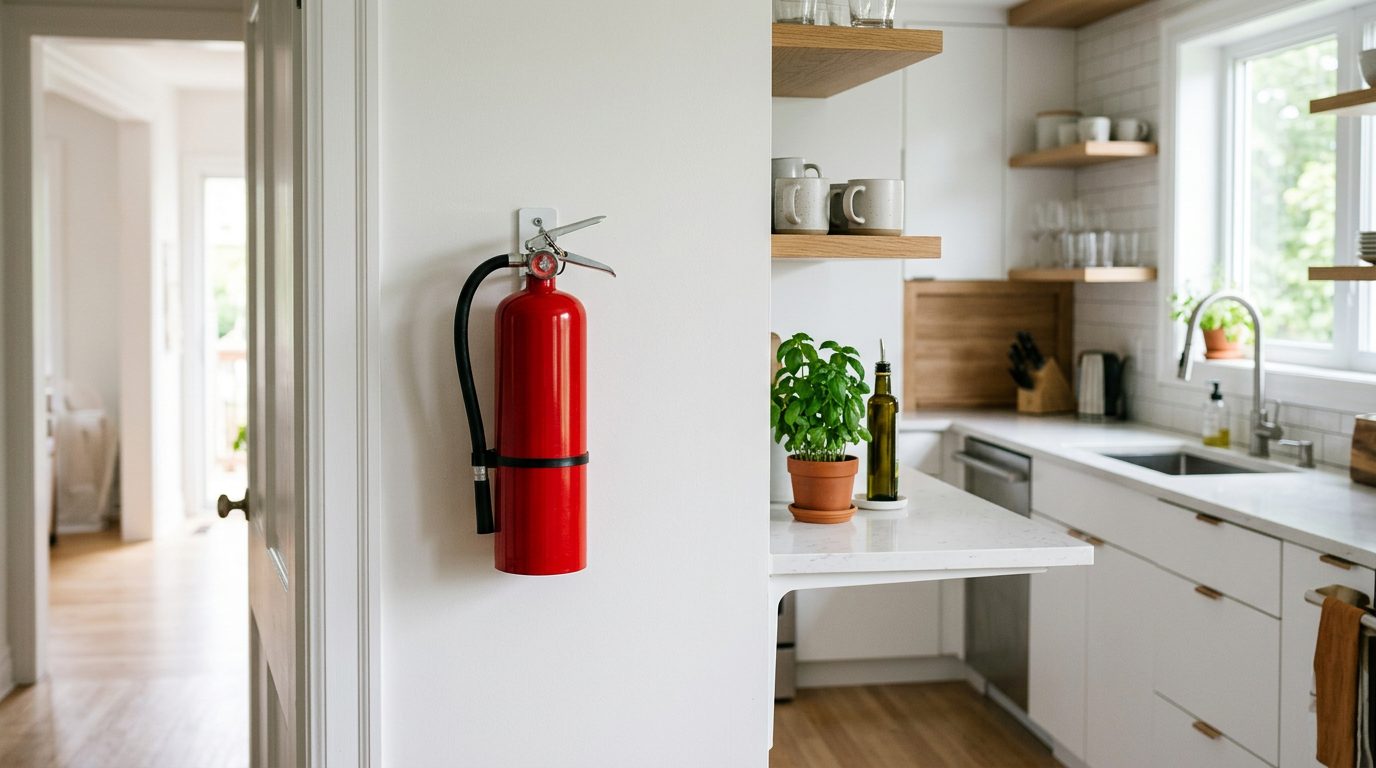
The best home fire extinguishers of 2026 compared by UL rating, size and refill options, plus USFA advice on placement, PASS technique and kitchen fires.

The best fire extinguisher for home use is a UL-listed multipurpose ABC extinguisher that is as large as the person using it can handle comfortably, and our top pick is the Amerex B402T, a 5-pound ABC dry chemical extinguisher rated 3-A:40-B:C, which means it holds the equivalent of 3.75 gallons of water for ordinary fires and can put out flammable liquid fires up to 40 square feet. Most homes are well served by one 5-pound ABC unit per level plus a smaller extinguisher in the kitchen, and every extinguisher is only a backup to working smoke alarms and a practiced escape plan.
Top picks at a glance
Affiliate links: As an Amazon Associate, Delozone earns from qualifying purchases, at no extra cost to you. Full disclosure
Key takeaways
Quick comparison: best home fire extinguishers for 2026
| Model | Agent and size | UL rating (maker) | Rechargeable | Best for | Buy |
|---|---|---|---|---|---|
| Amerex B402T | ABC dry chemical, 5 lb | 3-A:40-B:C | Yes (metal valve) | Main floor, whole home | Check price |
| Buckeye 10914 | ABC dry chemical, 5 lb | 3-A:40-B:C | Yes (aluminum valve) | Garage, workshop | Check price |
| First Alert HOME1 | ABC dry chemical | 1-A:10-B:C | Yes, by a professional | Each level, bedrooms area | Check price |
| Kidde Basic FA110 | ABC dry chemical, 2.5 lb | 1-A:10-B:C | No, single use | Budget coverage | Check price |
| Amerex B417T | ABC dry chemical, 2.5 lb | 1-A:10-B:C | Yes (metal valve) | Small spaces, vehicles | Check price |
| First Alert KITCHEN5 | Sodium bicarbonate | 5-B:C | No | Kitchen cabinet | Check price |
| First Alert AUTO5 | Dry chemical | 5-B:C | No | Car, boat trailer, garage | Check price |
The U.S. Fire Administration’s guide to choosing and using fire extinguishers describes 5 primary types, each designed for different fires. Class A is for ordinary materials like cloth, wood and paper. Class B is for combustible and flammable liquids like grease, gasoline, oil and oil-based paints. Class C is for plugged-in electrical equipment, and Class C extinguishers use an agent that does not conduct electricity.
The other two classes are rarely needed at home. Class D is for flammable metals and is usually found in factories. Class K is for vegetable oils, animal oils and fats in cooking appliances and is usually found in commercial kitchens such as restaurants and cafeterias.
The USFA notes that multipurpose extinguishers labeled “B-C” or “A-B-C” can be used on most types of home fires, and that most home improvement stores carry multipurpose extinguishers covering Class A through Class C. For a home, ABC is the default.
Every UL-listed extinguisher carries a rating such as 1-A:10-B:C. The USFA explains that the number before the A represents a multiple of 1.25 gallons of water, and the number before the B represents the area in square feet of flammable liquid fire the extinguisher can handle. The C shows it is safe on electrical fires.
So a 1-A:10-B:C extinguisher provides the equivalent of 1.25 gallons of water on a Class A fire and can extinguish a Class B fire of up to 10 square feet. A 3-A:40-B:C unit, like our top pick, provides the equivalent of 3.75 gallons of water and handles Class B fires up to 40 square feet.
Higher numbers mean more firefighting capacity, and they usually come with more agent and more weight. That is why the USFA’s advice is to choose the largest extinguisher the user can safely and comfortably operate.
The USFA says to always look for the “UL Listed” or “ULC Listed” label, which shows the extinguisher is certified by a nationally recognized testing laboratory. An extinguisher without that listing has no independent evidence that it will work when it matters.
Online marketplaces also sell aerosol fire sprays and novelty “fire extinguisher balls”. Some carry their own ratings, but they are not a substitute for a UL-listed ABC extinguisher with a pressure gauge.
All 7 of our picks are from established extinguisher makers and list a UL rating on the product or the manufacturer’s specification sheet.
Rechargeable extinguishers, usually with metal valves and heads, can be refilled by a fire equipment service after use or when the pressure drops. The Amerex, Buckeye and First Alert HOME1 picks are rechargeable, and First Alert says the HOME1 can be recharged by a certified professional after use.
Disposable extinguishers, often with plastic valves, are designed for single use and replacement. Kidde describes its Basic FA110 as residential and single-use only, with a 12-year service-free design.
The USFA notes that some extinguishers can be recharged while others must be replaced if the pressure is too low. Either way, an extinguisher that has been discharged, even briefly, should be recharged or replaced, because it may not hold pressure afterward.
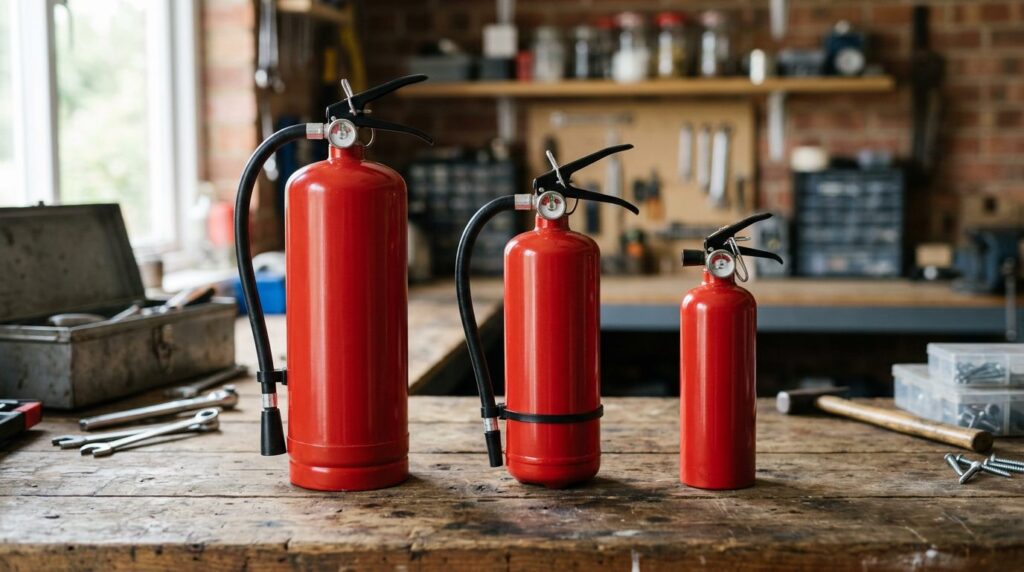
Home extinguishers typically range from about 2.5 to 10 pounds of agent. A 5-pound ABC unit, like the Amerex B402T or Buckeye 10914, is a common choice for a main living area because it gives substantial capacity while most adults can still handle it.
A 2.5-pound unit is easier to lift and store and suits kitchens, bedrooms areas, cars and small apartments, but it holds less agent and empties quickly. A 10-pound unit gives the most capacity but may be too heavy for some members of the household.
The USFA also notes that young children and older adults should not use fire extinguishers. Choose sizes for the adults who would realistically reach for them.
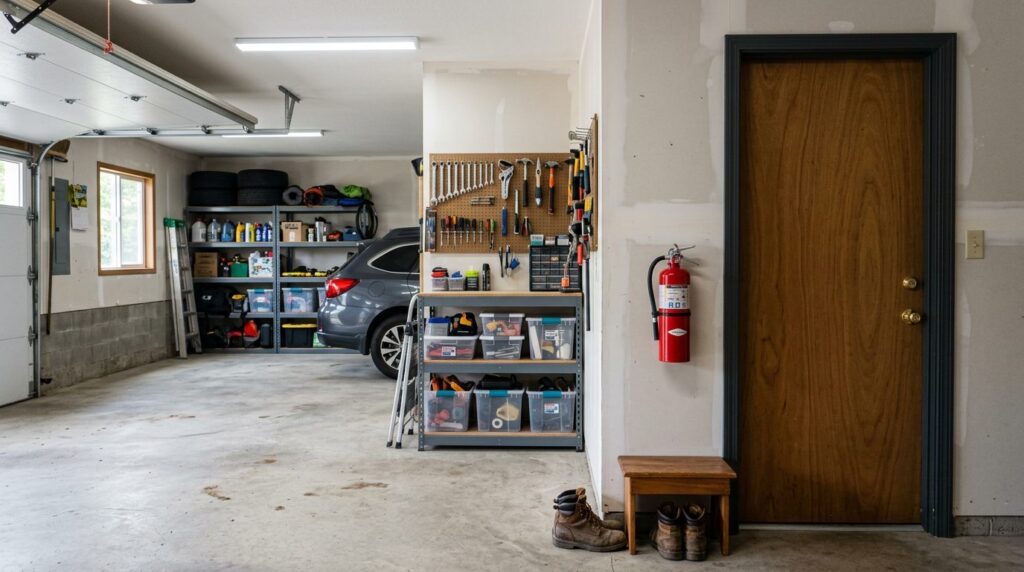
A practical plan for most homes is one extinguisher on each level, one in the kitchen and one in the garage or workshop. Mount them near exits, so you can fight a small fire with your escape route behind you, and where you can reach them in seconds.
In the kitchen, mount the extinguisher away from the stove, for example near the doorway, so you do not have to reach past a fire to get it. In the garage, mount it near the door into the house.
The USFA’s maintenance checklist starts with easy access: make sure nothing is blocking or limiting your ability to reach the extinguisher.
| Location | Suggested type | Example pick |
|---|---|---|
| Main living level | 5 lb ABC, 3-A:40-B:C | Amerex B402T |
| Upstairs near bedrooms | ABC, 1-A:10-B:C or larger | First Alert HOME1 |
| Kitchen | ABC or B:C kitchen unit | First Alert KITCHEN5 plus a pan lid |
| Garage or workshop | 5 lb ABC | Buckeye 10914 |
| Car or boat trailer | Compact B:C or ABC with bracket | First Alert AUTO5 or Amerex B417T |
Kitchen extinguishers like the First Alert KITCHEN5 use sodium bicarbonate and are rated 5-B:C, meaning they are designed for flammable liquid and electrical fires but not ordinary combustibles. They are compact enough to store in a cabinet.
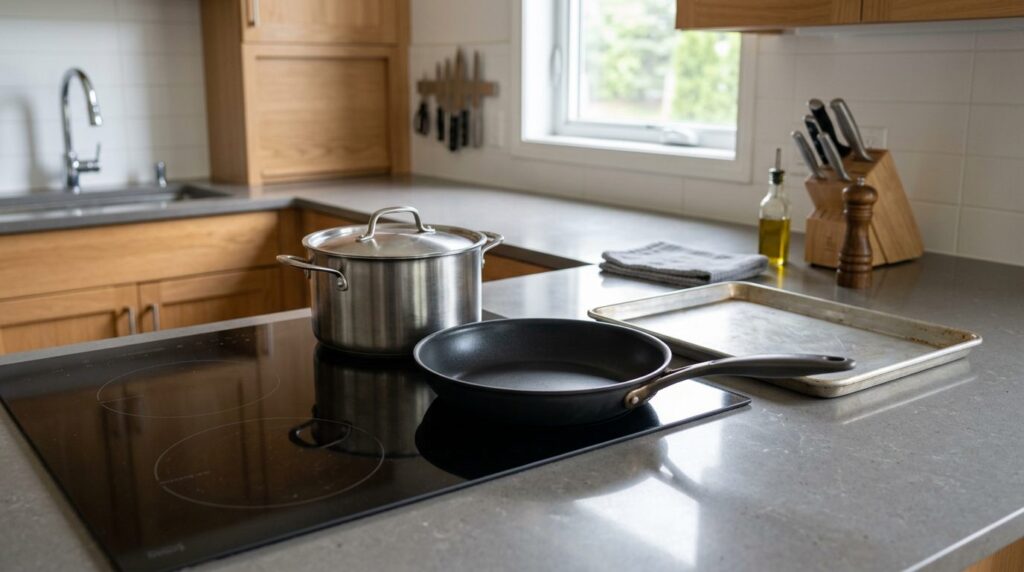
For a small stovetop pan fire, the USFA’s first advice is to keep a pan lid or baking sheet nearby and use it to cover the pan, which puts out the fire. Covering the pan and turning off the burner is often faster and cleaner than any extinguisher.
Class K extinguishers, designed for large volumes of cooking oil, are usually found in commercial kitchens. For home cooking, an ABC or B:C extinguisher plus a lid within reach covers typical risks.
Garages combine gasoline, solvents, paints and power tools, which is why a 5-pound ABC extinguisher with a sturdy bracket belongs there. The Buckeye 10914 uses an anodized aluminum valve and color-coded gauge, and the Amerex B402T includes a vehicle bracket.
For cars, a compact extinguisher must be secured so it cannot become a projectile. The First Alert AUTO5 includes a bracket and strap, and the Amerex B417T comes with a wall bracket.
Check the label for the manufacturer’s storage temperature range before keeping an extinguisher in a vehicle, and check its gauge more often there.
All 7 picks list a UL rating from the manufacturer and were in stock on Amazon with a working buy box when we checked in September 2026. We chose them on UL rating, size and weight, valve construction, rechargeability, included mounting hardware and the pattern of verified owner feedback.
Fire extinguishers are regulated shipping items, so availability and delivery options can vary by location; check that your address is eligible when you order.
The Amerex B402T is a 5-pound ABC multipurpose dry chemical extinguisher with a UL rating of 3-A:40-B:C, according to Amerex. By the USFA’s formula, that is the equivalent of 3.75 gallons of water on ordinary combustibles and coverage of flammable liquid fires up to 40 square feet.
It measures about 15.25 inches tall, 7.25 inches wide and 4.25 inches deep and includes a vehicle bracket. Amerex builds commercial-grade extinguishers with metal valves, which can be serviced and recharged by a fire equipment company.
At 5 pounds of agent it is heavier than basic home units, so make sure the adults who would use it can lift and aim it comfortably. For the main living level of most homes, it gives the most firefighting capacity of our picks.
Check Amerex B402T price on Amazon
The Buckeye 10914 is a 5-pound ABC multipurpose extinguisher that Buckeye’s specification sheet lists with a UL and ULC rating of 3-A:40-B:C. It uses an anodized aluminum valve assembly for strength and corrosion resistance and a color-coded gauge that shows operating status at a glance.
It measures 3.375 inches in diameter and about 16.4 inches tall and comes with a wall hook. The ABC dry chemical agent covers ordinary combustibles, flammable liquids and electrical fires, the mix you find in most garages and workshops.
Like the Amerex, it is a serviceable, rechargeable commercial-style unit. For a garage with fuel, solvents and power tools, it is our pick.
Check Buckeye 10914 price on Amazon
The First Alert HOME1 is a multipurpose extinguisher UL rated 1-A:10-B:C for common household fires including wood, paper, fabric, flammable liquid and electrical fires. First Alert says it has durable all-metal construction with a commercial-grade metal valve and trigger.
A pull pin with a safety seal deters accidental discharge, the waterproof label has 4-step instructions, and a mounting bracket is included. First Alert says it can be recharged by a certified professional after use, notes that it is U.S. Coast Guard approved for marine use and offers a 10-year limited warranty.
It is lighter than the 5-pound units and is often sold in multipacks, which makes it a good way to put one extinguisher on each level. For households that want a lighter extinguisher that can still be serviced, it is our pick.
Check First Alert HOME1 price on Amazon
The Kidde Basic FA110 is a 2.5-pound, UL-listed ABC extinguisher rated 1-A:10-B:C for basic home fires involving trash, wood, paper, liquids, gases and electrical equipment. It is one of the most widely bought home extinguishers on Amazon.
Kidde describes it as residential and single-use only, with a 12-year service-free design, all-metal construction, an easy pull pin and an easy-to-read pressure indicator: if the arrow is in the green, it is charged. It carries a 6-year limited warranty.
Because it is single-use, replace it after any discharge. For filling gaps, such as a second-floor hallway or a rental apartment, it is the most affordable UL-listed option on our list.
Check Kidde Basic FA110 price on Amazon
The Amerex B417T is a 2.5-pound ABC dry chemical extinguisher that Amerex lists with a UL and ULC rating of 1A:10B:C, and it comes with a wall bracket. It is a commercial-style unit in a compact size.
Its small size suits kitchens, bedrooms areas, RVs, boats and cars, where a 5-pound unit would be awkward to store. As an Amerex extinguisher with a metal valve, it can be serviced and recharged.
It has the same rating as the Kidde FA110 and First Alert HOME1 but a commercial-grade build. For anyone who wants a small extinguisher that can be recharged rather than thrown away, it is our pick.
Check Amerex B417T price on Amazon
The First Alert KITCHEN5 is a kitchen extinguisher UL rated 5-B:C, designed for flammable liquid and electrical fires, and it uses a sodium bicarbonate agent. It has a durable metal head and is compact enough to fit in a cabinet or the included bracket.
A metal pull pin with a safety seal helps prevent accidental discharge, and a push-button pressure check and waterproof label with simple instructions make it easy to maintain. First Alert offers a 10-year limited warranty and notes that the white cap must be removed with the packaging before use.
Because it is not rated for Class A fires, it complements rather than replaces an ABC extinguisher. Keep it with a pan lid near the stove, and keep an ABC unit by the kitchen door.
Check First Alert KITCHEN5 price on Amazon
The First Alert AUTO5 is a compact automotive extinguisher UL rated 5-B:C for flammable liquid and electrical fires. It has a durable metal head, a corrosion-resistant, color-coded metal gauge and a metal pull pin with safety seal.
It includes a mount, bracket and strap for secure placement, which matters in a moving vehicle, and a chemical-resistant, waterproof label with 4-step instructions.
Like the KITCHEN5, it is not rated for Class A fires. For a car, a boat trailer or a small garage where fuel and electrical fires are the main risk, it is a sensible, compact choice.
Check First Alert AUTO5 price on Amazon
Following the USFA’s advice, we only considered extinguishers with a UL or ULC listing and a published rating. We then compared ratings, favoring 3-A:40-B:C units for main living areas and 1-A:10-B:C units where weight and space matter.
We included two B:C specialist extinguishers, for kitchens and vehicles, because they are compact and suited to the fires most likely in those places, and we note clearly that they are not rated for ordinary combustibles.
Aerosol sprays, balls and unrated devices were excluded, because they do not carry the listings the USFA tells homeowners to look for.
We compared valve construction, metal versus plastic, because metal valves are generally what makes an extinguisher serviceable and rechargeable. We also noted pressure gauges or indicators, pull pins with tamper seals and included brackets.
Mounting hardware matters more than it seems: an extinguisher on a bracket by the door gets found in an emergency, while one in the back of a closet does not.
We did not assign scores or star ratings. Each pick is labeled with the place in the home it suits best.
We read verified owner reviews for patterns rather than star averages: pressure loss, gauge problems, damaged units on arrival and bracket quality. Every product was checked on Amazon in September 2026 for a working buy box.
Prices change often, so we link to current prices rather than printing numbers that go stale.
We did not discharge or test any extinguishers. Our choices rely on UL ratings, manufacturer specifications, USFA and NFPA guidance and verified owner feedback.
The USFA suggests a quick checklist before using an extinguisher. Have I alerted others in the building? Has someone called the fire department? Am I physically able to use an extinguisher? Is the fire small and contained to a single object or surface, like a pan or a wastebasket? Am I safe from the smoke? Do I have a clear escape route?
Use an extinguisher only when every answer is yes. The USFA says that if you are unsure whether it is safe, and in all other situations, alert others, leave the building and call 911 from a mobile phone or a neighbor’s phone.
“Use a fire extinguisher when all of these questions are answered yes.”
U.S. Fire Administration, Choosing and Using Fire Extinguishers
Fires grow fast. The USFA warns that when a smoke alarm sounds, you may have less than 2 minutes to get everyone outside, which is why working smoke alarms and an escape plan come before any extinguisher; see our guide to the best smoke detector for alarms built to the current standard.
The USFA teaches the word PASS. Pull the pin: hold the extinguisher with the nozzle pointing away from you and release the locking mechanism. Aim low: point the extinguisher at the base of the fire.
Squeeze the lever slowly and evenly. Sweep the nozzle from side to side across the base of the fire until it is out, and watch for re-ignition.
Keep your back to the exit while you work, and stop and leave if the fire grows or the extinguisher empties.
Cooking is by far the leading cause of home fires and home fire injuries, according to the U.S. Fire Administration’s cooking fire safety page. The USFA reports that fire departments responded to an estimated 170,000 home cooking fires in 2021, which caused an estimated 135 deaths and 3,000 injuries, and that unattended equipment was the leading factor in 37% of nonconfined home cooking fires.
The USFA’s advice is simple: stand by your pan, turn the burner off if you leave the kitchen, turn off the burner if you see smoke or the grease starts to boil, and keep a pan lid or baking sheet nearby to cover the pan if it catches fire. Covering the pan puts out the fire.
Never throw water on a grease fire. If a pan fire is larger than a lid can cover, or spreads beyond the stove, get out and call 911. NFPA’s home cooking fires research tracks these fires in detail.
An extinguisher only helps if someone knows a fire has started and has time to act. Working smoke alarms on every level and in every bedroom, interconnected so they all sound together, give that warning. The U.S. Fire Administration warns that you may have less than 2 minutes to get everyone outside once an alarm sounds.
Make a home escape plan with two ways out of every room and a meeting place outside, and practice it with everyone in the household. Children should learn to get out and stay out, never to fight a fire.
Add carbon monoxide alarms if you have fuel-burning appliances or an attached garage. Our guides to the best smoke detector and the best carbon monoxide detectors cover both.
The USFA points out that many adults might not know how or when to use fire extinguishers, and that fire departments can help with training and questions. Ask your local department’s non-emergency line whether they run practical training sessions.
At home, walk each adult through the PASS steps with the extinguisher in hand, without discharging it. Show them where each extinguisher is mounted and how to read its gauge.
Review the USFA checklist together: alert others, call the fire department, confirm the fire is small and contained, and keep a clear escape route. Deciding in advance makes the real decision faster.
Because cooking is by far the leading cause of home fires, the cheapest fire safety step is behavioral: stand by your pan, turn the burner off if you leave the kitchen and turn pot handles toward the back of the stove, as the USFA recommends.
The USFA also advises turning the burner off if you see smoke or the grease starts to boil, since fires start when the heat is too high. Keeping a pan lid or baking sheet within reach turns a pan fire into a non-event.
Outside the kitchen, keep space heaters away from anything that can burn, never leave candles unattended and have chimneys and heating equipment checked, which reduces the chance you will ever need the extinguisher.
Many landlords provide extinguishers, but tenants often find them missing, expired or out of reach. Check the gauge on any extinguisher in your unit, and if there is none, a compact UL-listed ABC unit like the Kidde Basic FA110 or Amerex B417T fits in a kitchen cabinet or closet near the door.
In apartment buildings, your first duty in a fire beyond a small pan fire is to leave and pull the building alarm on your way out, then call 911. Know where the stairwells are, since elevators should not be used in a fire.
Ask your building manager about extinguisher locations in hallways and about any fire safety training the building offers.
First Alert notes that its HOME1 extinguisher is U.S. Coast Guard approved for marine use, and boats and RVs have their own requirements for extinguisher types and mounting. Check the rules that apply to your vessel or vehicle before relying on a home extinguisher.
In any vehicle, the extinguisher must be secured in a bracket so it cannot become a projectile in a sudden stop. The First Alert AUTO5 includes a mount, bracket and strap, and the Amerex B402T includes a vehicle bracket.
For vehicle fires, the safest action is usually to stop, turn off the engine, get everyone out and away and call 911. Use an extinguisher only on a small fire you can reach safely.
The USFA states that young children and older adults should not use fire extinguishers. For households where the adults cannot comfortably lift and aim an extinguisher, escape planning and early warning matter even more.
Consider interconnected smoke alarms, alarms with strobes or bed shakers for people with hearing loss, and sleeping arrangements closer to exits. A lightweight extinguisher, such as a 2.5-pound unit, is easier to handle for those who can use one.
Family members and caregivers should know the plan, and some fire departments offer home safety visits for older residents. Ask your local department.
The USFA lists outdoor fires and grilling among its home fire safety topics. Keep grills well away from the house, deck railings and overhanging branches, and never leave a lit grill unattended.
A 5-pound ABC extinguisher mounted by the door to the patio, or in the garage near where the grill is stored, gives quick access for a small flare-up that spreads beyond the grill.
For a grease flare-up inside a gas grill, turning off the gas at the burners and tank and closing the lid is often the first step; follow your grill’s manual.

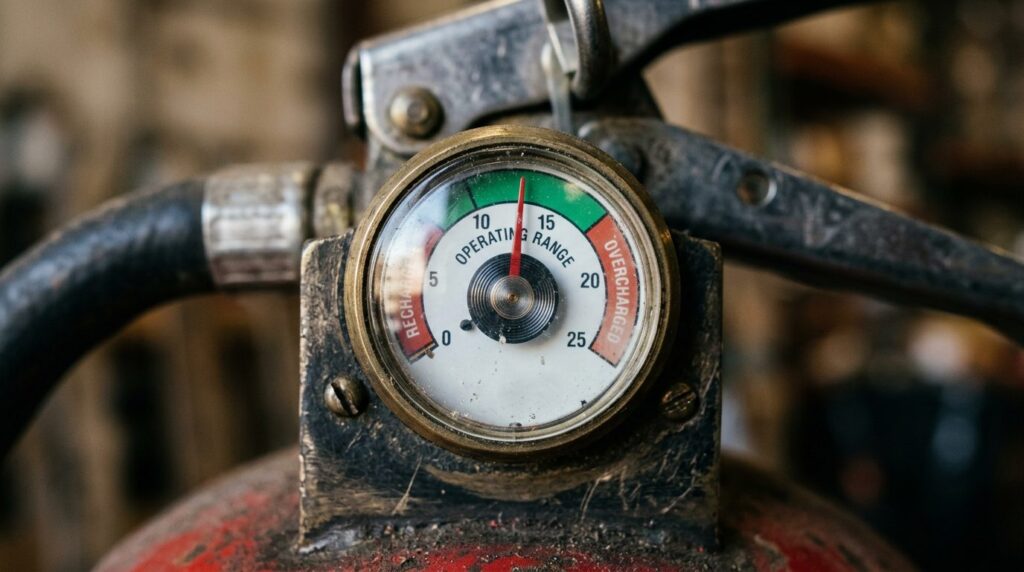
The USFA’s maintenance checklist covers four things. Easy access: nothing should block or limit your ability to reach it. The recommended pressure: many extinguishers have gauges that show when pressure is too high or too low.
Working parts: make sure the can, hoses and nozzles are not damaged, dented or rusted. Cleanliness: remove any dust, oil or grease from the outside.
A quick monthly look, when you test your smoke alarms, takes less than a minute and catches most problems.
Keep a simple log inside a kitchen cabinet door or in your phone: each extinguisher, its location, its purchase date and the date of the last check. When a gauge drifts out of the green or a unit reaches the end of its service life, the log tells you exactly which one needs attention.
The USFA notes that some extinguishers need to be shaken monthly, while others need to be pressure tested every few years. Follow the instructions on the label, which vary by model and agent.
Rechargeable extinguishers with metal valves, like the Amerex and Buckeye models, can be inspected and recharged by a fire equipment service. Disposable units, like the Kidde FA110, are replaced rather than serviced.
Write the purchase date on each extinguisher and keep the manual. It makes service intervals and warranty claims easier to track.
Once an extinguisher has been discharged, even briefly, have it recharged if it is rechargeable, or replace it. A partly used extinguisher may lose pressure and fail the next time.
Dry chemical agents leave a fine powder. Ventilate the area and clean up according to the manufacturer’s directions once the fire is completely out, and keep children and pets away until it is cleaned.
If there was any fire at all, even one you put out, let the fire department check that it has not spread into walls, cabinets or appliances.
An extinguisher is for small fires you can fight safely; if fire or smoke blocks the stairs, your plan needs a second exit from upstairs rooms. See our picks for the best fire escape ladder for two and three story homes, plus how to test fit one on your windowsill.
For small pan fires, many households pair their extinguisher with a fire blanket on the kitchen wall. It smothers a burning pan of oil without spraying powder across the room, and our guide to the best fire blanket covers sizes, standards and where to mount one.
A UL-listed ABC multipurpose extinguisher, because it covers ordinary combustibles, flammable liquids and electrical fires. Our top pick is the Amerex B402T, rated 3-A:40-B:C, with a lighter 1-A:10-B:C unit such as the First Alert HOME1 for other levels.
For most homes, a 5-pound ABC extinguisher on the main level is the practical balance of capacity and weight. The USFA recommends choosing the largest extinguisher the user can safely and comfortably operate, so a 10-pound unit makes sense only if the adults at home can handle it.
Choose a UL-listed model from an established maker with a pressure gauge and, ideally, a metal valve that can be serviced. The Amerex, Buckeye and First Alert HOME1 picks all fit that description.
According to the USFA, it means the extinguisher provides the equivalent of 1.25 gallons of water on ordinary combustible fires, can extinguish flammable liquid fires up to 10 square feet and is safe on electrical fires.
Near exits on each level, in the kitchen away from the stove and in the garage near the door to the house. Keep it where nothing blocks access, as the USFA recommends.
ABC extinguishers are rated for Class B flammable liquid fires, which include grease. For a small pan fire, the USFA’s first step is to cover the pan with a lid or baking sheet and turn off the burner. Never use water.
It depends on the model. Kidde describes its Basic FA110 as having a 12-year service-free design, while rechargeable extinguishers can be serviced and recharged. Check the gauge monthly and replace or recharge any extinguisher that has lost pressure or been used.
No. The USFA says young children and older adults should not use fire extinguishers. Teach children to get out and stay out, and practice your home escape plan.
Not for the whole home. Kitchen units like the First Alert KITCHEN5 are rated 5-B:C for flammable liquid and electrical fires, not ordinary combustibles such as wood, paper or fabric. Pair a kitchen unit with an ABC extinguisher on each level.
Most extinguishers have a gauge with a green zone; if the needle or arrow is in the green, the extinguisher is charged, as Kidde describes for the FA110. If it points to the recharge or overcharged area, the USFA’s checklist says pressure is too low or too high, so have it serviced or replace it.
Many fire departments offer training or answer questions about extinguishers, according to the USFA. Call your local department’s non-emergency number to ask about training sessions or home safety visits.
For the rest of your home safety setup, see our guides to the best carbon monoxide detectors and the best radon test kit.
Written by the Delozone Editorial Team. We research products using UL ratings, manufacturer specifications, U.S. Fire Administration and NFPA guidance and verified owner feedback, and we update guides when products or guidance change. How we work.
The Delozone Editorial Team researches water treatment, pool and spa, and indoor air products for independent buying guides. We compare products using manufacturer specifications, certification listings such as NSF/ANSI, UL, AHAM and Energy Star, published third-party test data and verified owner feedback. We do not sell products, and affiliate commissions never decide what we recommend.