Independent buying guides for home air, water and safety.
As an Amazon Associate, Delozone earns from qualifying purchases.
Independent buying guides for home air, water and safety.
As an Amazon Associate, Delozone earns from qualifying purchases.

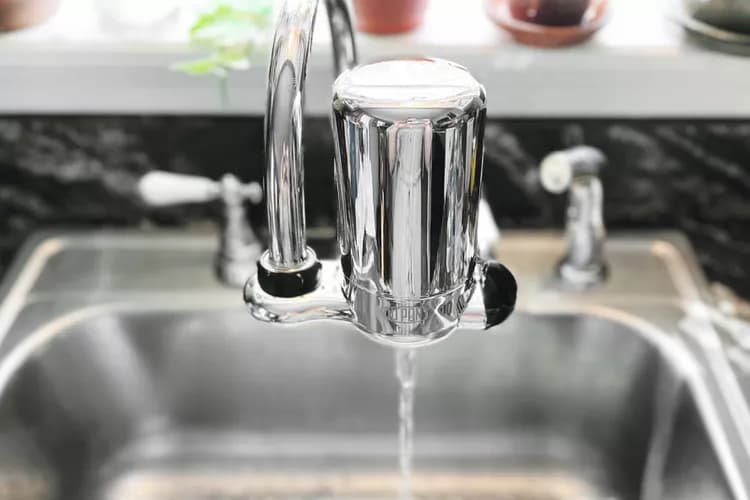

The best faucet water filter is the one that is certified for the contaminants in your water and actually fits your tap. In this guide we compare the faucet-mount systems sold widely in the US for 2026, using published certification listings, manufacturer spec sheets and independent reviews, so you can match a filter to your water report instead of to a brand name.
Top picks at a glance
Certifications and capacities are taken from manufacturer pages, certification summaries and the Amazon listings, not from our own testing.
Affiliate links: As an Amazon Associate, Delozone earns from qualifying purchases, at no extra cost to you. Full disclosure
We did not lab-test or install these filters ourselves. Instead, we shortlisted faucet-mount systems that are easy to buy in the US and then checked each one against public evidence:
Where we mention capacity or certification numbers, they come from the listing or spec sheet and we say so. We do not publish our own flow-rate or removal percentages.
Most faucet-mount filters use a carbon block. Some add ion-exchange resin (PUR) or KDF media and extra layers (Waterdrop). According to Tap Score’s faucet filter guide, carbon block is mainly used for chlorine, taste and odor and for suspended particles, while health claims such as lead or VOC reduction depend on the specific cartridge being certified for that contaminant.
That last point matters: a standard is granted contaminant by contaminant. A box that says “NSF 53” does not mean the filter is certified for every contaminant that standard covers, and “tested to NSF standards” is not the same as certified. Always open the certification list for the exact cartridge model.
Some carbon filters also keep calcium and magnesium in the water, which many people prefer for taste. PUR’s Mineral Core cartridge, for example, is marketed as filtering water over natural minerals for taste, per the PUR product page.
Faucet filters cover a narrow range of problems. Tap Score lists coliform and E. coli, viruses and other microbes, mold, nitrate, fluoride, arsenic and uranium as contaminants faucet filters are not appropriate for. PUR itself states that its faucet filters do not filter microbes. If your water report shows any of these, look at a certified reverse osmosis or whole-house system instead (see our home water filtration guide).
Flow rate affects how long it takes to fill a pot or a kettle. Carbon blocks need contact time, so filtered flow is slower than the unfiltered tap on every model here, and it drops further as a cartridge loads up. Manufacturers rarely publish a filtered flow figure, so we do not rank on it; if fast filling matters most, a pitcher plus the faucet’s normal stream, or an under-sink system, may suit you better.
Convenience also includes the ergonomics of the attachment: an easy lever between filtered and unfiltered water, a stable mount, and a body that does not hit the bottom of a shallow sink. Horizontal units sit along the spout, vertical units hang down, which is the main thing to check if your sink is shallow.
The PUR Plus horizontal system (model PFM400H) is the most widely certified faucet filter we found. PUR states it is NSF and WQA certified to reduce 70 contaminants, including lead and mercury, and Wirecutter names it its top faucet-mounted pick for the same reason. Tap Score’s summary of the RF-3375 and RF-9999 cartridges lists NSF/ANSI 42 (chlorine, Class I particulates), NSF/ANSI 53 (lead, mercury, several pesticides and VOCs, total PFAS) and NSF/ANSI 401 (pharmaceuticals, BPA, microplastics).
PUR rates each cartridge for up to 100 gallons or about 3 months, and the unit has a filter change light. Installation is tool-free on standard faucets: remove the aerator, fit the adapter and click the unit on.
Check PUR Plus price on Amazon
The Brita Elite Advanced faucet system uses a carbon block cartridge (FR200). Tap Score’s certification summary lists WQA certification to NSF/ANSI 42 (chlorine, Class I particulates, taste and odor), NSF/ANSI 53 (lead, asbestos, VOCs as chloroform and others) and NSF/ANSI 401 (BPA, estrone, ibuprofen, microplastics and others). Wirecutter counts 63 certified contaminants for Brita’s faucet filters, versus 70 for PUR.
The Amazon listing quotes a 4-month filter life and three spray options. Brita cartridges are stocked by most grocery and drug stores, which is handy if you would rather not order replacements online.
Check Brita Elite price on Amazon
The PUR Plus vertical system takes the same PUR cartridges, so the certifications above apply, but the housing hangs below the spout instead of along it. That layout can suit faucets with little room beside the spout; in shallow sinks the horizontal model usually leaves more clearance. Measure from the spout to the sink floor before you choose.
Capacity is the same 100 gallons per cartridge, according to the listing. Cartridges are interchangeable with the horizontal unit, so a household with two PUR systems needs only one kind of refill.
Check PUR Plus vertical price on Amazon
The Waterdrop FC-01 is a longer-life option: the listing rates its cartridge for 320 gallons. Waterdrop describes a multi-stage cartridge with carbon block and KDF media. According to Tap Score’s summary of Waterdrop’s 320-gallon faucet filter, its NSF certification covers NSF/ANSI 42 for chlorine, taste and odor only.
That makes it a good pick if your water is safe but tastes or smells of chlorine, and a poor pick if your concern is lead, PFAS or VOCs. In that case choose a PUR or Brita cartridge with NSF/ANSI 53 certification.
Check Waterdrop FC-01 price on Amazon
If you already own a PUR system, the genuine PUR replacement cartridge is the part that keeps the certifications valid. PUR notes that compatible third-party replacements are not guaranteed to offer the same water quality, and many cheaper “fits PUR” cartridges list only NSF/ANSI 42, if any certification at all.
The listing rates it for 100 gallons or about 3 months, with lead and microplastic reduction. Buying a multi-pack means you can swap the cartridge on schedule instead of when the indicator has been red for weeks.
Check PUR replacement filter price on Amazon
| Filter | NSF/ANSI 42 | NSF/ANSI 53 (incl. lead) | NSF/ANSI 401 | Rated cartridge life |
|---|---|---|---|---|
| PUR Plus (horizontal or vertical) | Yes | Yes | Yes | 100 gal / about 3 months |
| Brita Elite Advanced | Yes | Yes | Yes | About 4 months (listing) |
| Waterdrop FC-01 | Yes (chlorine, taste, odor) | No | No | 320 gal (listing) |
Sources: PUR product page, Tap Score certification summaries, Amazon listings. Certification can change when a manufacturer updates a cartridge, so check the current listing at the certifier before you buy.
Rated capacity is a laboratory figure at a set flow and contaminant load. Heavy daily use, sediment or high chlorine levels can use a cartridge up faster, which is why indicators count gallons or time rather than measure water quality. Replace on the indicator or the calendar, whichever comes first.
For a two-person household drinking and cooking with filtered water, a 100-gallon cartridge lasts roughly the 2 to 3 months the makers quote. Larger families will be closer to monthly changes, and that is where a longer-life cartridge or an under-sink system starts to make sense.
The upfront unit is the small part of the bill. Over a few years you mostly pay for cartridges, so compare the price per cartridge divided by its rated gallons. Multi-packs usually lower the cost per gallon. Prices change often, so use the buttons above to see current pricing rather than a figure we quote here.
Genuine cartridges cost more than generic “compatible” ones, but only the genuine cartridge carries the certification listed above. If lead reduction is the reason you bought the filter, that difference is worth paying.
Faucet-mount filters attach where the aerator screws on, and most kits include adapters for common male and female aerator threads. Wirecutter notes that no faucet-mounted filters work on faucets with integrated pull-out or pull-down sprayers, and the PUR listings specify compatibility with sinks that have external aerators. Check before you order:
If a faucet filter will not fit, see our picks for the best countertop water filters.
Faucet‑mounted filters excel at point‑of‑use treatment, but they do not address water quality issues that affect the entire plumbing network. Pairing a faucet filter with a whole‑house system can protect appliances, fixtures and bathing water as well.
A whole‑house sediment pre‑filter makes sense when your supply carries visible sediment, as this protects the faucet filter’s cartridge from premature clogging. The combined approach also reduces the load on the faucet filter, which helps it reach its rated capacity.
For detailed guidance on selecting and installing a whole‑house system, our home water filtration guide offers step‑by‑step instructions and a comparison of popular technologies.
Ozone water treatment is a chemical‑free method for disinfecting water and breaking down some organic contaminants. It is a whole‑system or point‑of‑entry treatment, not something you add to a faucet filter, and it does not replace a certified cartridge for lead or VOCs. Because faucet filters do not filter microbes, a disinfection step upstream is the right tool when microbial safety is the concern.
We explain how ozone systems work, where they make sense and how to size them in our ozone water treatment guide, which includes safety tips and maintenance recommendations.
Choosing the right combination of faucet and whole‑house filtration is easier once you know what is in your water. City customers can read their utility’s annual water quality report; private well owners should test at least once a year. Then pick a filter certified for the contaminants that actually show up.
Keep a simple checklist: confirm faucet compatibility, note the cartridge model you need, and put the next replacement date in your calendar the day you install a new cartridge.
Keeping the faucet attachment free of mineral buildup helps prevent leaks. We recommend wiping the exterior with a soft cloth dampened with a mild vinegar solution once a month.
After a period of non‑use, such as a vacation, run filtered water for a short time before drinking to flush the cartridge. This simple step can be done without removing the cartridge.
For models with removable heads, an occasional cleaning with a soft brush and a non‑abrasive cleaner removes stubborn deposits. Follow the manufacturer’s cleaning instructions so the housing and seals are not damaged.
Signs of reduced performance include slower flow, off‑taste, or a lingering chlorine odor. A quick taste check after each cartridge change gives you a baseline for comparison.
If you notice a sudden drop in flow, inspect the aerator adapter for clogs and clean it with a brush. A cartridge can also reach its capacity earlier than expected when the water carries more sediment or chlorine than usual.
LED indicators and color‑changing windows give visual cues, but they count gallons or time. A periodic water‑quality test using a home testing kit can confirm whether filtered water still meets your targets.
Before replacing a cartridge, turn off the tap and switch the lever to unfiltered. This prevents water spray and makes removal smoother.
Most cartridges feature a twist‑lock mechanism; rotate until the housing releases, then insert the new cartridge and lock it in place. Ensure the cartridge sits flush to avoid leaks.
After installation, flush the new cartridge for the time the manual specifies to clear loose carbon fines, then reset the indicator if your model requires it.
Yes, if your faucet has a removable aerator and your main concerns are chlorine taste, lead or common VOCs. A certified faucet filter gives filtered water on demand without plumbing work, and Wirecutter notes that faucet filters remove many more contaminants than pitcher filters and last longer between replacements. They are not worth it for microbes, nitrate, fluoride or arsenic, which they are not designed to remove.
Both make certified lead‑reducing faucet systems. PUR’s cartridges are certified for 70 contaminants and Brita’s for 63, according to Wirecutter, and PUR’s list includes total PFAS under NSF/ANSI 53 in Tap Score’s summary. Brita’s Elite cartridge is rated for a longer 4‑month life per its listing. If you want the widest certified list, choose PUR; if store availability of refills matters most, Brita is a good choice.
It depends on the cartridge’s certification. Lead‑certified models such as PUR Plus and Brita Elite are certified for chlorine, lead, mercury (PUR), several VOCs and pesticides, and some pharmaceuticals and microplastics. Chlorine‑only models are certified for taste and odor.
Follow the rating: PUR cartridges are rated for 100 gallons or about 3 months, Brita Elite for about 4 months, and the Waterdrop FC‑01 for 320 gallons. Replace sooner if flow drops sharply or taste returns.
No. Faucet filters need a standard threaded aerator. They do not fit faucets with integrated pull‑out or pull‑down sprayers, and some designer spouts need an adapter that is not in the box. Check the compatibility chart before you buy.
Yes, filtered flow is slower than the unfiltered tap because water needs contact time with the carbon. Flow drops further as the cartridge nears the end of its life. The bypass lever restores full flow for washing up.
A faucet filter protects water at the point of consumption, but a whole‑house system addresses contaminants that affect appliances, pipes and bathing water. Most city homes do fine with a faucet filter alone; well owners with sediment, iron or bacteria usually need treatment at the point of entry too.
Yes. Ozone or another disinfection step treats water upstream, and the faucet filter then handles taste and certified chemical contaminants at the tap. Proper sizing and installation of the ozone system are essential.
First, verify that the adapter is tightened securely and that the rubber washer is seated correctly. If the leak persists, inspect the washers and O‑rings for damage and replace them if necessary.
The Delozone Editorial Team researches water treatment, pool and spa, and indoor air products for independent buying guides. We compare products using manufacturer specifications, certification listings such as NSF/ANSI, UL, AHAM and Energy Star, published third-party test data and verified owner feedback. We do not sell products, and affiliate commissions never decide what we recommend.