Independent buying guides for home air, water and safety.
As an Amazon Associate, Delozone earns from qualifying purchases.
Independent buying guides for home air, water and safety.
As an Amazon Associate, Delozone earns from qualifying purchases.

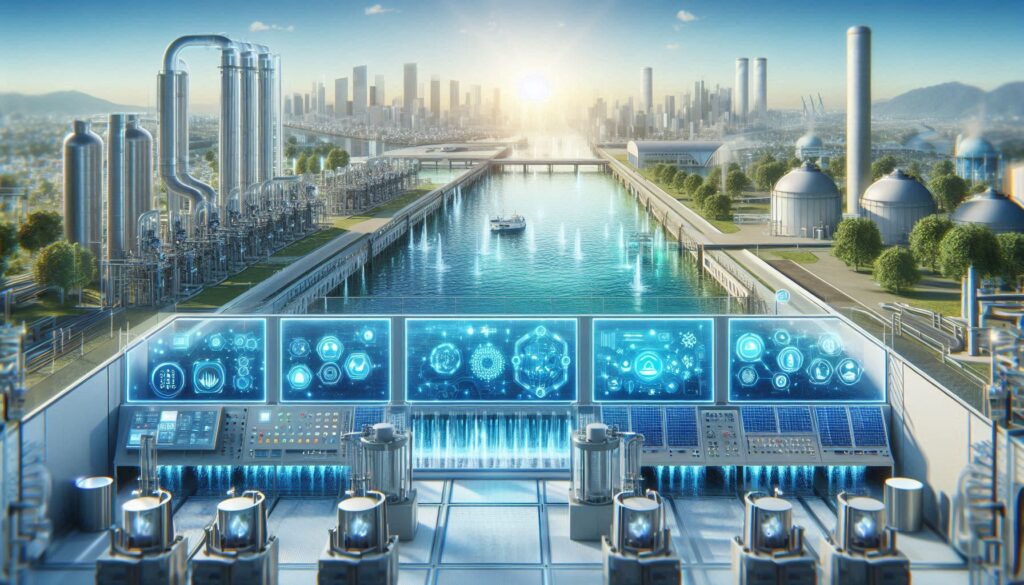

Clean water technology is evolving faster than ever. As we move into 2026, global concerns about water scarcity, contamination, aging infrastructure, and public health are accelerating innovation across the water treatment industry. From advanced oxidation and smart monitoring systems to sustainable filtration and AI-driven automation, clean water technology is no longer limited to basic purification. This guide provides a comprehensive overview of the technologies shaping clean water solutions in 2026, explaining how they work, why they matter, and what they mean for homeowners, commercial facilities, and municipalities.
Water quality challenges are no longer confined to developing regions. Climate change, industrial runoff, microplastics, pharmaceuticals, and emerging pathogens are impacting water supplies worldwide. At the same time, public awareness of health, sustainability, and chemical exposure is increasing. Clean water technology now plays a critical role in protecting public health, supporting economic stability, and ensuring long-term environmental resilience. In 2026, water treatment is as much about prevention and monitoring as it is about purification.
Traditional water treatment relied heavily on single solutions such as chlorination or basic filtration. Modern clean water technology uses multi-barrier systems that combine filtration, oxidation, disinfection, and monitoring. This layered approach ensures that if one barrier underperforms, others compensate. Multi-barrier systems are now considered best practice for drinking water, commercial facilities, and recreational water applications.
Filtration remains a core component of clean water systems, but the technology has advanced significantly. High-performance media, membrane filtration, and depth filtration are increasingly common. These systems remove sediment, microplastics, heavy metals, and particulate matter with greater efficiency and longer service life. In 2026, filtration is no longer just a pre-treatment step—it is a precision-engineered process designed to protect downstream technologies and improve overall system performance.
Activated carbon remains essential for removing chlorine, chloramines, volatile organic compounds, and taste- and odor-causing substances. In 2026, carbon systems are more specialized, with application-specific media designed for drinking water, industrial use, and point-of-entry systems. However, carbon is now widely recognized as a complementary technology rather than a standalone solution.
Oxidation is one of the most important developments in modern water treatment. Strong oxidizers break down organic contaminants, neutralize pathogens, and reduce chemical byproducts. In 2026, oxidation is central to addressing emerging contaminants that traditional treatment methods cannot fully remove. Oxidation does not merely trap pollutants—it chemically transforms them into safer compounds.
Ozone has become one of the most widely adopted advanced water treatment technologies. Its ability to destroy bacteria, viruses, protozoa, and organic contaminants within seconds makes it exceptionally effective. In 2026, ozone systems are more compact, energy-efficient, and automated than ever before. Ozone is widely used in drinking water, pools, wastewater reuse, and industrial applications due to its strong oxidation power and minimal chemical footprint.
Ultraviolet disinfection remains a key tool for controlling microorganisms. UV-C light damages the genetic material of pathogens, preventing replication. In 2026, UV systems are increasingly paired with sensors and real-time monitoring to ensure consistent performance. While UV does not remove chemicals or particles, it plays a critical role in multi-barrier pathogen control strategies.
Advanced Oxidation Processes combine ozone, UV, hydrogen peroxide, or catalysts to create highly reactive radicals. These radicals break down persistent contaminants such as pharmaceuticals, pesticides, and industrial chemicals. In 2026, AOP systems are becoming more cost-effective and are increasingly used in high-risk or high-purity water applications. AOPs represent the cutting edge of clean water science.
Smart water systems are transforming how water quality is managed. Sensors, cloud connectivity, and automated controllers allow systems to adjust treatment levels in real time. In 2026, smart water technology reduces human error, improves efficiency, and enables predictive maintenance. Residential and commercial systems alike benefit from real-time alerts, remote monitoring, and data-driven optimization.
AI is playing a growing role in clean water technology. Machine learning algorithms analyze water quality data, predict contamination events, and optimize treatment processes. In large-scale systems, AI improves operational efficiency and reduces energy consumption. In residential systems, AI-driven automation simplifies maintenance and ensures consistent water quality without constant manual testing.
Microplastics and emerging contaminants are among the most pressing water quality concerns in 2026. Research shows that these particles can carry bacteria and chemical residues through water systems. Advanced filtration, oxidation, and AOP technologies are now being deployed specifically to address these threats. Clean water technology is evolving to handle contaminants that were not even measurable a decade ago.
Sustainability is a defining theme of clean water technology in 2026. Systems are designed to minimize chemical use, reduce energy consumption, and lower environmental impact. Ozone and UV technologies reduce reliance on transported chemicals, while smart controls optimize resource usage. Sustainable water treatment is no longer optional—it is an industry standard.
Residential clean water solutions are becoming more sophisticated and accessible. Whole-house systems, point-of-use filtration, and smart monitoring allow homeowners to customize treatment based on local water conditions. In 2026, homeowners increasingly prioritize systems that improve taste, safety, and long-term plumbing protection without excessive chemicals.
Commercial facilities face stricter regulations and higher usage demands. Hotels, gyms, hospitals, and food processing plants rely on advanced water treatment to protect health and reputation. Integrated systems combining filtration, oxidation, and automation deliver consistent performance under heavy load. In 2026, water quality is a competitive advantage for many businesses.
Water quality regulations continue to evolve as science advances. Regulatory bodies are placing greater emphasis on pathogen control, emerging contaminants, and proactive risk management. Clean water technology must not only meet current standards but adapt to future requirements. Compliance increasingly depends on data transparency, monitoring, and system resilience.
Modern clean water systems are designed for long-term reliability. Predictive maintenance, modular components, and remote diagnostics reduce downtime and operating costs. In 2026, lifecycle performance is a key purchasing factor, as users prioritize durability and total cost of ownership over initial price alone.
Despite rapid innovation, challenges remain. Infrastructure upgrades, cost barriers, and public awareness continue to limit adoption in some regions. However, ongoing research, declining technology costs, and increasing regulatory pressure are accelerating global implementation. Education and system integration remain critical success factors.
Looking beyond 2026, clean water technology will continue to converge with digital infrastructure, sustainability goals, and public health strategies. Real-time monitoring, decentralized treatment, and advanced oxidation will define the next generation of water systems. Clean water will increasingly be managed as a dynamic resource rather than a static utility.
Clean water technology in 2026 represents a shift toward smarter, stronger, and more sustainable solutions. By combining advanced filtration, oxidation, UV disinfection, automation, and data-driven control, modern systems address today’s challenges while preparing for tomorrow’s risks. Whether for homes, businesses, or municipalities, investing in advanced clean water technology is no longer a luxury—it is a necessity.
No single technology dominates. Multi-barrier systems combining filtration, oxidation, and disinfection deliver the best results.
Yes. Ozone has been safely used in municipal drinking water systems worldwide for decades.
Smart systems improve efficiency, reduce maintenance costs, and provide consistent water quality through automation.
Advanced filtration and oxidation technologies are increasingly used to reduce microplastic presence.
Yes. As research evolves, regulations are expected to expand to include emerging contaminants and proactive monitoring.
The Delozone Editorial Team researches water treatment, pool and spa, and indoor air products for independent buying guides. We compare products using manufacturer specifications, certification listings such as NSF/ANSI, UL, AHAM and Energy Star, published third-party test data and verified owner feedback. We do not sell products, and affiliate commissions never decide what we recommend.