Independent buying guides for home air, water and safety.
As an Amazon Associate, Delozone earns from qualifying purchases.
Independent buying guides for home air, water and safety.
As an Amazon Associate, Delozone earns from qualifying purchases.

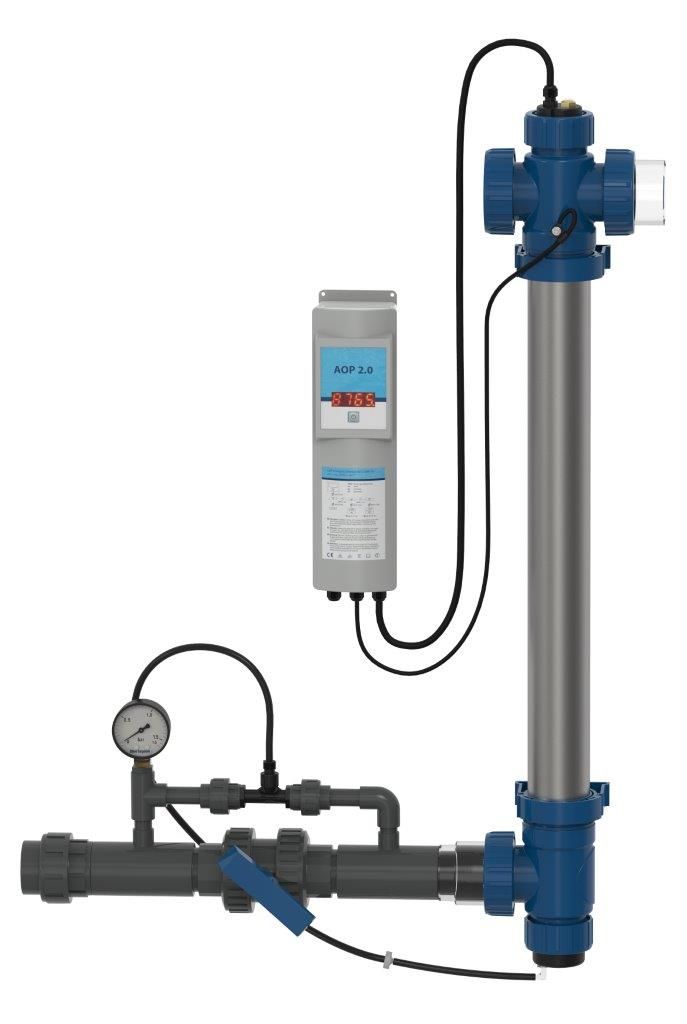

In the world of water treatment, UV‑C vs AOP sparks frequent debate among engineers and facility managers. We aim to unpack the science, economics, and practical considerations that guide a smart technology selection.
UV‑C light emits photons in the 200‑280 nm range, a band that directly damages the nucleic acids of microorganisms. When a pathogen absorbs these photons, pyrimidine dimers form, preventing replication and rendering the organism harmless. The process occurs in a single pass, which means there is no need for chemical additives or residual disinfectants.
Our installations typically use low‑pressure mercury lamps or emerging LED sources that deliver a consistent fluence rate. The design of the reactor ensures uniform exposure by turbulent flow and reflective surfaces. Because the reaction is photochemical, temperature and pH have minimal impact on efficacy.
One advantage of UV‑C is its ability to in a broad spectrum of microbes, from bacteria and viruses to protozoan cysts. However, the technology does not address chemical contaminants such as pesticides or dissolved organic carbon. For that reason, many of us pair UV‑C with complementary treatment steps.
Municipal drinking‑water plants often place UV‑C units after filtration to provide a final barrier against pathogens. In industrial settings, the technology protects cooling towers, boiler feedwater, and wastewater reuse streams. We also see UV‑C employed in residential point‑of‑use devices, where space constraints favor a compact footprint.
Because UV‑C leaves no residual, it is especially attractive for applications where downstream disinfection is undesirable, such as aquaculture or food‑processing water. The technology integrates well with automated control systems, allowing real‑time monitoring of lamp intensity and flow rates. In many cases, the simplicity of operation translates into lower labor costs.
When we evaluate a project, we look at the required dose, measured in mJ/cm², and match it to the target organism’s UV sensitivity. Higher doses are needed for resistant spores, while viruses typically require lower exposure. This flexibility helps us tailor solutions to specific regulatory limits.
Key advantages include rapid action, absence of chemical residues, and a small physical footprint. The technology also provides a predictable log‑reduction performance that can be modeled with confidence. From a safety perspective, the lack of hazardous by‑products reduces the need for extensive personal‑protective equipment.
Limitations arise when water quality is poor; turbidity and color can shield microbes from UV photons. In such cases, pre‑filtration or clarification becomes essential. Additionally, lamp aging reduces output, so regular intensity testing is a must.
We have observed that UV‑C alone cannot break down complex organic molecules, which may lead to downstream fouling in membranes. For facilities that need both microbial control and organic degradation, a hybrid approach often delivers the best results.
Advanced oxidation processes rely on the generation of hydroxyl radicals (·OH), the most reactive species in aqueous chemistry. These radicals attack a wide range of contaminants, including pharmaceuticals, pesticides, and industrial solvents. The reaction pathway typically involves ozone, hydrogen peroxide, or UV light as a catalyst.
In a classic ozone‑hydrogen peroxide AOP, ozone decomposes to produce singlet oxygen, which reacts with peroxide to yield ·OH. The resulting cascade can mineralize organic compounds to carbon dioxide and water. Because the radicals have a half‑life measured in nanoseconds, they react near‑instantaneously with any nearby pollutant.
We often pair AOP with UV‑C to boost radical production; UV photons split ozone molecules, creating additional hydroxyl radicals. This synergy can achieve higher removal efficiencies than either method alone. The chemistry is well‑documented, and kinetic models help us predict performance under varying conditions.
One popular configuration is UV‑Ozone, where a UV lamp emits at 185 nm to dissociate ozone, generating ·OH in situ. Another approach uses hydrogen peroxide combined with UV‑C (UV/H₂O₂), which is especially effective for treating wastewater with high organic loads. We also deploy ozone‑hydrogen peroxide (O₃/H₂O₂) reactors for batch processes.
Each configuration has distinct equipment requirements. UV‑Ozone systems need quartz sleeves that transmit both 185 nm and 254 nm wavelengths, while UV/H₂O₂ setups require precise dosing pumps. O₃/H₂O₂ reactors often incorporate contact tanks to allow sufficient reaction time.
When we design a plant, we evaluate the influent composition, desired removal targets, and available utilities. The flexibility of AOP allows us to adjust reagent concentrations on the fly, which is valuable for fluctuating loads.
Strengths include the ability to degrade non‑volatile organic compounds that are resistant to conventional treatment. The process also reduces the formation of disinfection by‑products because hydroxyl radicals do not produce chlorinated species. In many cases, AOP can achieve mineralization rates exceeding 90 % for recalcitrant contaminants.
Weaknesses involve higher operational costs due to reagent consumption and the need for robust corrosion‑resistant equipment. The generation of ozone can pose safety concerns if not properly vented. Moreover, the process requires careful monitoring of pH, as extreme values can suppress radical formation.
We have found that the capital expense of AOP can be justified when regulatory limits for emerging contaminants are strict. For facilities with modest organic loads, a simpler UV‑C system may provide sufficient protection at a lower cost.
For deeper guidance on ozone‑based solutions, explore our Ozone Water Treatment Guide, Pool Ozone System Guide, and Is Ozone Water Treatment Safe? pages.
UV‑C delivers log‑reduction values that depend primarily on dose and pathogen sensitivity. Typical systems achieve 3‑log reduction for bacteria at 30 mJ/cm² and 4‑log reduction for viruses at 20 mJ/cm². The absence of chemical residues means there is no risk of microbial regrowth after treatment.
AOP, when coupled with UV, can inactivate microbes while simultaneously degrading organic matter. The hydroxyl radicals attack cell membranes and nucleic acids, providing a multi‑pronged attack. In practice, AOP can reach 5‑log reduction for resistant spores when the radical concentration is sufficiently high.
Our field data show that UV‑C excels in scenarios where the primary concern is pathogen removal, whereas AOP shines when both microbial and chemical challenges exist. Selecting the right technology hinges on the specific contaminant profile of the water source.
UV‑C produces no chemical by‑products, which simplifies downstream handling and disposal. The only residual is a small amount of ozone generated by some low‑pressure lamps, but this is typically negligible. This characteristic aligns well with strict discharge regulations.
AOP generates hydroxyl radicals that rapidly convert organic pollutants to carbon dioxide, water, and inorganic ions. However, incomplete oxidation can yield intermediate compounds such as aldehydes or carboxylic acids. Monitoring these intermediates is essential to confirm full mineralization.
When we compare the two, UV‑C offers a cleaner chemical footprint, while AOP provides a pathway to degrade stubborn organics. In many installations, we use a UV‑C pre‑treatment followed by AOP to capture the best of both worlds.
| Metric | UV‑C | AOP (UV‑Ozone) |
|---|---|---|
| Typical Energy Use (kWh/m³) | 0.05‑0.08 | 0.12‑0.18 |
| Capital Cost (USD/kW) | 800‑1,200 | 1,500‑2,200 |
| Operating Cost (USD/1,000 m³) | 0.30‑0.45 | 0.70‑1.10 |
| Maintenance Frequency | Quarterly lamp checks | Monthly reagent dosing & lamp checks |
Energy consumption for UV‑C is primarily driven by lamp power and flow rate. Modern LED modules have reduced electricity use, making UV‑C competitive even in large‑scale plants. The low operating cost reflects the absence of consumable chemicals.
AOP’s higher energy demand stems from the need to generate ozone and maintain UV intensity for radical production. Reagent costs for hydrogen peroxide or ozone also contribute to the overall expense. Nevertheless, the added capability to remove trace organics can offset the cost in high‑value water reuse projects.
Our experience shows that total cost of ownership favors UV‑C for simple disinfection, while AOP becomes cost‑effective when stringent organic removal is required. A detailed life‑cycle analysis helps us recommend the most economical solution for each client.
Combining UV‑C with ozone creates a synergistic effect where ozone provides a residual disinfectant and UV‑C supplies rapid pathogen kill. The ozone can be injected upstream of the UV chamber, allowing the UV photons to break down ozone into additional hydroxyl radicals. This dual action improves overall water quality without a large increase in footprint.
We have deployed hybrid units in municipal plants where regulatory limits require both a residual disinfectant and high log‑reduction. The system’s control logic monitors ozone concentration and UV intensity, adjusting dosing to maintain optimal performance. Maintenance is streamlined because the same quartz sleeve houses both the UV lamp and ozone inlet.
Hybrid UV‑C/Ozone systems are particularly useful for treating water with moderate turbidity, as ozone can oxidize suspended particles, improving UV transmission. The approach also reduces the need for separate chlorine dosing, which can lower the formation of chlorinated by‑products.
Adding ozone to an AOP configuration amplifies hydroxyl radical generation, especially when UV‑C is already present. Ozone reacts with hydrogen peroxide to form peroxone, a powerful oxidant that further enhances organic degradation. This setup is common in industrial wastewater streams that contain high concentrations of refractory compounds.
Our design guidelines recommend a contact tank that allows sufficient residence time for ozone‑peroxide interactions before UV exposure. The tank geometry promotes mixing and prevents dead zones where radical formation could be limited. Real‑time sensors track dissolved ozone and peroxide levels to fine‑tune the process.
Hybrid AOP/Ozone systems can achieve mineralization rates above 95 % for compounds such as phenols and chlorinated solvents. The technology also reduces the volume of sludge generated in downstream filtration, which can lower disposal costs.
Key factors include the target contaminant class, required residual disinfectant, and available utility infrastructure. When a residual is mandated, UV‑C/Ozone offers a straightforward solution. For plants facing complex organic loads, AOP/Ozone provides the necessary oxidative power.
We assess the cost‑benefit ratio by comparing capital investment, reagent consumption, and expected lifespan of components. The presence of existing ozone generators can tip the balance toward a hybrid that leverages current assets. Additionally, regulatory drivers such as the Clean Water Act influence the choice of technology.
Our recommendation process also considers operational expertise; hybrid systems may require more advanced monitoring and control. Training programs and remote diagnostics can mitigate the learning curve, ensuring reliable long‑term performance.
Accurate sizing starts with a flow‑rate calculation based on peak demand and safety factors. For UV‑C, we determine the required lamp power by applying the target dose to the flow volume. AOP sizing incorporates reagent flow rates, ozone generation capacity, and UV intensity to achieve the desired radical concentration.
We use computational fluid dynamics (CFD) models to predict hydraulic behavior inside reactors. These models help us avoid short‑circuiting and ensure uniform exposure. The design also accounts for head loss, which can affect pump selection and energy consumption.
When integrating with existing infrastructure, we evaluate space constraints and potential retrofits. Modular units allow phased implementation, reducing downtime. Our engineering team collaborates with plant operators to align design with maintenance schedules.
Routine lamp cleaning is essential for UV‑C systems; fouling can reduce UV transmittance by up to 30 %. We schedule cleaning based on water quality monitoring, using soft brushes and approved cleaning agents. Lamp replacement follows manufacturer recommendations, typically every 9‑12 months.
AOP equipment requires periodic inspection of ozone generators, peroxide storage tanks, and UV lamps. We recommend a weekly check of ozone concentration and a monthly verification of peroxide dosing accuracy. Corrosion‑resistant materials such as PTFE and stainless steel extend component life.
Our service contracts include remote monitoring of key parameters, allowing us to detect performance drift before it impacts water quality. Predictive maintenance algorithms analyze trends and suggest optimal service windows, minimizing unplanned shutdowns.
Regulations such as the EPA’s Stage 2 Disinfection By‑Product Rule influence the choice between UV‑C and AOP. UV‑C’s lack of chemical residues helps meet limits on trihalomethanes and haloacetic acids. AOP must be designed to avoid excess ozone emissions, which are regulated under the Clean Air Act.
Safety protocols include ozone leak detection, proper ventilation, and personal protective equipment for UV exposure. We install interlocks that shut down lamps if protective shields are opened. Training sessions cover emergency shutdown procedures and chemical handling.
Documentation is a core part of compliance; we provide detailed logs of lamp intensity, ozone dosage, and peroxide consumption. These records support audit trails and help demonstrate adherence to water‑quality standards.
UV‑C provides fast, chemical‑free pathogen removal with a modest capital outlay. AOP delivers powerful oxidation capable of breaking down stubborn organic contaminants. Hybrid systems combine the strengths of each technology, offering flexibility for complex water‑treatment challenges.
Opt for UV‑C when the primary objective is microbial disinfection and the water source has low turbidity. The technology is ideal for facilities that require a residual‑free solution and have limited space. Cost‑sensitive projects also benefit from UV‑C’s lower operating expenses.
Select AOP when the water contains high levels of recalcitrant organics or when regulatory limits for emerging contaminants are stringent. The process is well‑suited for industrial wastewater, water‑reuse schemes, and advanced drinking‑water treatment. AOP’s ability to mineralize pollutants makes it a valuable tool for achieving high water‑quality standards.
Yes, UV‑C at 254 nm can inactivate enveloped viruses by damaging their RNA. Studies show a 3‑log reduction at doses around 20 mJ/cm². The effectiveness depends on proper dosing and minimal shielding from suspended solids.
We recommend pairing UV‑C with filtration to remove turbidity, which enhances viral exposure. Continuous monitoring of UV intensity ensures the system maintains the required dose. For high‑risk applications, a secondary disinfection step can provide an added safety margin.
AOP can partially oxidize nitrate to nitrogen gas, but the process is not as efficient as dedicated denitrification. Hydroxyl radicals preferentially attack organic compounds, leaving inorganic nitrogen largely unchanged. For complete nitrate removal, a biological or ion‑exchange system is usually required.
In practice, we sometimes combine AOP with biological treatment to achieve both organic oxidation and nitrogen removal. The AOP step reduces the organic load, creating a more favorable environment for nitrifying bacteria. This integrated approach can improve overall plant performance.
Ozone is a strong oxidant and can be hazardous if inhaled in high concentrations. Proper venting and ozone destruct units are essential to keep airborne levels below occupational limits. We install continuous ozone monitors that trigger alarms and automatic shutdowns if thresholds are exceeded.
Material compatibility is also a concern; ozone can degrade certain plastics and rubbers. Selecting ozone‑resistant components such as PTFE, stainless steel, and glass prevents premature equipment failure. Regular inspection of seals and gaskets helps maintain system integrity.
Lamp life is typically rated between 9,000 and 12,000 hours of operation. We schedule replacement based on intensity measurements rather than calendar time to ensure consistent performance. A gradual decline in output signals the need for a new lamp.
In high‑throughput facilities, we may implement a staggered replacement program to avoid complete shutdowns. Keeping spare lamps on hand reduces downtime. Our maintenance contracts include lamp‑intensity verification as part of routine service visits.
When properly designed, AOP minimizes the formation of harmful intermediates. However, incomplete oxidation can produce aldehydes or short‑chain acids that may require additional treatment. We monitor these compounds using online sensors and adjust reagent dosing to achieve full mineralization.
In most cases, the by‑products are less toxic than the original contaminants. The rapid reaction of hydroxyl radicals limits the opportunity for secondary reactions. Proper reactor design and adequate contact time are key to controlling by‑product formation.
The Delozone Editorial Team researches water treatment, pool and spa, and indoor air products for independent buying guides. We compare products using manufacturer specifications, certification listings such as NSF/ANSI, UL, AHAM and Energy Star, published third-party test data and verified owner feedback. We do not sell products, and affiliate commissions never decide what we recommend.