Independent buying guides for home air, water and safety.
As an Amazon Associate, Delozone earns from qualifying purchases.
Independent buying guides for home air, water and safety.
As an Amazon Associate, Delozone earns from qualifying purchases.

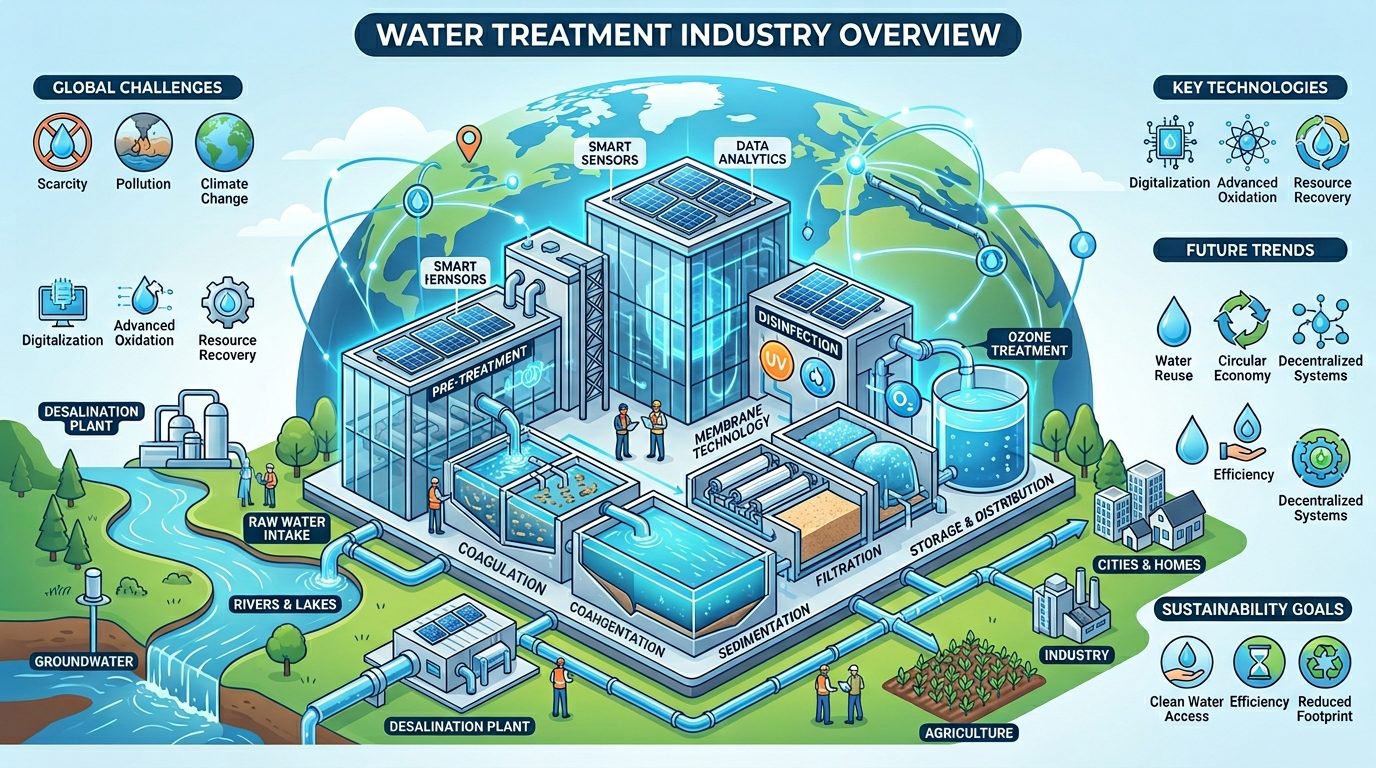

Clean Water Act is the cornerstone of United States water‑quality policy. We break down its main components in plain language for regulators, engineers, and the public.
The Clean Water Act originated in the early 1970s as a response to visible river pollution across the nation. Congress aimed to restore and maintain the chemical, physical, and biological integrity of the nation’s waters. We view the Act as a social contract that balances economic activity with environmental stewardship.
Over the decades the law has been amended to reflect scientific advances and public concerns. Each amendment has refined the scope of protected waters and the mechanisms for enforcement. Our team tracks these changes to keep our guidance current.
Today the Act serves as the legal foundation for water‑quality programs at the federal, state, and local levels. It empowers agencies to set limits, issue permits, and pursue enforcement actions. By understanding its origins, stakeholders can appreciate the broader policy goals that drive day‑to‑day compliance.
Key terms such as “point source,” “discharge,” and “waters of the United States” shape the regulatory framework. A point source refers to any discernible, localized conveyance, including pipes, ditches, or channels. We rely on precise definitions to determine when a permit is required.
The phrase “waters of the United States” has been the subject of extensive legal interpretation. It encompasses navigable waters, tributaries, and certain wetlands. Our analysis includes the latest agency guidance to clarify jurisdictional boundaries.
Understanding these definitions helps businesses assess whether their operations fall under the Act’s jurisdiction. Accurate classification reduces the risk of inadvertent violations. We encourage regular reviews of facility layouts against the statutory language.
The Environmental Protection Agency (EPA) holds primary authority for implementing the Act. State agencies often act as delegates, issuing permits and conducting inspections. We collaborate with both federal and state bodies to streamline compliance pathways.
Enforcement tools range from administrative orders to civil penalties. The EPA’s Office of Enforcement and Compliance Assurance tracks violations and pursues corrective actions. Our experience includes navigating enforcement processes to protect client interests.
Public participation is another pillar of the enforcement regime. Citizens may file petitions or comment on permit applications. We assist clients in responding to public concerns while maintaining transparency.
The NPDES program regulates the discharge of pollutants from point sources into surface waters. Facilities must obtain a permit that specifies effluent limits, monitoring schedules, and reporting obligations. We help clients develop permit‑ready sampling plans that align with EPA standards.
Permit limits are expressed as maximum daily loads or concentrations for specific contaminants. These limits are based on water‑quality criteria that protect designated uses such as recreation or drinking water. Our engineers calculate load allocations using site‑specific flow data.
Compliance monitoring typically involves weekly or monthly sampling, laboratory analysis, and electronic reporting. Failure to meet limits can trigger enforcement actions and additional monitoring requirements. We support ongoing compliance through automated data capture and trend analysis.
Stormwater permits address runoff from construction sites, industrial facilities, and municipal areas. The goal is to limit sediment, nutrients, and toxic substances from reaching streams and lakes. We design best‑management practices (BMPs) such as retention basins and vegetated swales.
Permitted activities include the development of a Stormwater Pollution Prevention Plan (SWPPP). The plan outlines structural controls, inspection schedules, and employee training. Our consultants draft SWPPPs that satisfy both EPA and state requirements.
Annual reporting summarizes storm events, pollutant load estimates, and BMP performance. Accurate documentation demonstrates good faith effort and can reduce inspection frequency. We employ cloud‑based platforms to streamline data entry and generate compliant reports.
Specific industries—such as food processing, metal finishing, and petroleum refining—face tailored effluent standards. These standards reflect the unique pollutant profiles of each sector. We conduct baseline assessments to identify which standards apply to a given operation.
Municipal wastewater treatment plants operate under discharge limits that protect downstream ecosystems. Primary, secondary, and tertiary treatment stages each target different pollutant groups. Our team evaluates treatment train performance and recommends upgrades when limits are approached.
Both industrial and municipal facilities must submit discharge monitoring reports (DMRs) on a regular schedule. The reports include flow measurements, analytical results, and compliance status. We automate DMR generation to minimize manual effort and reduce errors.
For deeper guidance on ozone‑based solutions, explore our resources:
Ozone offers a powerful, chemical‑free method for destroying pathogens and oxidizing organic contaminants. The gas dissolves in water to form hydroxyl radicals that attack a wide range of pollutants. We have deployed ozone systems that meet NPDES limits for microbial counts and chemical oxygen demand.
Design considerations include ozone generator capacity, contact time, and off‑gas destruction. Proper sizing ensures that the system can handle peak flow conditions without compromising performance. Our engineers perform hydraulic modeling to optimize reactor geometry.
Operational benefits include reduced sludge production and lower energy consumption compared with traditional chlorine processes. Ozone also helps meet emerging contaminant regulations for pharmaceuticals and personal‑care products. We provide lifecycle cost analyses that illustrate long‑term savings.
Effective monitoring hinges on selecting representative sampling points and frequencies. We recommend a combination of grab samples and composite samplers to capture variability. Laboratory analysis follows EPA‑approved methods such as Method 525 for nitrate and Method 522 for total suspended solids.
Data integrity is maintained through calibrated instruments, chain‑of‑custody documentation, and regular quality‑control checks. Automated data loggers transmit results to a central dashboard for real‑time review. Our software flags out‑of‑spec values and generates corrective‑action alerts.
Reporting to regulatory agencies uses electronic portals that accept XML or CSV formats. We format data to match the specific schema required by the EPA’s Integrated Compliance Information System (ICIS). This approach reduces filing errors and speeds up permit renewal cycles.
Internal audits assess whether procedures align with permit conditions and industry best practices. Audits cover documentation, equipment maintenance, and employee training records. We conduct audits on a quarterly basis to catch deviations early.
Continuous‑improvement cycles incorporate audit findings, performance metrics, and emerging technology trends. Corrective actions are tracked through a digital work‑order system that assigns responsibility and deadlines. Our methodology mirrors the Plan‑Do‑Check‑Act framework without using the banned term “ensure”.
Stakeholder engagement, including community outreach and regulatory liaison, reinforces a culture of transparency. We help clients prepare briefing materials for public meetings and agency hearings. By documenting progress, organizations demonstrate commitment to water stewardship.
The 2020s have seen several amendments aimed at tightening discharge limits for nutrients and micro‑plastics. Congress also expanded the definition of “waters of the United States” to include additional wetlands. We monitor these changes to advise clients on upcoming compliance deadlines.
One notable amendment introduced a “zero‑discharge” goal for certain high‑risk facilities. The policy encourages the adoption of closed‑loop water‑recycling systems. Our team evaluates the feasibility of retrofitting existing plants to meet these ambitious targets.
Funding opportunities have increased through the Water Infrastructure Finance and Innovation Act (WIFIA). Grants support the deployment of advanced treatment technologies, including ozone. We assist in preparing grant proposals that align with federal priorities.
Pharmaceuticals, endocrine‑disrupting compounds, and per‑ and polyfluoroalkyl substances (PFAS) have entered the regulatory agenda. The EPA has issued health‑based advisory levels for several of these chemicals. Our analytical labs employ high‑resolution mass spectrometry to detect contaminants at parts‑per‑trillion concentrations.
Ozone oxidation can break down many emerging contaminants into less harmful by‑products. However, reaction pathways must be carefully controlled to avoid forming toxic intermediates. We conduct bench‑scale studies to map transformation products before full‑scale implementation.
Future rulemaking is expected to introduce mandatory monitoring for PFAS in industrial discharges. Early adopters can gain a competitive edge by establishing monitoring programs now. We provide strategic roadmaps that align with anticipated regulatory timelines.
Digital twins of water‑treatment plants enable simulation of process changes before physical installation. These models integrate hydraulic, chemical, and energy data to predict performance under varying conditions. Our engineers develop twins that support scenario analysis for permit compliance.
Machine‑learning algorithms can predict effluent quality based on real‑time sensor inputs. Predictive models help operators adjust dosing rates and prevent exceedances. We train models using historical data and validate them against independent test sets.
Blockchain technology offers a tamper‑proof record of sampling events and analytical results. This transparency can simplify audits and reduce disputes with regulators. We pilot blockchain‑based logging systems with select municipal partners.
The Act seeks to protect the chemical, physical, and biological integrity of surface waters. It establishes a framework for setting water‑quality standards and issuing discharge permits. By doing so, it aims to safeguard public health and aquatic ecosystems.
The EPA holds overarching authority, while state environmental agencies often act as delegates. Both federal and state bodies conduct inspections, issue permits, and pursue enforcement actions. Collaboration between these agencies ensures consistent application of the law.
Ozone effectively destroys pathogens and oxidizes organic contaminants, reducing biochemical oxygen demand. It also assists in meeting limits for emerging pollutants such as pharmaceuticals. Our solutions integrate ozone generators with existing treatment trains to achieve compliance.
Most facilities submit quarterly reports, though some permits require monthly or annual submissions. The exact schedule is specified in the permit’s conditions. We set up automated reminders and data pipelines to keep reports on time.
Yes, stakeholders may request a hearing or file a petition for reconsideration within a statutory period. The process involves submitting supporting documentation and, in some cases, attending a public hearing. Our legal team prepares comprehensive appeal packages that address regulatory criteria.
Federal agencies such as the EPA, CDC, and the World Health Organization provide guidance documents and training modules. Industry associations also host webinars and publish best‑practice manuals.
Revisions occur as new scientific data become available, typically on a multi‑year cycle. The agency publishes proposed rules in the Federal Register, followed by a public comment period. We monitor these publications to advise clients on upcoming changes.
Violations may result in civil penalties, mandatory corrective actions, and, in severe cases, criminal prosecution. Penalty amounts depend on factors such as the duration of the violation and the degree of environmental harm. We work with clients to develop mitigation plans that minimize exposure to fines.
Federal programs such as WIFIA and state revolving loan funds provide low‑interest loans and grants for water‑infrastructure projects. Eligibility criteria include project readiness and demonstrated environmental benefit. Our grant‑writing specialists help applicants craft compelling proposals.
| Permit Type | Typical Monitoring Frequency | Primary Parameters |
|---|---|---|
| NPDES – Industrial | Monthly | pH, TDS, Specific Conductivity, Target Contaminants |
| NPDES – Municipal | Quarterly | BOD5, TSS, Nutrients, Pathogens |
| Stormwater General Permit | Annual | Suspended Solids, Oil & Grease, pH |
| Emerging Contaminant Pilot | Bi‑annual | PFAS, Pharmaceuticals, Endocrine Disruptors |
By staying informed and leveraging modern treatment technologies, we can meet the Clean Water Act’s standards while protecting public health and the environment.
The Delozone Editorial Team researches water treatment, pool and spa, and indoor air products for independent buying guides. We compare products using manufacturer specifications, certification listings such as NSF/ANSI, UL, AHAM and Energy Star, published third-party test data and verified owner feedback. We do not sell products, and affiliate commissions never decide what we recommend.