Independent buying guides for home air, water and safety.
As an Amazon Associate, Delozone earns from qualifying purchases.
Independent buying guides for home air, water and safety.
As an Amazon Associate, Delozone earns from qualifying purchases.

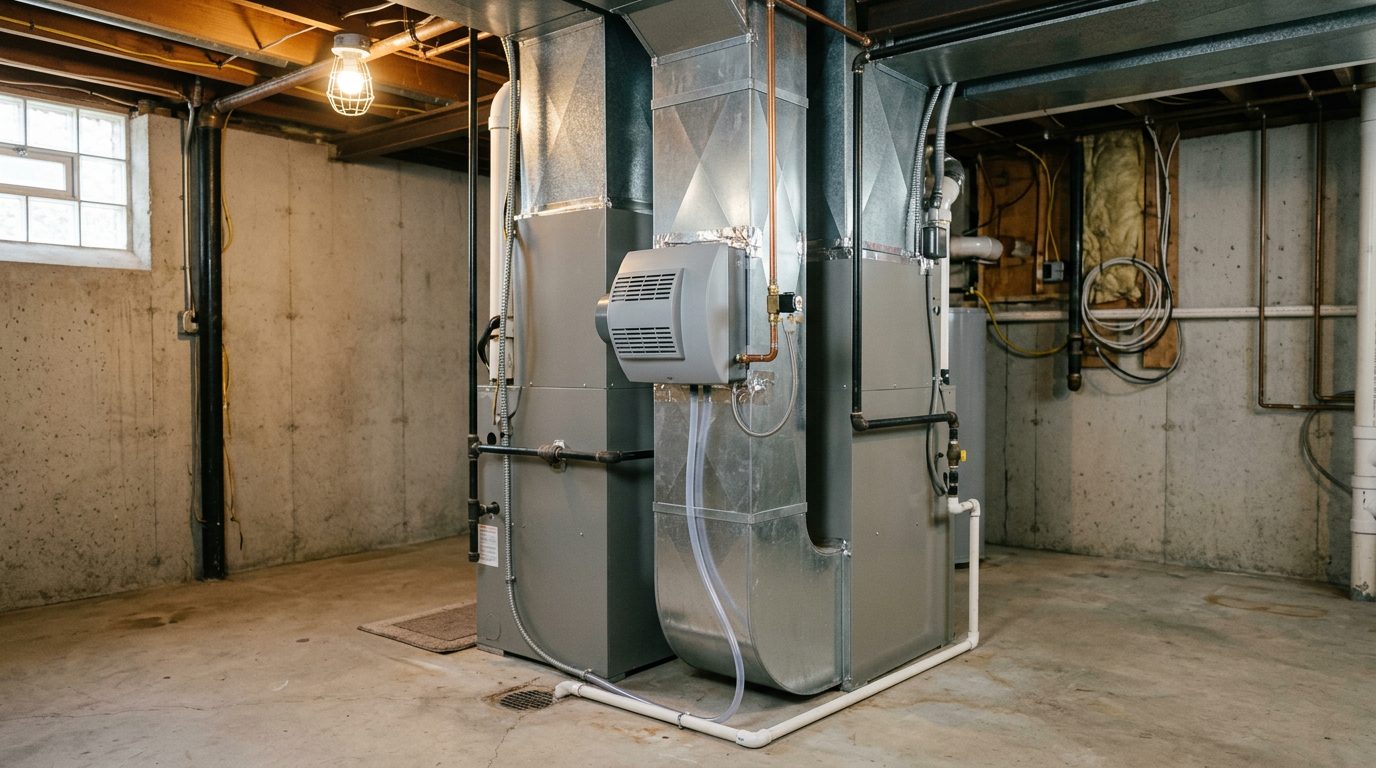
The best whole house humidifiers of 2026: bypass, fan-powered and steam furnace models plus console units, with humidity targets, sizing and install tips.

The best whole house humidifier for most homes with a forced-air furnace is a furnace-mounted evaporative model with automatic control, and our top pick is the AprilAire 500, which adds up to 12 gallons of moisture a day for homes up to 3,600 sq ft and uses an outdoor temperature sensor to lower the humidity target on cold days so your windows do not fog. Larger homes should look at the AprilAire 600 or the fan-powered AprilAire 700, homes that need humidity when the furnace is not heating should consider the AprilAire 800 steam model, and renters or homes without ductwork are better served by a large console humidifier such as the Vornado Evap40.
Top picks at a glance
Affiliate links: As an Amazon Associate, Delozone earns from qualifying purchases, at no extra cost to you. Full disclosure
Key takeaways
Quick comparison: best whole house humidifiers for 2026
| Model | Type | Output (maker) | Home size (maker) | Control | Buy |
|---|---|---|---|---|---|
| AprilAire 500 | Bypass evaporative | 12 gallons/day | Up to 3,600 sq ft | Automatic, outdoor sensor | Check price |
| AprilAire 500M | Bypass evaporative | 12 gallons/day | Up to 3,600 sq ft | Manual | Check price |
| AprilAire 600 | Bypass evaporative, high output | 17 gallons/day | Up to 5,000 sq ft | Automatic, outdoor sensor | Check price |
| AprilAire 700 | Fan-powered evaporative | 18 gallons/day | Up to 5,300 sq ft | Automatic, outdoor sensor | Check price |
| AprilAire 800 | Steam | 11.5 to 34.6 gallons/day | Up to 10,300 sq ft | Automatic, outdoor sensor | Check price |
| AIRCARE MA0800 Mini-Console | Portable evaporative console | 2.5-gallon tank | Up to 2,600 sq ft | Digital humidistat | Check price |
| Vornado Evap40 | Portable evaporative | Up to 4 gallons/day | Up to 1,000 sq ft | Adjustable humidistat | Check price |

Cold outdoor air holds very little moisture. When a furnace heats that air to room temperature, its relative humidity drops sharply, which is why many homes fall well below 30% in winter. Mayo Clinic notes that humidity levels tend to be higher in summer and lower in winter, and that low humidity can cause dry skin, irritate the nose and throat and make eyes itchy.
The EPA’s fact sheet on home humidifiers adds that the moisture humidifiers add also helps with nuisances brought on by winter heating, such as static electricity, peeling wallpaper and cracks in paint and furniture.
A whole-house humidifier solves this for every room at once by adding moisture to the air your furnace already circulates. That is the key difference from a bedroom unit, which only humidifies one room and needs daily refilling.
A bypass humidifier mounts on the furnace’s supply or return duct and uses the furnace blower to push warm air through a wet evaporator pad, which AprilAire calls a water panel. A bypass duct connects the supply and return sides so some warm air can loop through the humidifier.
AprilAire’s installation materials distinguish bypass models, which need a bypass duct between supply and return, from fan-powered models, which do not. The AprilAire 500 and 600 on our list are bypass models.
Bypass humidifiers use water that flows over the panel and then drains away, carrying minerals and residue with it; AprilAire says in models 300, 500 and 600, minerals and solid residue not trapped by the water panel are flushed down the drain. That keeps the panel from clogging quickly, but it means the humidifier needs a drain connection and uses some water that does not end up in the air.
A fan-powered humidifier has its own built-in fan that pulls heated air from the furnace through the water panel, so it does not need a bypass duct. AprilAire says its 700 model’s built-in fan pulls heated air directly from the furnace through the humidifier.
That makes fan-powered models easier to fit where there is no room for a bypass duct, and their higher output suits larger homes. The AprilAire 700 is rated at 18 gallons per day for homes up to 5,300 sq ft.
The trade-off is a slightly more complex unit with an electric fan, which uses some electricity and adds a little noise at the furnace. Like bypass models, it needs a water supply and a drain.
Steam humidifiers boil water in a canister and inject steam into the ductwork. Because they make their own heat, they can add humidity even when the furnace is not heating, for example with a heat pump or during mild weather when the blower runs without heat.
The AprilAire 800 is rated for homes up to 10,300 sq ft, with 6 output levels from 11.5 to 34.6 gallons of moisture per day depending on voltage and installation. AprilAire says its electrode technology needs impurities in the water to conduct electricity, so water filtration is not recommended, and the canister should be replaced every humidifier season.
Steam models cost more to buy and run, and they need an electrical connection sized for the unit. For very large, tightly built homes, homes with heat pumps and households that need precise humidity, they are the most capable option.
If your home has radiators, baseboard heat or ductless mini-splits, a furnace-mounted humidifier is not an option. Large console-style evaporative humidifiers are the practical alternative, and they need no installation.
The AIRCARE Mini-Console is rated for up to 2,600 sq ft with a 2.5-gallon tank and a digital humidistat, and the Vornado Evap40 is rated for up to 1,000 sq ft with a 4-gallon dual tank. Both are evaporative, so they do not produce white dust.
Console units need refilling and regular cleaning, but they can move with you, which makes them the right choice for renters.
According to Mayo Clinic’s humidifier guide, it is ideal to keep indoor humidity between 30% and 50%. The EPA’s fact sheet advises not humidifying above 50%, because higher humidity can encourage the growth of biological organisms in the home.
AprilAire’s product listings describe 40% to 60% as optimal. Our advice is to follow the more conservative health guidance: aim for 30% to 50% in winter, and let the automatic control reduce the target further on the coldest days.
Too much humidity causes condensation, which the EPA’s guide to mold and moisture links directly to mold growth. The key to mold control, the EPA says, is moisture control.
“Do not humidify to indoor relative humidity levels exceeding 50 percent. Higher humidity levels may encourage the growth of biological organisms in the home.”
U.S. EPA, Indoor Air Facts No. 8: Use and Care of Home Humidifiers
The colder it is outside, the less humidity your windows and exterior walls can tolerate before water condenses on them. A humidity level that is comfortable at 30°F can fog every window at 0°F.
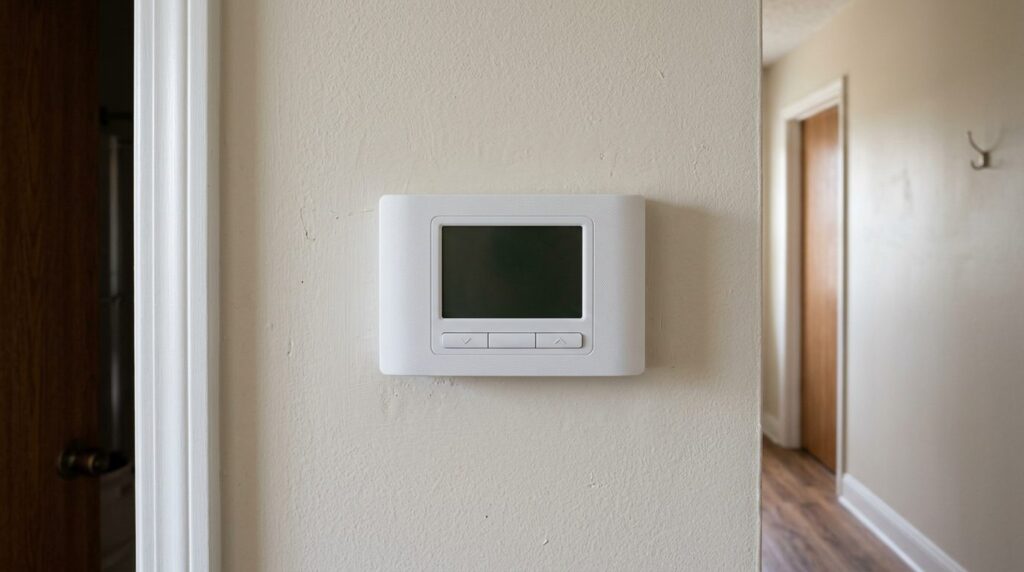
AprilAire’s FAQ explains that its automatic mode uses an outdoor temperature sensor that continuously reports changes in outdoor temperature to the digital humidifier control, which uses that information to maintain the right humidity. With a manual control, AprilAire says you need to anticipate a drop in outdoor temperature and reduce the setting yourself to avoid excess condensation.
For most homeowners, the automatic control is worth it: it prevents the most common problem with whole-house humidifiers, which is too much moisture on cold nights. AprilAire notes that any of its furnace-mount humidifiers can be upgraded to automatic by installing its automatic digital control with the outdoor sensor.
Too low: static shocks, dry skin, cracked lips, a scratchy throat in the morning and gaps opening in wood floors and furniture. Mayo Clinic notes that low humidity can irritate the nose, throat and eyes.
Too high: condensation on windows, damp spots on exterior walls or ceilings, musty smells and a stuffy feel. The EPA says to relocate a humidifier, lower its setting or reduce its use if water condenses on windows, walls or pictures.
A hygrometer in the main living area, separate from the humidifier’s control, is the easiest check. Our guide to the best air quality monitors for home covers monitors that track humidity alongside other readings.
Mayo Clinic notes that humidifiers can ease dry skin, dry nasal passages and a stuffy nose, but warns that humidity that stays too high can cause condensation that feeds bacteria, dust mites and mold, which can trigger allergy and asthma flare-ups.
If anyone in the home has allergies or asthma, Mayo Clinic recommends talking to a healthcare professional before using a humidifier. A whole-house system with an automatic control and regular maintenance is easier to keep within the healthy range than several portable units.
AprilAire’s listings cite research linking 40% to 60% humidity with fewer respiratory infections; that is the manufacturer’s claim, and the EPA’s 50% ceiling is the safer limit to plan around.
All 7 picks were in stock on Amazon with a working buy box when we checked in September 2026. We chose them on output and home size, control type, installation requirements, maintenance and the pattern of verified owner feedback.
Five are furnace-mounted AprilAire models covering bypass, fan-powered and steam designs, and two are console humidifiers for homes without ductwork. Honeywell Home furnace humidifiers were considered, but current Amazon owner feedback on those listings was notably weaker, so they are not on the list.
The AprilAire 500 is a compact bypass humidifier rated at up to 12 gallons of moisture per day for homes up to 3,600 sq ft in tightly built homes, according to AprilAire. It is designed and made in the USA by the company that says it invented the whole-home evaporative humidifier.
This automatic version uses dual sensors to monitor outdoor temperature and indoor humidity and adjust output around the clock. Its digital control shows the humidity level and indicates when the humidifier is running, when to change the water panel and when service is needed, and a blower activation switch lets it run continuously or only when the furnace runs.
It is a bypass model, so it needs a bypass duct, a water supply and a drain. For most homes with a forced-air furnace up to about 3,600 sq ft, it is the best balance of output, control and running cost we found.
Check AprilAire 500 price on Amazon
The AprilAire 500M is the same compact bypass humidifier with a manual control. AprilAire rates it at 12 gallons per day for homes up to 3,600 sq ft, and its standard control has a single sensor that monitors indoor humidity so you can set the percentage yourself.
Without an outdoor sensor, you must lower the setting as the weather gets colder. AprilAire’s FAQ describes exactly that: anticipate a drop in outdoor temperature and reduce the humidity setting to avoid excess condensation.
It costs less than the automatic version and can be upgraded later with AprilAire’s automatic digital control and outdoor sensor. For homes in milder winter climates, or owners who are comfortable adjusting a dial, it is a sound choice.
Check AprilAire 500M price on Amazon
The AprilAire 600 is a high-output bypass humidifier rated at up to 17 gallons per day for homes up to 5,000 sq ft in tightly built homes, according to AprilAire. It uses the same automatic dual-sensor control as the 500.
Its larger water panel and higher output suit bigger homes and colder climates, where the furnace runs more and the air needs more moisture. The digital control and blower activation switch work the same way as on the 500.
Like other bypass models, it needs space for the bypass duct, a water line and a drain. For homes from roughly 3,500 to 5,000 sq ft with room for a bypass installation, it is our pick.
Check AprilAire 600 price on Amazon
The AprilAire 700 is a fan-powered humidifier rated at up to 18 gallons per day for homes up to 5,300 sq ft in tightly built homes, according to AprilAire. Its built-in fan pulls heated air directly from the furnace through the humidifier, so it does not need a bypass duct.
That makes it the easiest AprilAire evaporative model to fit into tight furnace rooms, and its output is the highest of the evaporative models on our list. It uses the automatic dual-sensor control.
It still needs a water supply and a drain, and the fan adds a small electrical load. For large homes, or any home where a bypass duct will not fit, it is our pick.
Check AprilAire 700 price on Amazon
The AprilAire 800 is a steam humidifier rated for homes up to 10,300 sq ft in tightly built homes, with 6 output levels adding 11.5 to 34.6 gallons of moisture per day depending on voltage and installation, according to AprilAire. It uses the automatic dual-sensor control.
AprilAire says its electrode technology needs impurities in the water to conduct electricity, so purified water is not required and water filtration is not recommended. The steam canister is replaced every humidifier season, and a service light signals when it is time.
Steam is the most expensive option to buy and run, and installation requires an electrical supply suited to the unit, so it is a job for an HVAC contractor. For very large homes, heat pump systems and homes that need humidity even when the furnace is not heating, it is the most capable choice.
Check AprilAire 800 price on Amazon
The AIRCARE MA0800 Mini-Console is a portable evaporative humidifier rated for up to 2,600 sq ft with a 2.5-gallon tank. It has a digital humidistat that holds your chosen humidity level, an automatic shutoff when the target is reached or the unit is empty, a refill indicator and a check-filter indicator.
It uses AIRCARE’s MAF2 Super Wick, with the first one included. Because it is evaporative, it does not create white dust, and it needs no installation.
Its coverage figure assumes open, tightly built spaces; in a house with many closed rooms it will humidify the area around it more than distant bedrooms. For homes with radiators or ductless heat, and for renters, it is the most practical large-area option.
Check AIRCARE Mini-Console price on Amazon
The Vornado Evap40 is an evaporative humidifier with a 4-gallon dual tank system that Vornado says delivers up to 4 gallons of moisture output daily for rooms up to 1,000 sq ft. It uses deep-pitched blades and dual wicking filters to circulate humidified air without visible mist.
A built-in adjustable humidistat with 3 speed settings maintains your chosen humidity, and the removable, leak-proof tanks are designed for easy refilling and cleaning. Vornado offers a 5-year replacement guarantee.
It covers a large open living area rather than a whole house, but it is simpler to live with than several small units. For a great room, an open-plan main floor or a basement living space, it is a strong choice.
Check Vornado Evap40 price on Amazon
We compared published output in gallons per day and the home sizes manufacturers support, noting that AprilAire’s coverage figures assume tightly built homes. Older, draftier houses lose moisture faster and need more output than the rating suggests.
We gave extra weight to automatic controls with outdoor temperature sensing, because over-humidification in cold weather is the most common and most damaging mistake with whole-house systems.
For homes without ductwork, we looked for evaporative consoles with humidistats, which avoid white dust and self-limit as humidity rises.
We looked at what each model needs: bypass duct, water supply, drain, electrical connection and space at the furnace. These decide both the installation cost and whether a model will fit.
We also compared ongoing maintenance: water panels once per season for AprilAire evaporative models, a steam canister each season for the 800, and wick changes for console units.
We did not assign scores or star ratings. Each pick is labeled with the home it suits best.
We read verified owner reviews for patterns rather than star averages: leaks, control reliability, clogging in hard water, noise and support. Models with weak recent feedback were left out.
Every product was checked on Amazon in September 2026 for a working buy box. Prices change often, so we link to current prices instead of printing numbers that go stale.
We did not run our own tests. Our choices rely on manufacturer specifications and documentation, EPA and Mayo Clinic guidance and verified owner feedback, and we update the guide when products change.
The clearest signs are physical: static shocks when you touch door handles, dry or itchy skin that lotion does not fix, cracked lips and a dry, scratchy throat in the morning. Mayo Clinic lists dry skin and irritation of the nose, throat and eyes among the effects of low humidity.
Many people also notice that dry air feels colder at the same thermostat setting, because moisture evaporates more quickly from the skin. Raising humidity to the healthy range can make a room feel more comfortable without turning up the heat.
If more than one room shows these signs every winter, and portable units in each room have become a chore, a whole-house system is worth pricing.
The EPA notes that the moisture a humidifier adds helps with nuisances of winter heating such as static electricity, peeling wallpaper and cracks in paint and furniture. Gaps opening between hardwood floorboards in winter, and closing again in summer, are another common sign.
Wood trim, doors and cabinets can shrink and crack when humidity stays very low for months. Paintings, books and antiques are also sensitive to large swings in humidity.
Keeping humidity steady within the healthy range, rather than swinging from very dry in winter to damp in summer, is kinder to the house and everything in it.
Pianos, guitars and other wooden instruments are especially sensitive to dry winter air, and instrument makers commonly advise stable humidity to avoid cracks and tuning problems. A whole-house humidifier keeps the whole home steadier than a small unit in one room.
For a single valuable instrument, a room humidifier or an in-case humidifier may still be needed, because the room where it lives can differ from the rest of the house.
Use a hygrometer near the instrument to see what it actually experiences, and follow the maker’s recommended range where it gives one.
If you already see condensation on windows in winter, musty smells or mold spots, your home has too much moisture, not too little. Adding a humidifier would make things worse. The EPA’s guidance is clear that moisture control is the key to mold control.
Homes with basements that stay damp, poor bathroom or kitchen ventilation or water leaks should fix those problems first. Our guide to the best dehumidifiers for mold prevention covers the damp side of the problem.
Very tight, newly built homes can also hold more moisture than older ones. In those homes, start at the low end of the 30% to 50% range and let an automatic control adjust from there.
A whole-house humidifier often goes in at the same time as a better furnace filter, a new thermostat or an air purifier, because the contractor is already working on the system. Planning them together can save a second visit.
The EPA recommends a furnace or HVAC filter rated at least MERV 13 where your system can accommodate it, which our MERV rating guide explains. Humidity and filtration work well together: filters handle particles, the humidifier handles dryness.
If you also track air quality, a monitor that reports humidity lets you confirm the humidifier is holding the room within range, rather than relying on the control on the duct.
Manufacturers rate whole-house humidifiers by gallons of moisture per day and by the home size they can serve. AprilAire’s ratings, such as up to 3,600 sq ft for the 500 and up to 5,300 sq ft for the 700, assume tightly built homes, meaning homes with good air sealing and modern windows.
Older and draftier homes lose humidified air to the outside faster, so they need more output for the same square footage. If your home was built before modern air sealing, or you can feel drafts around windows and doors, size up by one step or plan to run the humidifier more.
A contractor can estimate your home’s air leakage or use a blower door test result if you have one. That number, together with your climate, is a better guide than square footage alone.
The colder your winters, the drier the heated air and the more moisture your home needs. Homes in very cold climates also run the furnace for more hours, which gives bypass and fan-powered models more time to add moisture.
At the same time, very cold weather lowers the humidity your windows can tolerate. AprilAire’s FAQ explains that excess condensation occurs because the indoor humidity is higher than what the home can support for the current outdoor temperature, which is why the automatic control’s outdoor sensor matters most in cold climates.
In mild climates, a manual model such as the AprilAire 500M, or a console humidifier, is often enough, since the setting rarely needs to change.
Use the manufacturer’s ratings as a starting point and adjust for how tight your home is. The table below matches common home sizes to the models on our list, based on AprilAire’s and the console makers’ published figures.
| Home size and type | Suggested model | Why |
|---|---|---|
| Up to about 3,600 sq ft, forced air, tight home | AprilAire 500 or 500M | 12 gallons per day; automatic or manual control |
| 3,600 to 5,000 sq ft, room for bypass duct | AprilAire 600 | 17 gallons per day, high-output bypass |
| Up to 5,300 sq ft, no room for bypass | AprilAire 700 | 18 gallons per day, fan-powered |
| Very large homes or heat pumps | AprilAire 800 | 11.5 to 34.6 gallons per day, steam |
| No ductwork, large open areas | AIRCARE Mini-Console | Up to 2,600 sq ft, no installation |
| One large room or main floor | Vornado Evap40 | Up to 1,000 sq ft, up to 4 gallons per day |
If you are between sizes, choose the larger model with an automatic control. A larger unit that is controlled well will simply run less, while an undersized unit will never reach the target on cold days.
A whole-house humidifier treats every room served by your ductwork, with no tanks to fill. Evaporative furnace models take water directly from your plumbing and drain automatically, so there is no daily refilling.
Portable humidifiers treat one room at a time and need daily emptying, refilling and cleaning every third day, as the EPA recommends. For a single bedroom, that is manageable; for a whole house, it quickly becomes a chore.
If only one or two rooms feel dry, or you rent, portable units make sense. If the whole house is dry every winter and you have forced-air heat, a whole-house system is simpler to live with.
The EPA’s fact sheet notes that ultrasonic and impeller portable humidifiers can disperse minerals and microorganisms from their tanks, while evaporative and steam types generally disperse less. Furnace-mounted evaporative and steam humidifiers fall into the lower-dispersal group.
Whole-house systems also avoid the standing-water problem of forgotten portable tanks, although the EPA still advises following the manufacturer’s maintenance directions for central humidifiers and not letting water stand in any tank.
Portable evaporative consoles, like the two on our list, share the advantage of no white dust, but they still need regular cleaning and wick replacement.
A furnace-mounted humidifier costs more up front, because it needs professional installation, but its running costs are modest: water, a new water panel each season and, for fan-powered models, a little electricity. Steam models add a canister each season and more electricity.
Portable humidifiers cost less to buy, but several units, wicks or filters and distilled water for ultrasonic models add up over a few winters.
Because prices change, we do not list them here; ask your contractor for an installed quote and compare it with the cost of the portable units and supplies you would otherwise buy.
| Factor | Whole-house (furnace-mounted) | Portable console or room unit |
|---|---|---|
| Coverage | All ducted rooms | One room or open area |
| Refilling | None, plumbed in | Daily |
| Installation | HVAC contractor | None |
| Main maintenance | Water panel or steam canister each season | Cleaning every third day, wicks |
| Best for | Homeowners with forced-air heat | Renters, single rooms, homes without ducts |
Bypass evaporative humidifiers send some water down the drain to carry away minerals, which AprilAire says keeps residue from building up on the water panel. That water use is the trade-off for low maintenance, and it only occurs while the humidifier is calling for moisture.
Fan-powered models work the same way at the water panel. Steam humidifiers drain periodically to flush minerals from the canister.
If you are on a private well or pay high water rates, ask your installer about the expected water use for your model and climate.
Bypass humidifiers use very little electricity, since the furnace blower moves the air and only the water valve and control need power. Fan-powered models add a small fan, and steam humidifiers use the most, because they boil water.
Because bypass and fan-powered models rely on the furnace, running the blower more often to humidify also uses more electricity. The blower activation switch on AprilAire’s automatic control lets you choose whether the humidifier runs only with the furnace or also with the blower alone.
For most homes, the energy cost of evaporative humidification is small compared with heating costs, and comfortable humidity can make a slightly lower thermostat setting feel warmer.
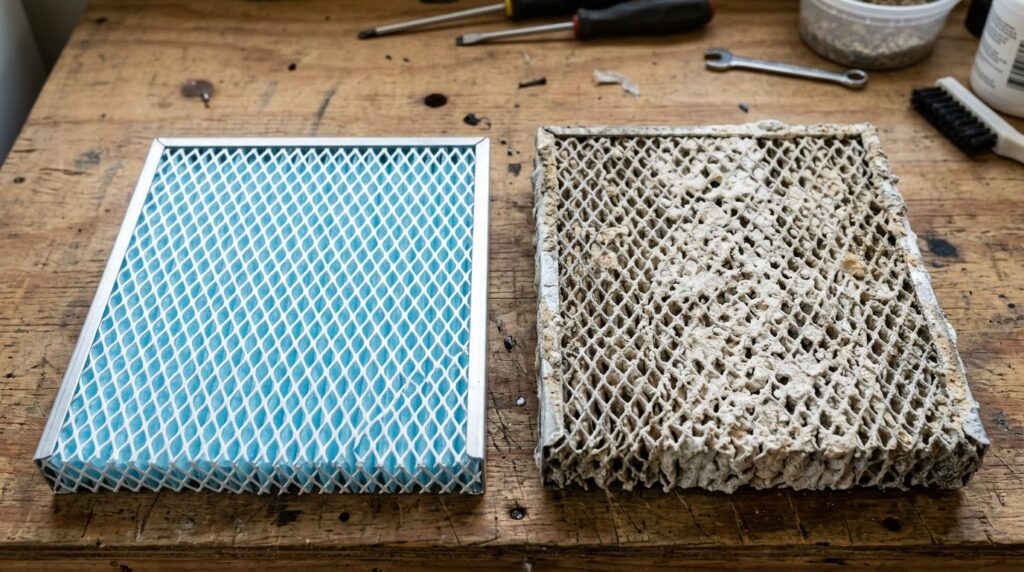
Hard water leaves more mineral scale on evaporative water panels, so panels may need replacing before the end of the season. The flow-through design of bypass models helps by flushing minerals away.
AprilAire says its steam humidifiers need impurities in the water to conduct electricity and that water filtration is not recommended for them. If your home has a water softener, ask your installer which supply line the steam unit should use.
If you already treat your water for hardness, our guide to the best water filter for hard water covers the options, and your installer can advise which supply line suits the humidifier.
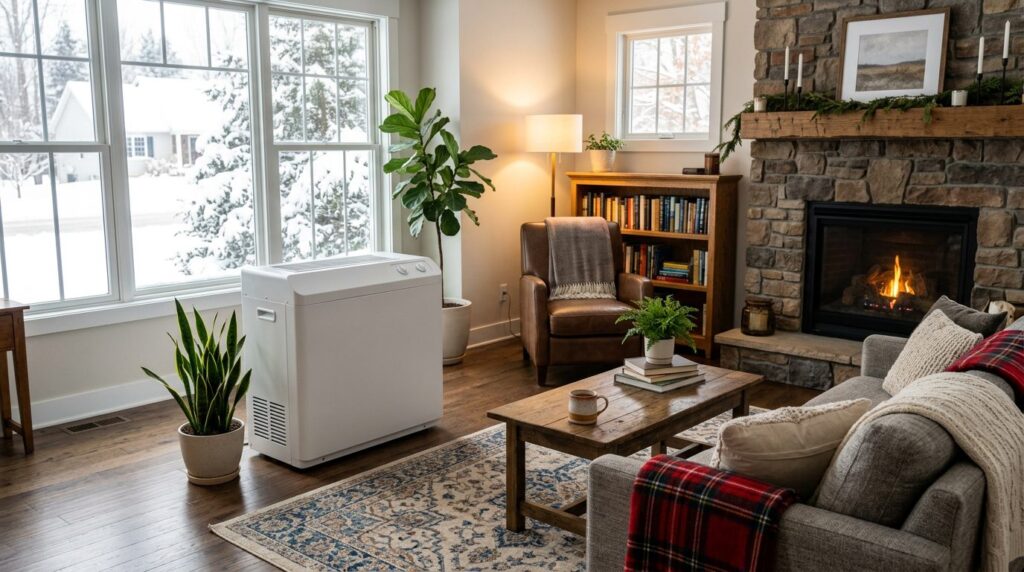
AprilAire states that its products are sold through licensed heating and cooling contractors, who are best placed to choose the right unit, install it correctly and handle warranty situations. It also says homeowners should contact the place of purchase or the installing contractor to make a warranty claim.
Before buying online, talk to your HVAC contractor about the model and ask whether they will install a unit you supply and how they handle warranty support. Some contractors prefer to supply the equipment themselves.
Keep your receipt and register the product, which AprilAire says makes any warranty claim easier because proof of purchase is required.
Furnace-mounted evaporative humidifiers need a cold water supply line with a solenoid valve, a drain connection, wiring to the furnace or humidifier control and, for bypass models, a bypass duct between supply and return. The control is mounted on the return duct or a wall, and automatic models add an outdoor temperature sensor.
Steam models add an electrical supply suited to the unit and a drain for periodic flushing. All of this is work for an HVAC contractor, who can also size the unit for your home and climate.
Ask the installer to set the blower activation option to match your system and to show you how to adjust the control and replace the water panel.
Before the installer leaves, run the humidifier through a short test: confirm water flows to the panel only when the humidifier calls for moisture, check the drain for leaks and make sure the control reads a sensible indoor humidity. Note the water shutoff valve location so you can close it quickly if a leak ever appears, and keep the manual near the furnace for the next season.
Ask which type suits your furnace and ductwork: bypass, fan-powered or steam. Ask where the humidifier, water line, drain and control will go, and whether the installation includes the outdoor temperature sensor for automatic control.
Ask how the unit will be wired: whether it will run only when the furnace heats or also with the blower alone, which AprilAire’s blower activation switch allows. Ask for the expected water panel or canister schedule for your water hardness, and where to buy genuine replacement parts.
Finally, ask who handles warranty claims. AprilAire directs homeowners to the place of purchase or the installing contractor, so it helps to know in advance whether your installer will support a unit you bought yourself. Get the model number, installation date and a copy of the receipt in writing, and register the product with the manufacturer.
Evaporative humidifiers work best with the warm air from a gas or oil furnace, which carries more moisture off the pad. Heat pumps deliver cooler supply air, so evaporative output drops, and a steam humidifier like the AprilAire 800 is often the better match.
Downflow and horizontal furnaces have different mounting options, which is another reason to let an installer choose between bypass, fan-powered and steam.
If you also have air quality goals, coordinate the humidifier with your filter upgrade; our HVAC filter and MERV rating guide covers the filter side.
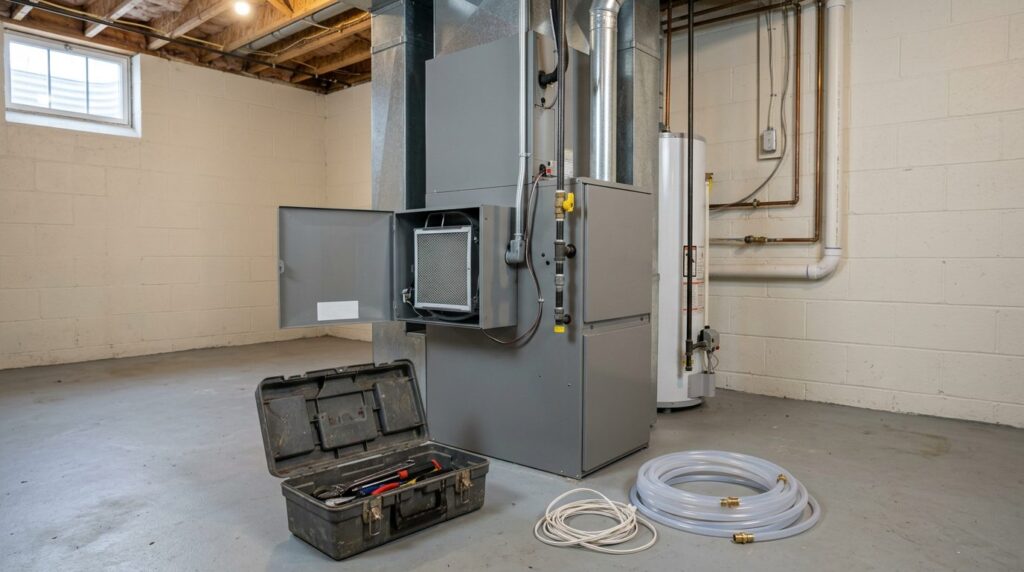
AprilAire says the water panels in its 300, 500, 500M, 600, 600M, 700 and 700M models should be replaced once per humidifier season. Minerals build up on the panel over time and reduce output.
Check the panel mid-season in hard water areas. If it is heavily crusted, replace it early rather than waiting for the reminder light.
At the end of the season, follow the manual’s shutdown steps, which typically include turning off the humidifier’s water supply and, on bypass models, setting the damper for summer so humid air does not flow through it.
For the AprilAire 800, replace the steam canister each humidifier season, as AprilAire recommends; the service light indicates when. The unit drains automatically, so keep the drain line clear.
For console humidifiers, follow the EPA’s guidance for portable units: empty and refill with fresh water daily and clean every third day, and replace wicks as the manufacturer recommends. Standing water in a dirty tank is where bacteria and mold start.
The EPA’s fact sheet also says to follow the manufacturer’s directions for cleaning and maintaining central humidifiers and not to allow water to stand in a tank for extended periods.
Condensation on windows means the humidity is too high for the outdoor temperature. Lower the setting, or switch a manual control to automatic with an outdoor sensor.
Low output often points to a scaled water panel, a clogged water inlet or a damper left in its summer position. Replace the panel, check the water supply and confirm the damper setting in the manual.
Water leaking at the furnace needs attention right away: shut off the humidifier’s water supply and call your installer, because leaks near electrical components and ductwork can cause real damage.
For homes with forced-air heating and dry winter air, yes, as long as humidity is kept within 30% to 50% and the system is maintained. An automatic control that lowers humidity in cold weather prevents the condensation problems that give whole-house humidifiers a bad name.
For most gas or oil furnaces, a bypass or fan-powered evaporative model such as the AprilAire 500 or 700. For very large homes, heat pumps or precise control, a steam model like the AprilAire 800. For homes without ducts, a console humidifier.
Costs vary by model, local labor rates and how much ductwork, plumbing and wiring are needed, with steam models costing the most. Ask a licensed HVAC contractor for a quote that includes the bypass duct, water line, drain and control.
Mayo Clinic recommends 30% to 50%, and the EPA advises not exceeding 50%. On very cold days, go lower if windows fog; an automatic control with an outdoor sensor adjusts this for you.
Yes, if humidity is set too high or the unit is not maintained. The EPA says the key to mold control is moisture control, so keep humidity within the recommended range and watch for condensation.
Evaporative models work less well because heat pumps deliver cooler air. Steam humidifiers, which make their own heat, are usually the better choice with a heat pump.
AprilAire recommends replacing its evaporative water panels once per humidifier season, and sooner if they are heavily scaled in hard water areas.
For whole homes, usually. It humidifies every room through the ductwork, needs no daily refilling and is easier to keep within a healthy range with an automatic control. Portable units suit single rooms, rentals and homes without ducts; see our guide to the best humidifier for bedroom use.
No. Summer air is usually humid enough, and air conditioning removes moisture on purpose. Turn off the humidifier and follow your manual’s summer shutdown steps.
It involves ductwork, a water line, a drain and wiring to the furnace controls, and AprilAire sells through licensed contractors who handle installation and warranty support. For most homeowners, professional installation is the safer choice.
Bypass and fan-powered evaporative models need a drain, because water flows over the water panel and carries minerals away; AprilAire says residue not trapped by the panel is flushed down the drain. Steam models drain periodically to flush minerals from the canister, so they need a drain connection as well.
A bypass model uses the furnace blower and a bypass duct between the supply and return to move air through the water panel. A fan-powered model has its own fan and needs no bypass duct, which makes it easier to fit and gives it more output, as with the AprilAire 700.
It is strongly recommended in cold climates. AprilAire says the outdoor sensor is what makes its humidifiers automatic, letting the control lower humidity as outdoor temperatures fall. Without it, you must turn the setting down yourself before cold snaps to avoid condensation.
Usually, once indoor humidity rises into the 30% to 50% range. The EPA lists static electricity among the winter nuisances that the moisture from a humidifier helps with.
If you have the opposite problem in summer or in a basement, see our guide to the best dehumidifiers for mold prevention.
Written by the Delozone Editorial Team. We research products using manufacturer specifications and documentation, EPA and Mayo Clinic guidance and verified owner feedback, and we update guides when products or guidance change. How we work.
The Delozone Editorial Team researches water treatment, pool and spa, and indoor air products for independent buying guides. We compare products using manufacturer specifications, certification listings such as NSF/ANSI, UL, AHAM and Energy Star, published third-party test data and verified owner feedback. We do not sell products, and affiliate commissions never decide what we recommend.