Independent buying guides for home air, water and safety.
As an Amazon Associate, Delozone earns from qualifying purchases.
Independent buying guides for home air, water and safety.
As an Amazon Associate, Delozone earns from qualifying purchases.


Ozone generators are powerful water treatment tools that are completely safe when installed and operated correctly. However, since ozone is a strong oxidizer, homeowners need to follow some basic safety practices. This guide covers everything you need to know to run your ozone system safely — from installation to daily operation to maintenance.
Before diving into specific tips, it helps to understand the two forms of ozone you’ll encounter:
The goal of ozone safety is simple: keep all ozone either dissolved in water or converted back to oxygen before it enters your breathing space. Modern ozone systems are designed to do exactly this. For the full science, see our complete ozone safety guide.
HEPA alternatives to running an ozone generator
Read the air purifier for mold guide →
Affiliate links: as an Amazon Associate, Delozone earns from qualifying purchases. We do not show prices because they change daily.
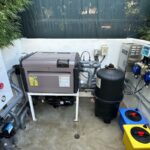
Install your ozone generator in an area with good air circulation — a pool equipment pad, ventilated utility room, or outdoor equipment enclosure. Never install an ozone generator in:
A check valve on the ozone injection line prevents water from flowing backward into the ozone generator. Without a check valve, water can damage the generator, create leaks, and potentially cause ozone to escape through the wrong path. This is the most critical safety component in any installation.
Ozone degrades certain materials. For all connections carrying ozone gas, use:
Avoid natural rubber, standard PVC cement on ozone lines, brass fittings, and standard vinyl tubing. These materials will degrade, causing leaks over time.
An off-gas destruct unit (also called an ozone destructor) converts any undissolved ozone back to oxygen before it’s released into the air. Most quality pool and spa ozone systems include one, but verify it’s installed and connected correctly. For corona discharge generators, which produce higher ozone concentrations, a destruct unit is mandatory.
Leave adequate space around the ozone generator for:
For detailed installation instructions, see our pool ozone generator installation guide.
Your ozone generator should only operate when the circulation pump is running. If ozone is generated without water flow, it has nowhere to go and can accumulate in the plumbing or escape into the air. Most modern systems have flow switches that enforce this automatically.
Ozone has a distinctive clean, sharp smell — similar to the air after a lightning storm. You can detect it at very low concentrations (0.01-0.02 ppm), well below harmful levels. A faint whiff near your equipment is normal. A strong, persistent ozone smell indicates a problem — shut down the system and inspect for leaks.
Never disconnect the off-gas destruct unit, remove check valves, or bypass flow switches to “get more ozone.” These safety components exist for good reason. If you feel your system isn’t producing enough ozone, check for maintenance issues or consult the manufacturer.
Don’t stack items around or on top of your ozone generator. You need to be able to inspect the unit, check connections, and access it quickly if you detect an issue.
For pool owners, test your water regularly to ensure proper ozone levels and chlorine residual. If ozone output drops significantly, it may be time to replace the ozone cell or UV lamp. Declining output can also mean air leaks or moisture in the system.
Always power off the ozone generator and the circulation pump before performing any maintenance. Wait 5-10 minutes for residual ozone in the lines to dissipate before disconnecting any ozone-carrying tubing.
Key replacement intervals for safe operation:
See our complete replacement parts guide for specific part recommendations.
During routine maintenance, inspect:
Ozone generators that use ambient air need clean, dry intake air. Moisture reduces ozone output and can damage corona discharge cells. Ensure the air intake isn’t blocked, and if your system has an air dryer, maintain it per manufacturer instructions.
Serious ozone exposure from residential water treatment systems is extremely rare. Most incidents result from commercial/industrial units in poorly ventilated spaces, not from properly installed home systems.
A properly installed ozone water treatment system is not dangerous. The safety features (check valves, destruct units, ventilation) ensure ozone stays in the water where it belongs. Problems only arise from improper installation, disabled safety features, or severe maintenance neglect.
For residential pool and spa systems, an ambient ozone monitor is not required but provides extra peace of mind. For commercial or industrial installations, ambient monitoring is typically required by code. Monitors that alarm at 0.1 ppm are available for $200-$500.
A very faint ozone scent near the equipment is normal and not a health concern (you can smell ozone at 0.01 ppm, far below any harmful level). A strong, persistent smell indicates a leak that should be addressed.
Pets drinking ozone-treated water is perfectly safe. However, birds are particularly sensitive to airborne ozone. Never place an ozone generator near a bird cage or aviary. Dogs and cats are about as sensitive as humans to airborne ozone.
Some budget ozone generators, particularly small spa units, may not include a destruct unit. If the ozone output is low (less than 50 mg/hr) and the equipment is in a ventilated outdoor area, this may be acceptable. For any indoor installation or higher-output unit, add an aftermarket destruct unit — they’re inexpensive and easy to install.
The Delozone Editorial Team researches water treatment, pool and spa, and indoor air products for independent buying guides. We compare products using manufacturer specifications, certification listings such as NSF/ANSI, UL, AHAM and Energy Star, published third-party test data and verified owner feedback. We do not sell products, and affiliate commissions never decide what we recommend.