Independent buying guides for home air, water and safety.
As an Amazon Associate, Delozone earns from qualifying purchases.
Independent buying guides for home air, water and safety.
As an Amazon Associate, Delozone earns from qualifying purchases.

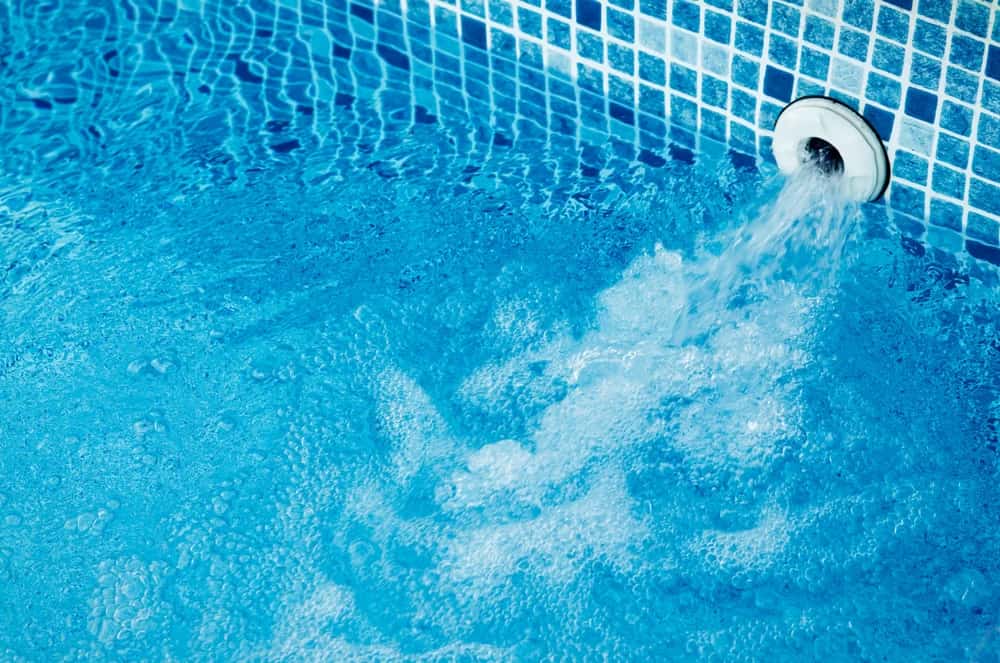

Ozone pool systems are gaining popularity in both residential and commercial pools, yet misinformation continues to surround this technology. Many pool owners hesitate to adopt ozone because of persistent myths related to safety, cost, effectiveness, and maintenance. These misconceptions often stem from confusion between ozone’s role as a supplemental oxidizer and traditional chlorine-based sanitation.
In this article, we break down the top five myths about ozone pool systems, explain why they are incorrect, and clarify what pool professionals and water treatment experts actually say about ozone technology.
Ozone is a powerful oxidizer and disinfectant, capable of destroying bacteria, viruses, and protozoa more effectively than chlorine in many cases. Because of this, many people assume ozone can completely replace chlorine in swimming pools.
Ozone does not eliminate the need for chlorine in traditional pool systems. Experts agree that ozone is best used as a secondary or supplemental sanitizer, while a small residual amount of chlorine remains necessary to protect water as it circulates through the pool.
Ozone works inside the circulation system: oxidizing contaminants, breaking down chloramines, and improving water clarity, but it does not provide a long-lasting residual in the pool basin itself. This is why health codes in most regions still require a measurable chlorine or bromine residual.
By significantly reducing the workload on chlorine, ozone allows pools to operate with much lower chlorine levels, resulting in cleaner, more comfortable water without violating regulations.
Ozone is a strong oxidant, and in high concentrations, ozone gas can be harmful when inhaled. This has led to the misconception that ozone pool systems expose swimmers to unsafe ozone levels.
Properly designed ozone pool systems do not expose swimmers to ozone gas. Ozone is generated, injected, and destroyed within the pool’s plumbing system before water returns to the pool. Any remaining ozone rapidly converts back into oxygen.
Modern ozone systems include safety features such as contact chambers, degassing units, and off-gas destructors to ensure ozone never accumulates in the pool environment.
When installed and operated correctly, ozone pool systems are considered extremely safe and are widely used in public pools, hotels, and aquatic centers worldwide.
The initial cost of an ozone system is higher than that of a basic chlorine feeder, leading many to assume ozone is a luxury solution with limited return on investment.
While upfront costs can be higher, ozone systems often reduce long-term operating expenses. By lowering chemical consumption, minimizing shock treatments, and reducing corrosion and equipment wear, ozone can significantly decrease ongoing pool maintenance costs.
Ozone also improves water quality more efficiently, which means fewer pool closures, less troubleshooting, and reduced labor time.
Pool professionals increasingly view ozone as a cost-effective upgrade, particularly for pools with heavy usage, indoor facilities, or owners seeking long-term savings rather than short-term cost avoidance.
Some pool owners believe ozone’s benefits are overstated and that water treated with ozone looks and feels no different from standard chlorinated water.
Ozone dramatically improves several aspects of pool water quality. It breaks down chloramines, which are responsible for strong odors, eye irritation, and respiratory discomfort. It also oxidizes body oils, lotions, sweat, and organic debris that traditional chlorine struggles to eliminate quickly.
Pools using ozone typically have clearer water, less odor, and softer-feeling water, even with lower chlorine levels.
Experts consistently note that swimmers can feel the difference almost immediately, especially in indoor pools where chloramine buildup is a major issue.
Advanced technology often carries the assumption of complex operation and high maintenance requirements. Some pool owners worry ozone systems require constant monitoring or specialized technicians.
Modern ozone pool systems are designed for low maintenance and automation. Most units require periodic inspection, occasional cleaning, and replacement of components such as ozone cells after several years of use.
Compared to frequent chemical adjustments and manual shocking, ozone systems often simplify overall pool management rather than complicate it.
With proper installation and routine servicing, ozone systems are considered reliable and user-friendly, especially when integrated into automated pool control systems.
Ozone is a stronger oxidizer than chlorine, so it seems logical that it would burn through whatever chlorine is in the water and leave you with a higher chlorine bill, not a lower one.
Ozone reacts first with whatever is easiest to oxidize, and in a real pool that means sweat, oils, lotions, chloramines and other organics. CMP, which makes DEL ozone systems, explains that ozone reacts more readily with the hypochlorite ion, the weaker form of chlorine that dominates when pH runs high, than with hypochlorous acid, the form that does the killing. In a pool with pH in range, the effect on free chlorine is small. As a best practice, the manufacturer recommends injecting ozone downstream of your chlorine feeder or salt cell.
Keep pH balanced and test free chlorine the same way you do now. If your chlorine demand goes up after an ozone install, check pH and injector placement before blaming the ozone.
The best evidence that ozone works, and that it does not replace chlorine, comes from the rules for public pools. The CDC Model Aquatic Health Code (MAHC) lists ozone, along with UV, as a secondary disinfection system aimed at Cryptosporidium, the chlorine-tolerant parasite behind many pool outbreaks. The key numbers:
Your backyard pool is not bound by the MAHC, but these rules answer two myths at once: regulators trust ozone enough to use it against Crypto, and they still require a chlorine or bromine residual in the pool.
Busting myths does not mean ozone is perfect. Here is what the sales pages tend to skip:
If cloudy water is the problem you are trying to solve, start with our guide to fixing cloudy water in ozone pools, since ozone alone rarely fixes a filtration or balance issue. Comparing technologies for a hot tub? See AOP vs ozone vs UV for spas.
Much of the confusion surrounding ozone pool systems comes from outdated information, improper installations, or unrealistic expectations. Ozone is sometimes marketed as a “chemical-free” solution, which oversimplifies its role and leads to disappointment or mistrust.
Education and proper system design are key to understanding what ozone does, and what it does not do, in pool sanitation.
Ozone should be viewed as part of a multi-barrier sanitation strategy. It excels at oxidation and rapid disinfection inside the circulation system, while chlorine or bromine provides residual protection in the pool itself.
This combination allows pool operators to achieve higher water quality standards with fewer chemicals, better air quality, and improved swimmer comfort.
Ozone pool systems are particularly beneficial for:
Experts often recommend ozone as one of the most effective upgrades for improving overall pool performance without increasing chemical exposure.
Ozone pool systems are often misunderstood, but when the myths are stripped away, the benefits become clear. Ozone does not replace chlorine, but it significantly enhances sanitation efficiency, water clarity, and swimmer comfort. It is safe, cost-effective over time, and easier to maintain than many assume.
For pool owners seeking cleaner water with fewer chemicals and fewer problems, ozone is not a myth: it is a proven, science-backed solution.
If you have decided ozone fits your pool, these are the units worth shortlisting. We picked them from published manufacturer specifications and sizing guidance, not from price. Size by more than gallons: DEL’s own sizing chart also weighs bather load and climate, and it recommends the larger Eclipse 20 for some pools as small as 7,000 gallons when use is heavy.
The EC-10 is DEL’s smaller residential pool generator in the Eclipse line, which DEL has since renamed OZONE 25/50/100. It uses corona discharge (DEL calls its cell design Advanced Plasma Gap), the technology DEL moved to from UV-lamp ozone because it produces more ozone per unit and holds its output longer. It suits lightly to moderately used residential pools; check DEL’s sizing chart against your gallons and bather load before buying.
Affiliate links: As an Amazon Associate, Delozone earns from qualifying purchases, at no extra cost to you. Full disclosure
The EC-20 is the next size up in the same corona discharge line. Pick it for larger in-ground pools, hot climates or pools with heavy daily use, where the sizing chart steps up a size. Same install approach and same wear parts as the EC-10, so maintenance does not get harder as the unit gets bigger.
CircuPool’s INDIGO3 generators use high-output VUV lamps rather than corona discharge and run on 110V or 220V. Retailer spec sheets list about 1.08 to 1.46 g/hr for the INDIGO3-S and 2 to 2.25 g/hr for the INDIGO3-M, with a larger XL model above that. CircuPool markets them as an add-on for salt systems. Plan on lamp replacement as part of ownership.
Search CircuPool INDIGO3 on Amazon
For spas and hot tubs, DEL’s Spa Eclipse is a compact corona discharge ozonator built for spa plumbing. A hot tub is also the cheapest place to see whether ozone makes a difference you can smell and feel before you commit to a full pool system. Match the connector to your spa pack before ordering.
Search DEL Spa Eclipse on Amazon
This is the part that answers the “hard to maintain” myth in practice. The 9-0150E renewal kit fits DEL OZONE 25/50/100 units (sold as Eclipse until 2018) and includes a replacement ozone supply check valve, 10 feet of ozone supply tubing, male and female injector hose barbs and a flow meter. DEL recommends changing the ozone supply tubing every year.
No. Ozone reduces chlorine demand but does not eliminate the need for a residual sanitizer.
Yes. Properly installed ozone systems improve comfort by reducing chloramines and irritation.
Yes. Ozone works in both indoor and outdoor pools, though benefits are most noticeable indoors.
Ozone has a very short lifespan and quickly converts back into oxygen after oxidation. One pool ozone maker, CMP, puts its half-life at about 12 minutes at typical pool temperatures, and most of the work happens in the pipes before the water reaches the pool. For more detail, see how long ozone lasts in water.
Yes. Ozone is widely used as a secondary pool sanitation technology. In the CDC Model Aquatic Health Code, ozone qualifies as a secondary disinfection system when it is designed for at least a 2-log (99%) Cryptosporidium reduction per pass, or 3-log (99.9%) for interactive water play venues. A chlorine or bromine residual is still required.
Ozone leaves no lasting residual, only works while the pump runs, does not balance pH or alkalinity, and needs yearly wear parts such as tubing and check valves. Small residential units may reduce chlorine use less than marketing suggests.
Yes. Several ozone generators are sold as add-ons for salt systems. The salt cell keeps providing the chlorine residual while ozone handles oxidation in the plumbing. Inject ozone downstream of the salt cell.
The bans you read about target indoor air cleaners, not pool ozonators. California’s Air Resources Board has limited portable indoor air cleaning devices to 0.050 ppm ozone emissions since 2010 because ozone irritates the lungs. Pool and spa ozonators inject ozone into water inside the plumbing, which is a different product. For public pools, the MAHC requires the air within 6 inches of the water to stay below 0.1 ppm ozone.
The Delozone Editorial Team researches water treatment, pool and spa, and indoor air products for independent buying guides. We compare products using manufacturer specifications, certification listings such as NSF/ANSI, UL, AHAM and Energy Star, published third-party test data and verified owner feedback. We do not sell products, and affiliate commissions never decide what we recommend.