Independent buying guides for home air, water and safety.
As an Amazon Associate, Delozone earns from qualifying purchases.
Independent buying guides for home air, water and safety.
As an Amazon Associate, Delozone earns from qualifying purchases.


ozone vs uv water treatment is a frequent question for homeowners, pool operators, and industrial facilities. In the following sections we compare the two technologies across the most relevant factors.
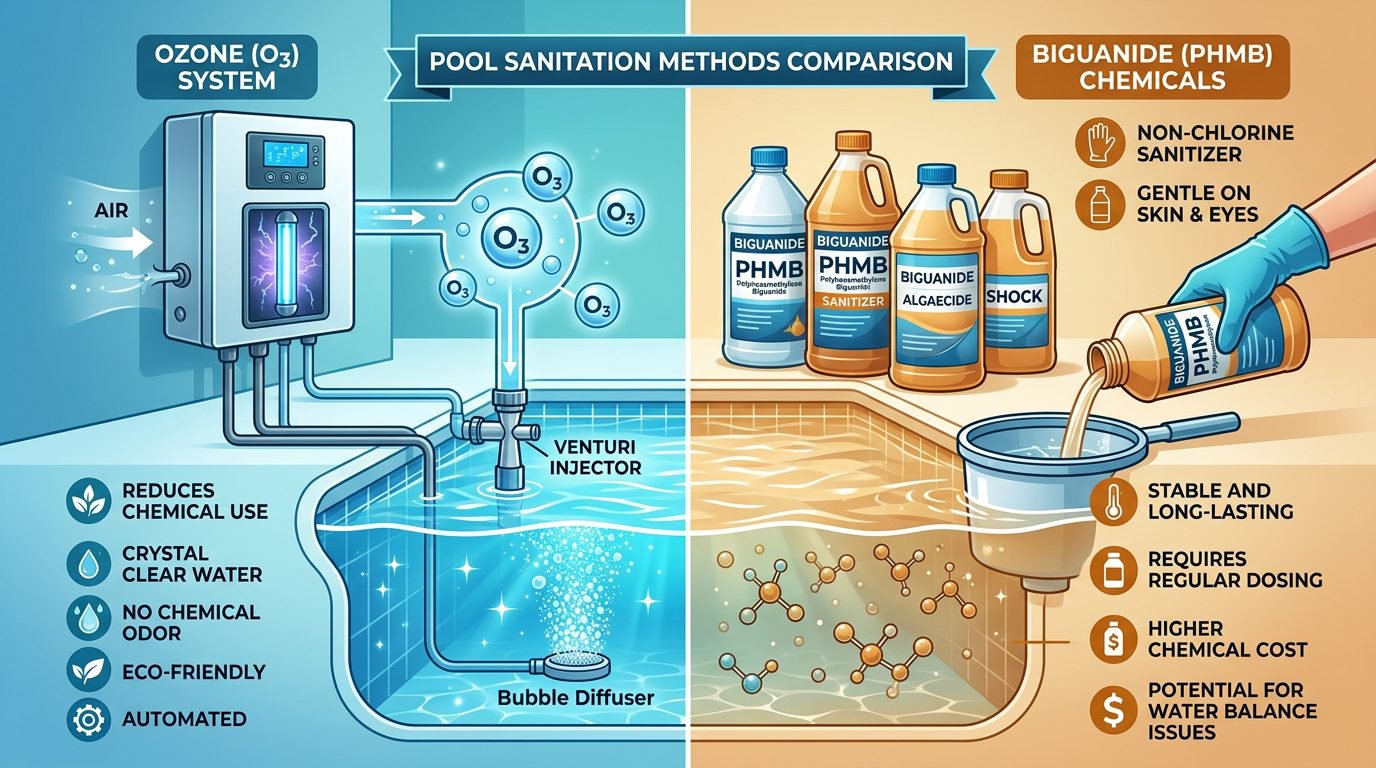
Ozone is produced by passing air or pure oxygen through a high‑voltage corona discharge, which splits O₂ molecules into individual atoms. These atoms quickly recombine with O₂ to form O₃, a powerful oxidant that dissolves into the water stream. Once in the water, ozone attacks organic compounds, bacteria, and viruses, breaking them down into harmless by‑products such as oxygen and water.
The reaction time is short; most contaminants are neutralized within seconds of contact. Because ozone reverts to oxygen after it has acted, there is no residual chemical left in the water, which is a major advantage for drinking‑water applications. The system can be tuned to produce a specific concentration of ozone, allowing precise control over treatment intensity.
One limitation is that ozone does not provide a lasting disinfectant barrier; once the ozone decays, the water can be re‑contaminated if exposed to new sources. For this reason, ozone is often paired with secondary disinfection methods when long‑term protection is required.
UV disinfection relies on a high‑intensity lamp that emits light at a wavelength of around 254 nm, which is optimal for damaging the DNA of microorganisms. When water passes through the UV chamber, each pathogen absorbs the light energy, causing genetic mutations that prevent replication.
The process is purely physical; no chemicals are added and no residues remain after treatment. UV is especially effective against chlorine‑resistant organisms such as Cryptosporidium and Giardia, making it a popular choice for municipal water supplies.
Because the UV dose depends on water clarity, pre‑filtration is often required to remove turbidity that can shield microbes from the light. The lamp’s effectiveness diminishes over time, so regular monitoring of UV intensity is essential to maintain performance.
Ozone’s oxidation potential is roughly 2.5 times that of chlorine, allowing it to break down a wide range of organic pollutants, including taste‑ and odor‑causing compounds. It also inactivates bacteria, viruses, and protozoa with high efficiency, achieving log‑reduction values that meet stringent health standards.
In swimming‑pool water, ozone can reduce the need for chlorine by up to 80 %, resulting in softer water that is gentler on skin and eyes. For industrial wastewater, ozone can degrade phenols, pesticides, and industrial solvents, often eliminating the need for additional chemical treatments.
However, ozone’s effectiveness drops sharply if the water contains high levels of dissolved solids or if the contact time is insufficient. Proper system design, including adequate diffusion chambers, is critical to achieve the desired level of contaminant removal.
UV delivers reliable inactivation of microorganisms, with typical log‑reduction values of 3‑5 for bacteria and 4‑6 for viruses. Because the mechanism is based on DNA damage, UV works regardless of the organism’s chemical resistance, making it a universal disinfectant.
In drinking‑water treatment, UV is often the final barrier after filtration and coagulation, ensuring that any remaining pathogens are neutralized. It is also widely used in aquaculture and food‑processing plants where chemical residues are undesirable.
UV does not remove dissolved chemicals, taste, or odor compounds, so it is usually combined with other processes when comprehensive water quality improvement is required. The technology’s performance is highly dependent on water clarity; suspended particles can block the UV light and reduce efficacy.
For more detailed guidance on ozone applications, see our Ozone Water Treatment Guide. If you are interested in pool‑specific solutions, explore the Pool Ozone System Guide. To understand the broader advantages of ozone, read the Benefits of Ozone Water Treatment article.
The upfront cost of an ozone system includes the generator, diffusion equipment, and often a dedicated power supply. Prices can range from a few hundred dollars for small residential units to several thousand dollars for commercial installations.
Operating expenses are driven by electricity consumption and the occasional need for oxygen or air supply. Because ozone decomposes to oxygen, there is no ongoing chemical purchase, which can offset the higher initial investment over time.
Maintenance costs are moderate; the generator’s electrodes may need replacement after several years, and the system may require periodic cleaning of diffusion plates. Overall, the total cost of ownership is competitive when the treatment goal includes odor removal or organic degradation.
UV systems have a lower purchase price for basic units, especially for small‑scale residential applications. The main hardware cost is the quartz‑enclosed lamp and the housing that ensures proper water flow.
Electricity usage is typically lower than that of an ozone generator, but the lamp must be replaced every 9‑12 months to maintain optimal output. Lamp replacement is a recurring expense that should be factored into the budget.
Additional costs may arise from pre‑filtration equipment needed to keep the water clear for the UV chamber. When these components are included, the overall expense can approach that of an ozone system for larger projects.
Routine checks focus on the generator’s high‑voltage components and the integrity of the diffusion media. Accumulated mineral deposits can reduce ozone output, so periodic cleaning is recommended.
Electrode wear is the primary wear item; most manufacturers suggest replacement after 5‑7 years of continuous operation. The system’s overall lifespan can exceed a decade when components are serviced on schedule.
Because ozone does not leave a residual, there is no need for chemical dosing adjustments, which simplifies day‑to‑day management. However, operators must monitor dissolved oxygen levels to avoid supersaturation in closed‑loop systems.
UV maintenance revolves around lamp replacement and cleaning of the quartz sleeve that protects the lamp. The sleeve can become cloudy due to mineral buildup, reducing UV transmission.
Most UV units are designed for a service life of 10‑12 years, with the lamp being the only consumable part. Regular intensity checks using a UV sensor help determine when a lamp has reached the end of its useful life.
Because the system does not involve chemicals, there is no risk of accidental overdosing. Nevertheless, water flow rates must be monitored to ensure that the exposure time meets the required UV dose.
Pros: strong oxidation power, ability to remove taste and odor, reduces need for chlorine, and produces no harmful residues. It also helps control algae growth in pools and can degrade complex industrial pollutants.
Cons: higher initial cost, requires electricity for generator operation, and does not provide a lasting disinfectant barrier after the ozone decays. System design must address water clarity to achieve optimal performance.
Overall, ozone is an excellent choice when the treatment goal includes chemical oxidation or when a chlorine‑free environment is desired.
Pros: rapid pathogen inactivation, no chemical additives, low risk of by‑product formation, and easy integration with existing filtration systems. UV is highly effective against chlorine‑resistant microorganisms.
Cons: does not address dissolved chemicals, taste, or odor, and performance drops with high turbidity. Lamp replacement is a recurring cost, and the system requires reliable power to avoid downtime.
UV shines in applications where the primary concern is microbial safety and where chemical residues must be avoided.
Ideal for swimming pools that aim to minimize chlorine usage while maintaining clear, odor‑free water. Ozone also excels in beverage processing, where it can sanitize equipment without leaving residues.
Industrial wastewater treatment benefits from ozone’s ability to break down hazardous organics, reducing the load on downstream treatment stages. Residential drinking‑water systems that need to remove taste and odor compounds can also leverage ozone’s oxidation strength.
When regulatory limits require low levels of disinfection by‑products, ozone provides a chemical‑free alternative that still meets microbial standards.
Best suited for municipal drinking‑water plants where pathogen removal is the top priority and water clarity is already high after filtration. UV is also widely used in aquaculture to protect fish stocks from disease without chemical exposure.
Food‑processing facilities rely on UV to sterilize surfaces and packaging lines, ensuring product safety while avoiding chemical residues. In healthcare settings, UV can disinfect water used for dialysis and other critical applications.
Hybrid systems that combine UV with ozone can address both microbial and chemical concerns, delivering a comprehensive treatment solution.
| Feature | Ozone | UV |
|---|---|---|
| Primary Mechanism | Oxidation via O₃ | DNA damage using 254 nm light |
| Pathogen Inactivation | High (log‑reduction 3‑5) | Very high (log‑reduction 4‑6) |
| Chemical Removal | Effective for organics, taste, odor | None (focus on microbes) |
| Residual | None (ozone reverts to O₂) | None (no chemicals added) |
| Typical Installation Cost | Higher (generator, diffusion) | Lower (lamp, housing) |
| Operating Cost | Electricity, occasional electrode replacement | Electricity, lamp replacement every 9‑12 months |
| Maintenance Frequency | Monthly cleaning, 5‑7 yr electrode check | Quarterly sleeve cleaning, annual lamp check |
| Best Application | Pools, taste/odor removal, industrial organics | Municipal drinking water, pathogen‑only needs |
Yes, ozone is approved by many health agencies for drinking‑water treatment. Because it breaks down to oxygen, it leaves no harmful residues. Proper system design ensures that ozone concentrations remain within safe limits.
Typical UV lamps have a useful life of 9‑12 months, depending on water quality and operating hours. Monitoring UV intensity helps determine the exact replacement schedule.
Combining the two technologies is common in larger installations. Ozone handles chemical oxidation while UV provides a final microbial barrier, delivering a more complete treatment profile.
Water turbidity is the primary factor; suspended particles can block the UV light and shield microorganisms. Installing a pre‑filter to achieve low turbidity restores optimal performance.
Because ozone can be hazardous at high concentrations, generators are usually sealed, and any vented air is passed through an ozone destruct unit. Proper installation follows local safety guidelines.
UV systems generally consume less power per gallon treated, especially for small‑scale applications. Ozone generators require higher voltage to create the corona discharge, which can increase electricity use.
Ozone is less corrosive than chlorine, so it can extend the life of pool liners, pumps, and filters. However, high ozone concentrations may affect certain rubber components, so material compatibility should be verified.
The Delozone Editorial Team researches water treatment, pool and spa, and indoor air products for independent buying guides. We compare products using manufacturer specifications, certification listings such as NSF/ANSI, UL, AHAM and Energy Star, published third-party test data and verified owner feedback. We do not sell products, and affiliate commissions never decide what we recommend.