Independent buying guides for home air, water and safety.
As an Amazon Associate, Delozone earns from qualifying purchases.
Independent buying guides for home air, water and safety.
As an Amazon Associate, Delozone earns from qualifying purchases.


ozone vs biguanide is a question that comes up whenever pool owners evaluate sanitation options. We will walk through the most important factors so you can decide which system fits your water‑care strategy.
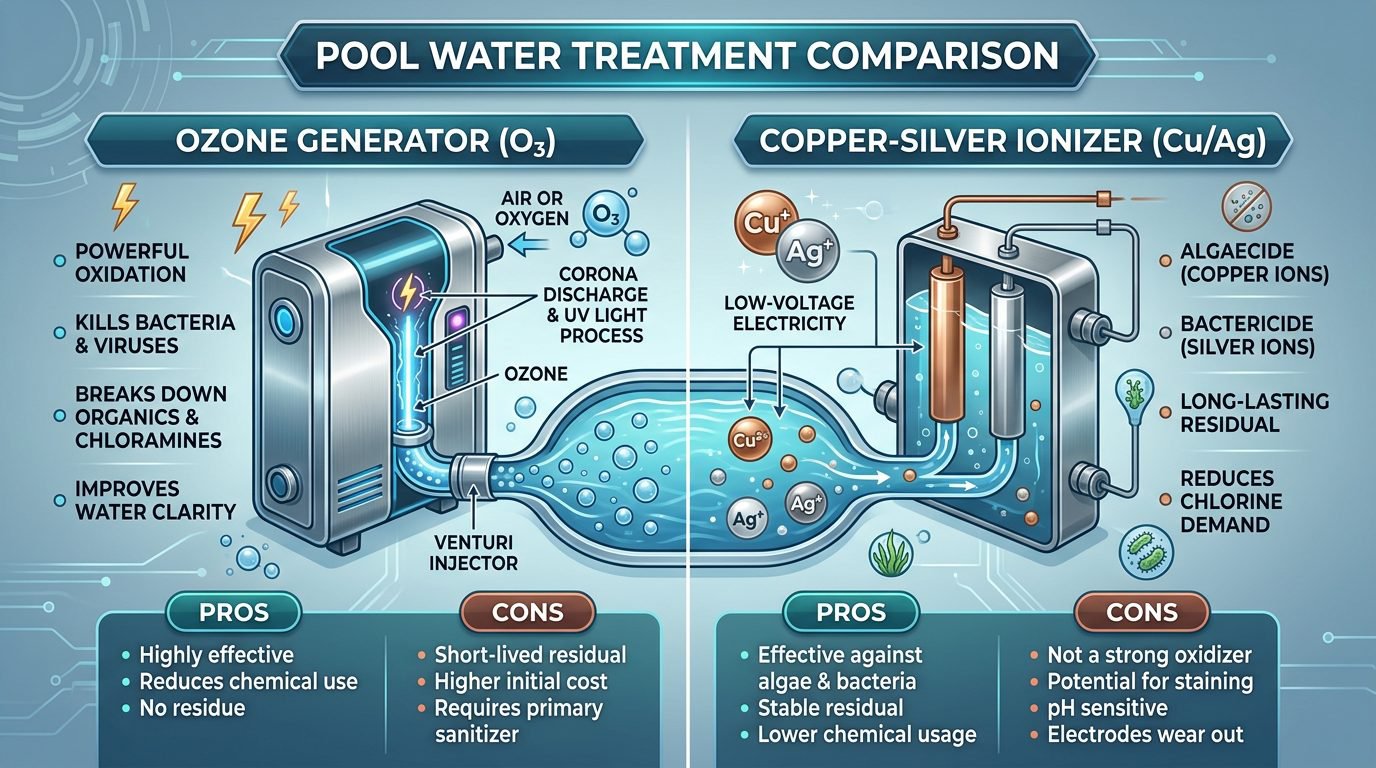
We start by passing air through a high‑voltage discharge, which splits O₂ molecules into individual oxygen atoms. These atoms recombine with other O₂ molecules to form O₃, a highly reactive form of oxygen. The gas is then dissolved into the pool water using a venturi injector or a bubble diffuser. This step creates a powerful oxidizing environment that attacks organic matter and microorganisms.
The dissolved ozone quickly attacks the cell walls of bacteria, viruses, and algae, breaking them apart at a molecular level. Because ozone is unstable, it reverts to ordinary oxygen within minutes, leaving no lasting chemical residues. This rapid breakdown means the water feels clean and fresh without a strong chlorine smell.
We monitor ozone concentration with a simple probe that measures parts per million (ppm). The system automatically adjusts the generator’s output to keep the level within a target range, typically 0.2–0.5 ppm for residential pools. This feedback loop helps maintain consistent sanitation while conserving energy.
Biguanide, sold under brand names such as Baquacil, is a polymeric compound that interferes with the metabolic processes of microorganisms. When added to pool water, it forms a thin film on surfaces that slowly releases the active ingredient. This film acts as a barrier, preventing microbes from establishing a foothold.
Unlike chlorine, biguanide does not generate hypochlorous acid; instead, it creates a stable, low‑pH environment that disrupts microbial cell membranes. The compound remains active for weeks, which reduces the frequency of dosing. Because it does not produce chloramines, swimmers experience a milder odor.
We keep track of biguanide levels by testing the water with a color‑change kit. The recommended concentration is usually 30–50 ppm, depending on pool size and usage patterns. Maintaining this range ensures continuous protection without the need for daily adjustments.
Benefits of Ozone Water Treatment
We have observed that ozone can inactivate most bacteria and viruses within seconds to a few minutes. Its strong oxidative power disrupts DNA and protein structures, making it difficult for pathogens to recover. Laboratory tests show >99.9 % reduction of E. coli and Giardia at typical residential dosing levels.
Biguanide, on the other hand, works more slowly. It takes several hours for the polymeric film to fully engage microbial cells, and complete inactivation may require a higher concentration. Nevertheless, biguanide maintains a steady suppressive effect that keeps bacterial counts low over long periods.
When comparing the two, ozone excels at rapid response to contamination spikes, while biguanide shines in maintaining a baseline level of protection without daily intervention. Choosing between them often depends on how quickly you need the water to become safe after a heavy load of contaminants.
Because ozone attacks organic matter directly, it can prevent algae spores from germinating. In practice, we see a noticeable reduction in green water episodes when ozone is present at the recommended level. The oxidizer also breaks down existing biofilm, making it easier for other sanitizers to work.
Biguanide’s film‑forming nature creates a surface that resists algae attachment. Over time, the polymeric layer discourages biofilm development, especially in areas with low circulation. However, if algae does establish, removal may require a shock treatment with a supplemental oxidizer.
Both systems can be combined with a small amount of chlorine or a non‑chlorine shock to handle stubborn algae blooms. In such hybrid setups, ozone provides the primary oxidation, while biguanide offers a supportive, low‑odor environment.
We typically allocate a larger budget for ozone because the system includes a generator, injector, and control electronics. Prices for a complete residential ozone unit range from $1,200 to $2,500, depending on capacity and brand. Installation may add a few hundred dollars if professional plumbing is required.
Biguanide requires only a storage tank and a dosing pump, which are far less expensive. A starter kit can be purchased for $150–$300, and the pump can be a simple manual or automatic model. Because the hardware is minimal, many pool owners install it themselves.
When evaluating cost, we consider the life‑cycle expense rather than just the purchase price. Ozone’s higher initial outlay can be offset by lower chemical purchases over time, while biguanide’s modest start‑up cost may lead to higher ongoing spending on the liquid disinfectant.
Ozone consumes electricity to run the generator, typically 0.5–1 kW per hour of operation. At an average electricity rate, the monthly cost is usually under $15. The only consumable is the occasional replacement of the ozone cell, which occurs every 2–3 years and costs $100–$200.
Biguanide is purchased as a liquid concentrate that must be added regularly. A typical 5‑gallon bottle can treat a 15,000‑gallon pool for about a month, and the price per bottle is $30–$45. This translates to a monthly expense of $30–$45, plus the cost of a dosing pump if it is not already owned.
We often find that the electricity cost for ozone is lower than the chemical cost for biguanide, especially in regions with cheap power. However, the decision also hinges on how much you value the convenience of a “set‑and‑forget” system versus the tactile control of manual dosing.
The ozone setup includes a generator, a venturi or diffuser, and a control panel. Each component requires periodic inspection: the generator’s dielectric plates can become coated with mineral deposits, the diffuser may clog with debris, and the control panel needs firmware updates. We recommend checking these parts every three months.
Biguanide systems consist of a storage tank, a pump, and a dosing line. The tank should be cleaned annually to prevent microbial growth, and the pump’s seals need replacement every 1–2 years. The dosing line can develop blockages if the concentrate is not mixed properly, so flushing the line before each season is a good practice.
Both systems benefit from a simple logbook where we record dates of component checks, parts replaced, and any anomalies observed. This habit helps catch issues before they affect water quality.
Ozone generators run continuously, but we only need to service the cell and clean the diffuser a few times a year. Because ozone does not leave a residual, there is no need for daily chemical adjustments. This reduces the amount of time pool owners spend on routine tasks.
Biguanide dosing is usually set to a daily schedule, either manually or via an automatic pump. The liquid concentrate must be replenished when the tank runs low, which often means a weekly or bi‑weekly visit to the store. This regular interaction can be seen as a benefit for those who enjoy hands‑on pool care.
Overall, ozone offers a lower service frequency, while biguanide requires more frequent attention to dosing levels and tank cleanliness.
We appreciate that ozone eliminates most of the chlorine smell that can be off‑putting to swimmers. The oxidizer also breaks down organic contaminants, resulting in clearer water with fewer clouding issues. Because ozone reverts to oxygen, there is no risk of harmful chloramine buildup.
Another benefit is the reduction in chemical usage. Once the system is calibrated, the only consumable is the ozone cell, which lasts several years. This can lower the overall chemical footprint of the pool.
Finally, ozone works well in conjunction with low levels of chlorine or a non‑chlorine shock, providing a safety net for unexpected contamination events.
One drawback is the need for electricity, which can be a concern in areas with high rates or frequent power outages. The generator also produces a small amount of ozone gas that must be vented safely to avoid indoor air quality issues.
Installation can be more complex than a simple dosing pump, especially for existing pools where plumbing modifications are required. Some homeowners may need a professional to ensure proper placement of the injector.
Because ozone leaves no residual, water can become vulnerable if the system fails. Adding a low‑level chlorine backup is a common practice to mitigate this risk.
Biguanide’s low‑odor profile makes it attractive for residential settings where a strong chlorine scent is undesirable. The polymeric film also provides a protective barrier on pool surfaces, reducing the likelihood of algae attachment.
Because the disinfectant remains active for weeks, owners can skip daily dosing in favor of a weekly top‑up. This can be convenient for seasonal pools that are not used continuously.
Biguanide is compatible with a wide range of pool materials, including plaster, vinyl, and fiberglass, without causing corrosion or staining.
The primary limitation is the need for a steady supply of liquid concentrate, which can be costly over the long term. Shipping and storage of the chemical also add logistical considerations.
Biguanide does not provide the same rapid oxidation power as ozone, so it may struggle with heavy organic loads such as leaf debris or high swimmer density. In such cases, a supplemental shock treatment is often required.
Because the polymeric film can build up on surfaces, occasional deep cleaning may be necessary to prevent visual dullness or reduced water flow.
For families that swim frequently and value a low‑odor environment, biguanide can be an excellent choice. The ability to dose weekly reduces the amount of time spent handling chemicals, and the film helps keep walls clean.
Homeowners who prioritize crystal‑clear water and want to minimize chemical purchases may lean toward ozone. The system’s rapid oxidation keeps the water sparkling, and the lack of residual chemicals means fewer skin irritations.
In many cases, a hybrid approach works best: ozone handles the bulk of oxidation, while a small amount of biguanide or chlorine provides a safety net during peak usage periods.
Spas, hotels, and public recreation centers often require a sanitation method that can handle high bather loads without producing strong odors. Ozone’s fast kill rate and low residual make it a strong candidate for these high‑traffic environments.
Facilities that operate on a tight budget and have staff trained in chemical handling may prefer biguanide. The simplicity of a dosing pump and the ability to store large volumes of concentrate can reduce labor costs.
Regulatory requirements sometimes mandate a residual disinfectant. In those jurisdictions, a low‑level chlorine backup combined with ozone can satisfy the rule while still delivering the benefits of oxidation.
| Aspect | Ozone | Biguanide |
|---|---|---|
| Primary Mechanism | Oxidation via O₃ gas dissolved in water | Polymeric film that disrupts microbial membranes |
| Kill Speed | Seconds to minutes | Hours to days |
| Residual | None (reverts to O₂) | Low‑level persistent concentration |
| Typical Dose | 0.2–0.5 ppm | 30–50 ppm |
| Upfront Cost | $1,200–$2,500 (generator + accessories) | $150–$300 (tank + pump) |
| Operating Cost | Electricity < $15/mo; cell replacement $100–$200 every 2–3 yr | Liquid concentrate $30–$45/mo |
| Maintenance Frequency | Cell & diffuser check 3×/yr | Tank refill weekly; pump service 1×/yr |
| Odor | Minimal (no chlorine smell) | Very low (no chloramines) |
| Best For | High‑traffic pools, rapid response to contamination | Low‑odor residential pools, seasonal use |
Ozone provides strong oxidation but leaves no residual, so many experts recommend a low‑level chlorine backup to maintain continuous protection. The backup amount is typically far lower than a full chlorine program.
Because biguanide does not produce chloramines, it is often gentler on eyes and skin. However, individuals with specific allergies should still test a small area before full exposure.
The cell’s lifespan depends on water hardness and usage patterns. In most residential settings, a replacement every 2–3 years provides reliable performance.
Without a continuous supply, the polymeric film will gradually degrade, and microbial growth can increase. It is advisable to keep a spare bottle on hand to avoid a gap in protection.
Yes, many pool owners run ozone as the primary oxidizer and add a small amount of biguanide or chlorine as a residual safeguard. This hybrid approach combines rapid kill rates with long‑term stability.
Installation involves electrical work and plumbing modifications, so a qualified technician is recommended. DIY installation is possible for experienced homeowners, but safety codes must be followed.
Biguanide does not corrode metal components, so it works well with most heater types. However, it is always wise to check the manufacturer’s guidelines for any specific restrictions.
The Delozone Editorial Team researches water treatment, pool and spa, and indoor air products for independent buying guides. We compare products using manufacturer specifications, certification listings such as NSF/ANSI, UL, AHAM and Energy Star, published third-party test data and verified owner feedback. We do not sell products, and affiliate commissions never decide what we recommend.