Independent buying guides for home air, water and safety.
As an Amazon Associate, Delozone earns from qualifying purchases.
Independent buying guides for home air, water and safety.
As an Amazon Associate, Delozone earns from qualifying purchases.


For decades, chlorine has been the backbone of water disinfection worldwide. It is inexpensive, effective against many pathogens, and easy to apply at scale. However, as scientific understanding of water chemistry, public health, and environmental impact has advanced, chlorine’s limitations and risks have become increasingly clear.
Today, environmental and public health agencies across the globe are actively pushing for reduced chlorine use in drinking water, pools, wastewater, and industrial applications. This shift is not about eliminating disinfection, but about modernizing water treatment to protect both human health and ecosystems more effectively.
Chlorine revolutionized public health in the early 20th century by dramatically reducing waterborne diseases such as cholera and typhoid. Its ability to provide a lasting disinfectant residual made it particularly valuable for municipal water distribution systems.
Despite these benefits, chlorine was adopted at a time when long-term chemical exposure and environmental persistence were not fully understood. Modern standards now demand higher levels of safety and sustainability.
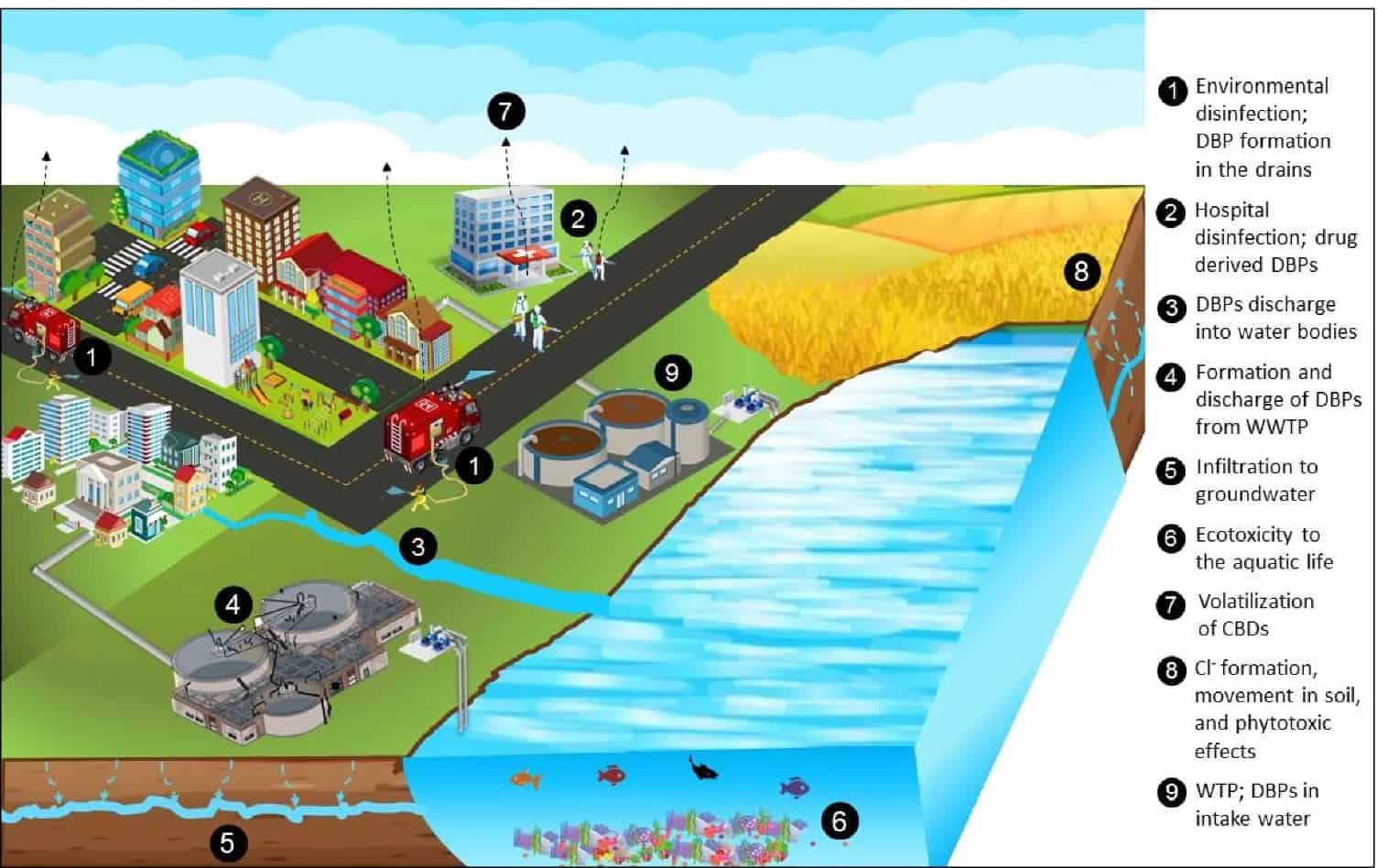
One of the primary reasons agencies are pushing chlorine reduction is the formation of disinfection byproducts (DBPs). When chlorine reacts with natural organic matter in water, it forms compounds such as trihalomethanes (THMs) and haloacetic acids (HAAs).
These byproducts are linked to increased cancer risk, reproductive issues, and developmental problems with long-term exposure. Regulatory bodies now recognize that reducing chlorine is one of the most effective ways to limit DBP formation.
While short-term exposure to chlorine-treated water is generally safe, chronic exposure raises concerns. Chlorine and chloramines can irritate the skin, eyes, and respiratory system, particularly in indoor pools and poorly ventilated spaces.
Sensitive populations — including children, the elderly, and individuals with asthma — are more vulnerable. Environmental agencies increasingly prioritize public health outcomes beyond basic pathogen control.
Chlorine does not only affect humans. When chlorinated water is discharged into natural ecosystems, it can be highly toxic to aquatic life. Even low levels of chlorine can damage fish gills, disrupt reproduction, and harm beneficial microorganisms.
Environmental agencies responsible for watershed protection see chlorine reduction as essential for preserving biodiversity and maintaining ecological balance.
Another major limitation of chlorine is its reduced effectiveness against certain pathogens. Cryptosporidium and Giardia, for example, are highly resistant to chlorine and have caused numerous outbreaks despite chlorinated water supplies.
This has led agencies to conclude that reliance on chlorine alone is no longer sufficient to ensure comprehensive microbial safety.
Modern water safety frameworks emphasize multi-barrier approaches, combining physical, chemical, and advanced treatment methods. Chlorine is increasingly viewed as a secondary or backup disinfectant rather than the primary solution.
By reducing chlorine and integrating technologies such as UV, ozone, and advanced oxidation processes (AOP), agencies achieve better overall protection with fewer chemical side effects.
Consumer awareness has played a significant role in shaping regulatory direction. The public increasingly demands water that is free from strong chemical tastes, odors, and potential health risks.
Environmental agencies respond to these expectations by encouraging treatment strategies that minimize chemical dependence while maintaining safety and compliance.
Chlorine is a major contributor to unpleasant taste and odor in drinking water. These sensory issues often lead consumers to seek bottled water or home filtration systems, increasing plastic waste and environmental footprint.
Reducing chlorine improves water palatability and helps restore trust in public water systems.
Chlorine gas is hazardous to store, transport, and handle. Accidental releases can cause serious injuries or fatalities. Environmental and workplace safety agencies consider chlorine reduction a risk-mitigation strategy for treatment plant operators and emergency responders.
On-site generation alternatives and non-chemical technologies significantly reduce these risks.
Water quality regulations are becoming more stringent worldwide. Many agencies are lowering allowable limits for DBPs and tightening environmental discharge requirements.
Rather than relying on costly end-of-pipe solutions, regulators encourage utilities to reduce chlorine use upstream by adopting cleaner, more efficient technologies.
Ozone and UV disinfection are increasingly favored because they effectively neutralize chlorine-resistant pathogens without producing harmful byproducts. Advanced oxidation processes further enhance contaminant removal by breaking down organic compounds at the molecular level.
Environmental agencies see these technologies as future-proof solutions that align with sustainability goals.
Climate change is increasing organic load in water sources due to higher temperatures, flooding, and runoff. This exacerbates DBP formation when chlorine is used.
Reducing chlorine and adopting advanced treatment methods helps utilities adapt to changing source water conditions.
Indoor pools have become a focal point for chlorine reduction efforts due to chloramine buildup and air quality issues. Agencies increasingly recommend supplemental systems like ozone or UV to lower chlorine demand while maintaining hygiene.
This approach improves swimmer comfort and reduces respiratory irritation.
Although alternative technologies require upfront investment, long-term operational costs often decrease. Reduced chemical purchasing, fewer corrosion issues, and lower regulatory compliance costs make chlorine reduction economically attractive over time.
Environmental agencies consider lifecycle cost analysis when promoting new treatment standards.
Chlorine reduction reflects a broader shift from reactive disinfection to preventive water management. By controlling organic matter, biofilm, and emerging contaminants, agencies aim to reduce the need for heavy chemical dosing altogether.
This proactive approach leads to safer, more resilient water systems.
Environmental agencies are not abandoning chlorine — they are redefining its role. The push for chlorine reduction is driven by health concerns, environmental protection, regulatory pressure, and technological advancement.
By embracing alternative and complementary treatment methods, agencies are working toward a future where water is not only microbiologically safe, but also healthier, cleaner, and more sustainable for people and the planet.
Chlorine is still useful as a residual disinfectant, but agencies aim to minimize its use to reduce health and environmental risks.
Disinfection byproducts, respiratory irritation, taste issues, and environmental toxicity are the primary concerns.
Yes, within regulated limits. However, agencies seek safer treatment combinations to reduce long-term exposure.
Common alternatives include ozone, UV disinfection, and advanced oxidation processes.
No. Modern multi-barrier systems provide equal or greater protection than chlorine-only treatment.
The Delozone Editorial Team researches water treatment, pool and spa, and indoor air products for independent buying guides. We compare products using manufacturer specifications, certification listings such as NSF/ANSI, UL, AHAM and Energy Star, published third-party test data and verified owner feedback. We do not sell products, and affiliate commissions never decide what we recommend.