Independent buying guides for home air, water and safety.
As an Amazon Associate, Delozone earns from qualifying purchases.
Independent buying guides for home air, water and safety.
As an Amazon Associate, Delozone earns from qualifying purchases.

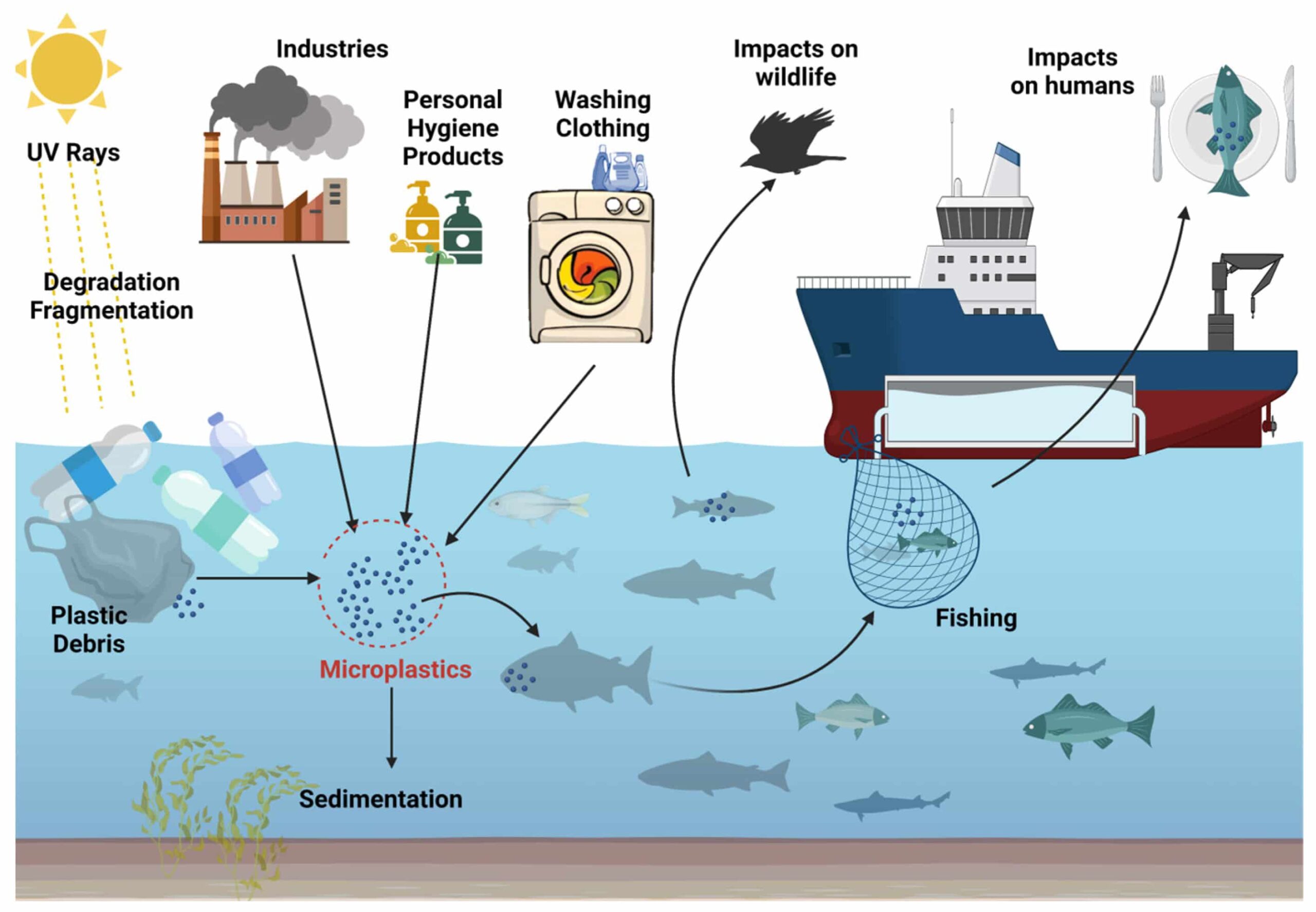

Microplastics have emerged as one of the most persistent and concerning pollutants in modern water systems. Found in oceans, lakes, rivers, groundwater, and even treated drinking water, these particles—typically smaller than 5 millimeters—pose significant environmental and health risks. As global concern rises, researchers are exploring advanced treatment technologies, including ozone, to determine whether they can effectively reduce or break down microplastics. This article examines what current scientific studies reveal about ozone’s ability to degrade microplastics, how ozone interacts with polymer structures, and what the future may hold for ozone-based water treatment.
Microplastics originate from two main sources: primary microplastics (manufactured small particles used in cosmetics, textiles, or industry) and secondary microplastics (broken down from larger plastic items). Their persistence is due to the chemical stability of polymers such as polyethylene (PE), polypropylene (PP), polystyrene (PS), and polyethylene terephthalate (PET). These materials degrade slowly under natural conditions, accumulating in ecosystems and entering the human food chain. Understanding this durable nature is essential for evaluating whether advanced oxidation processes like ozonation can reduce them.
Conventional water treatment plants rely on filtration, sedimentation, and activated sludge processes. While these methods capture some microplastics, especially larger particles, smaller fragments and nanoplastics often escape. Their hydrophobic surfaces, lightweight nature, and chemical resistance limit removal efficiency. Moreover, microplastics continuously fragment into smaller particles, making them even harder to eliminate. As a result, researchers are studying advanced treatment technologies, including ozone, ultraviolet-C (UV-C), and advanced oxidation processes.
Ozone (O₃) is a powerful oxidant used widely in drinking water and wastewater treatment. Its triatomic oxygen structure makes it highly reactive with organic contaminants, microorganisms, and chemical pollutants. When introduced into water, ozone decomposes into reactive oxygen species (ROS), which break down organic compounds. Because ozone works rapidly and leaves no harmful residues, it has become popular for disinfection and organic pollutant control. The question is whether this strong oxidizing power can also degrade the robust polymer chains that make up microplastics.
Several studies have investigated ozone’s impact on microplastics, with mixed but promising results. While ozone does not completely mineralize plastic into harmless components, research shows that it can oxidize polymer surfaces, increase fragmentation, and enhance biodegradability.
Research indicates that ozone modifies the surface chemistry of microplastics by introducing oxygen-containing functional groups—such as carbonyls and hydroxyls—into the polymer structure. These chemical alterations increase the hydrophilicity of microplastics, making them more compatible with biological and physical removal steps. For example, studies on polyethylene microplastics show increased roughness and cracks after ozone exposure, signaling early deterioration of the structure.
Although ozone alone is not typically strong enough to fully break microplastics into inert molecules, its oxidative effect weakens polymer chains, leading to fragmentation. In laboratory settings, prolonged ozonation has resulted in smaller particle sizes and increased microplastic brittleness. These changes improve removal efficiency when combined with filtration or coagulation processes. This means ozone may play a supporting rather than solitary role in microplastic mitigation.
A major challenge with microplastics is their resistance to microbial degradation. Studies show that ozonated microplastics become more susceptible to bacterial breakdown because ozone introduces reactive sites into the polymer. While this does not eliminate microplastics immediately, it accelerates long-term degradation pathways.
Despite positive findings, it is important to acknowledge ozone’s limitations. Ozone is highly reactive but not necessarily capable of complete chemical breakdown of plastic polymers. High doses and long exposure times are required to achieve significant changes, making the process energy-intensive in full-scale applications. Additionally, ozone may increase fragmentation without full mineralization, which could produce smaller particles that require additional treatment steps.
These limitations suggest that ozone is not a standalone solution but can serve as part of a multi-stage water treatment strategy.
Many studies conclude that ozone is more effective when combined with other advanced oxidation processes or physical removal technologies. The synergy between ozone and these treatment steps often results in significantly higher microplastic removal rates.
UV-C irradiation breaks chemical bonds while ozone provides oxidative stress. Together, they generate hydroxyl radicals, which have greater oxidation potential than ozone alone. This combination can degrade polymer surfaces more efficiently, making microplastics easier to capture through downstream filtration.
Also known as peroxone, this combination creates hydroxyl radicals that attack polymers more aggressively. Research has shown increased surface cracking and reduced particle size under peroxone treatment compared to ozone alone.
Ozone-treated microplastics often have increased polarity, allowing coagulants to bind to them more easily. This results in higher capture rates using sand filters, membrane filters, or dissolved air flotation.
Nanoplastics—particles smaller than 1 micrometer—are even more challenging to treat. Preliminary research shows ozone may alter the surface chemistry of nanoplastics but has limited ability to fully degrade them. Here again, ozone works best as a pre-treatment step that improves removal efficiency when paired with membrane filtration or advanced oxidation technologies.
Ozone does not introduce harmful chemical residues into water, making it an environmentally friendly treatment option. However, ozone must be used carefully to avoid generating excessive secondary oxidation byproducts. Fortunately, most byproducts are manageable with proper engineering controls. The overall environmental impact of ozone treatment remains significantly lower than that of chlorine-based treatments.
Researchers are currently studying optimized ozone dosages, hybrid treatment systems, and catalysts that enhance ozone degradation of microplastics. Emerging technologies such as catalytic ozonation and plasma-activated ozone show significant promise in laboratory settings. As the scientific community seeks scalable solutions, ozone is expected to play an increasingly important role in microplastic reduction.
Ozone cannot completely eliminate microplastics, but it can oxidize and weaken polymer structures, making them easier to remove through filtration and other processes.
Ozone can oxidize plastic surfaces and cause fragmentation, but full mineralization requires additional treatment steps such as UV-C or advanced oxidation processes.
Yes. Ozone is widely used for disinfection and does not leave harmful residues. However, controlled dosing is essential to minimize byproducts.
Ozone has limited ability to break down nanoplastics, but it improves their removal when combined with membrane filtration or advanced oxidation.
A multi-step treatment process—combining ozone, filtration, coagulation, and possibly UV-C—offers the highest removal efficiencies currently available.
The Delozone Editorial Team researches water treatment, pool and spa, and indoor air products for independent buying guides. We compare products using manufacturer specifications, certification listings such as NSF/ANSI, UL, AHAM and Energy Star, published third-party test data and verified owner feedback. We do not sell products, and affiliate commissions never decide what we recommend.