Physical Address
304 North Cardinal St.
Dorchester Center, MA 02124
Physical Address
304 North Cardinal St.
Dorchester Center, MA 02124

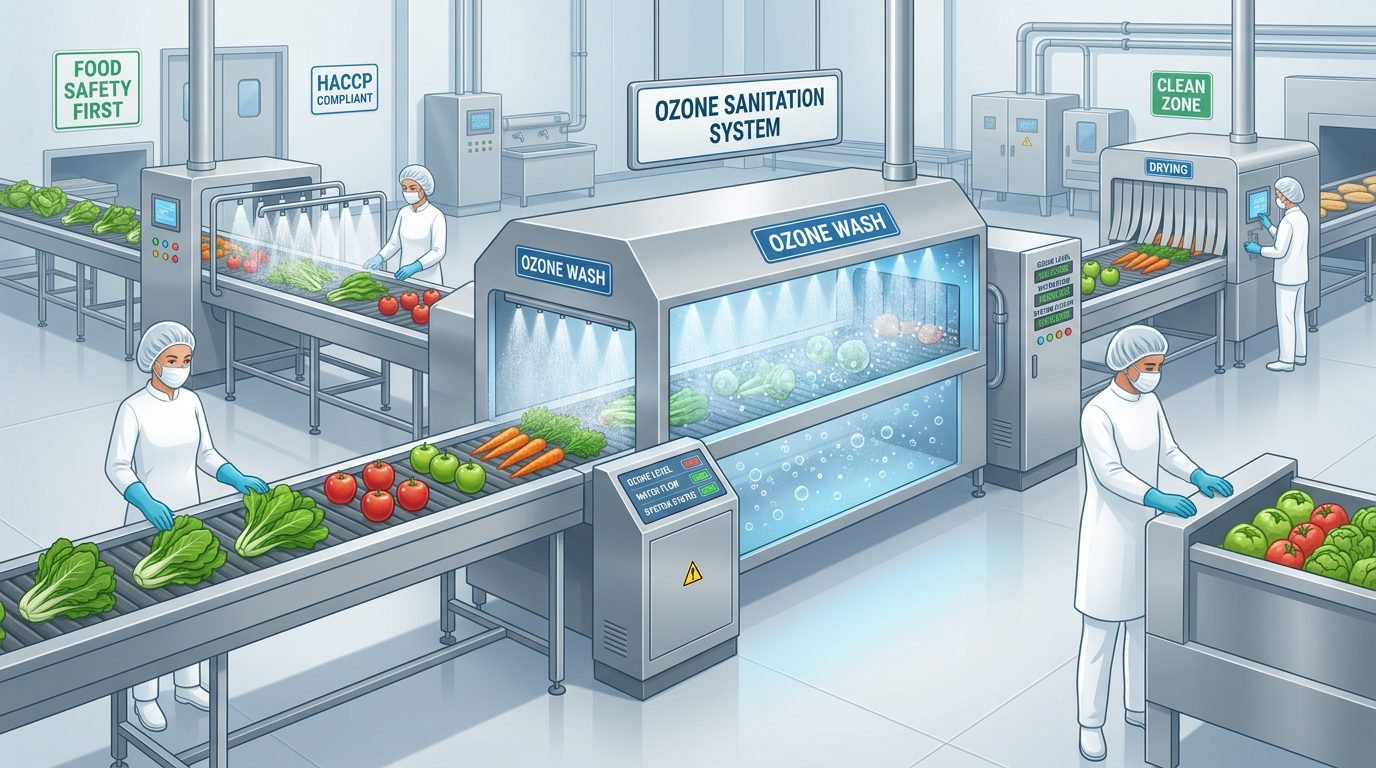

Industrial ozone applications reshape how we protect water, food, and equipment across manufacturing and processing sectors. We map out every major use case so you can find the right fit for your operation.
Key Takeaways
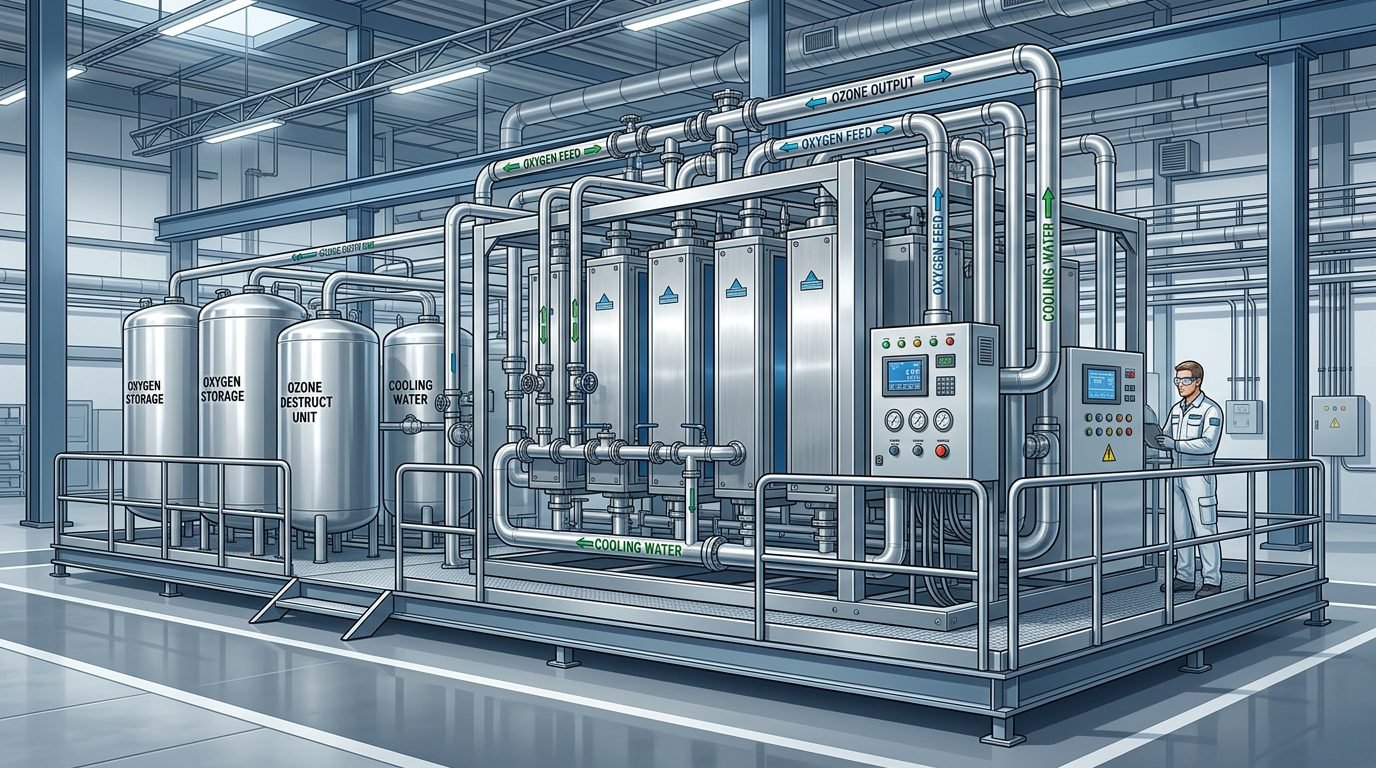
We generate ozone by applying a high-voltage spark across a gap filled with oxygen-rich gas. The corona discharge splits O₂ molecules, allowing them to recombine into O₃, a molecule that carries three times the oxidative power of its parent. In large-scale units, we cascade multiple discharge cells to reach output levels measured in kilograms per hour.
Our engineers treat each cell like a miniature thunderstorm, harnessing the raw energy of the arc while keeping temperature spikes under control. By cooling the gas stream between cells, we preserve the highest possible ozone concentration, often exceeding 150 g/Nm³. The result is a steady, high-purity stream ready for injection into water, air, or process streams.
We compare this method to a symphony: the high-voltage source is the conductor, the gas flow is the orchestra, and the ozone produced is the music that reverberates through the plant. The harmony of voltage, pressure, and flow determines the final performance.
We dissolve ozone into water using fine-bubble diffusers, venturi injectors, or static mixers, each creating a massive surface area for rapid transfer. The finer the bubbles, the faster the dissolution, because the gas-liquid interface expands dramatically. In practice, we achieve up to 95% transfer efficiency in a single pass.
For air-based applications, we employ venturi tubes that draw ambient air into the high-velocity stream, mixing ozone with the carrier gas. This approach spreads ozone evenly across cooling towers or HVAC ducts, where it attacks biofilm and microbes on contact. We monitor dissolution rates with online ozone sensors, adjusting flow to keep concentrations within target windows.
We view injection as a dance between gas and liquid, each step timed to maximize contact. The choreography varies with temperature, pressure, and the presence of organic load, so we fine-tune the process for each application.
We install continuous ozone analyzers that report concentration in real time, allowing us to shut down the generator if levels approach occupational limits. The sensors trigger alarms and automatically vent excess ozone to a catalytic destroyer, converting it back to oxygen. OSHA sets the permissible exposure limit at 0.1 ppm as an 8-hour time-weighted average.
Our safety interlocks include oxygen-deficiency detectors, emergency stop buttons, and enclosed housing for the discharge chamber. We train operators to wear ozone-compatible respirators during maintenance, and we post clear signage indicating safe distances.
We treat safety as a three-part shield: detection, response, and prevention. This approach keeps workers safe while preserving the integrity of the process.
We apply ozone after primary clarification to eliminate residual bacteria, viruses, and protozoa. The strong oxidizing power breaks cell walls, rendering pathogens harmless within seconds. Compared with chlorine, ozone leaves no chlorinated by-products, which simplifies downstream treatment.
Our pilot studies show a 99.9% reduction in coliform counts when ozone dosage reaches 2 mg/L for a 30-minute contact time. The process also lowers biochemical oxygen demand (BOD) by oxidizing soluble organic matter. As a result, the effluent meets stringent discharge standards set by the EPA’s NPDES program without additional filtration.
We view ozone as a guardian for waterways, sweeping away invisible threats while preserving the natural balance of the ecosystem. For a broader look at ozone’s purification mechanisms, read our guide to how ozone purifies water.
We target high-strength waste streams from food processing, petrochemicals, and metal finishing. Ozone oxidizes phenols, cyanides, and oil-based contaminants, turning them into biodegradable fragments. The reaction often produces harmless carbon dioxide and water, reducing the need for costly sludge handling.
In a textile plant, we reduced color-removal chemical usage by 40% after integrating an ozone oxidation stage. The same system lowered total organic carbon (TOC) by 30% in a pharmaceutical effluent line. These gains translate into lower operating costs and a smaller environmental footprint.
For commercial-scale implementations, our commercial ozone water treatment guide covers system design in detail.
We treat complex waste streams that contain active pharmaceutical ingredients (APIs) and residual solvents. Ozone reacts with aromatic rings and halogenated compounds, breaking them into smaller, less toxic molecules. The process can be paired with advanced oxidation processes (AOPs) for complete mineralization.
Our case study with a drug manufacturer showed a 95% reduction in trace API concentrations after a 15-minute ozone contact. The system also lowered the chemical oxygen demand (COD) by 25%, easing the load on downstream biological treatment.
Pharmaceutical waste is one of the most challenging streams we encounter, but ozone’s selectivity for complex organic bonds makes it an ideal primary treatment stage.
We rinse fruits and vegetables with ozone-rich water to eliminate surface microbes without altering flavor or texture. The short exposure time — typically under a minute — preserves delicate nutrients while achieving a 5-log reduction in Salmonella and E. coli. The FDA recognizes ozone as GRAS (Generally Recognized As Safe) for direct food contact.
Our trials with leafy greens showed a 70% extension of shelf life when ozone treatment preceded packaging. The oxidation also reduces pesticide residues, offering a cleaner product for health-conscious consumers.
We liken ozone to a gentle rain that washes away contaminants while leaving the produce fresh and vibrant. This chemical-free approach is gaining traction with organic producers and retailers demanding cleaner supply chains.
We integrate ozone gas chambers into processing lines to sanitize carcasses, cutting boards, and transport containers. The gas penetrates crevices that liquid sprays cannot reach, destroying pathogens on contact. Ozone also inhibits the growth of spoilage bacteria during cold storage.
In a poultry plant, ozone reduced Campylobacter counts by 99% and cut the need for chlorine washes by half. The result was a cleaner product with a longer refrigerated shelf life. Staff reported fewer chemical handling incidents, improving workplace safety.
We view the ozone chamber as a protective barrier that guards the product from invisible threats at every stage from slaughter to packaging.
We treat water used for brewing, soft drinks, and bottled water with ozone to achieve sterile quality without chemical residues. Ozone also removes off-flavors caused by iron or organic compounds, improving taste clarity.
Our collaboration with a brewery demonstrated a 30% reduction in microbial load after a 2-minute ozone injection, allowing the brewery to skip a traditional pasteurization step. The energy savings were meaningful, and the product retained its aromatic profile.
Bottling operations benefit from ozone’s rapid decomposition — by the time the bottle is capped, the ozone has reverted to oxygen, leaving no residual taste or chemical trace. To learn more about ozone’s benefits, see our benefits of ozone water treatment overview.
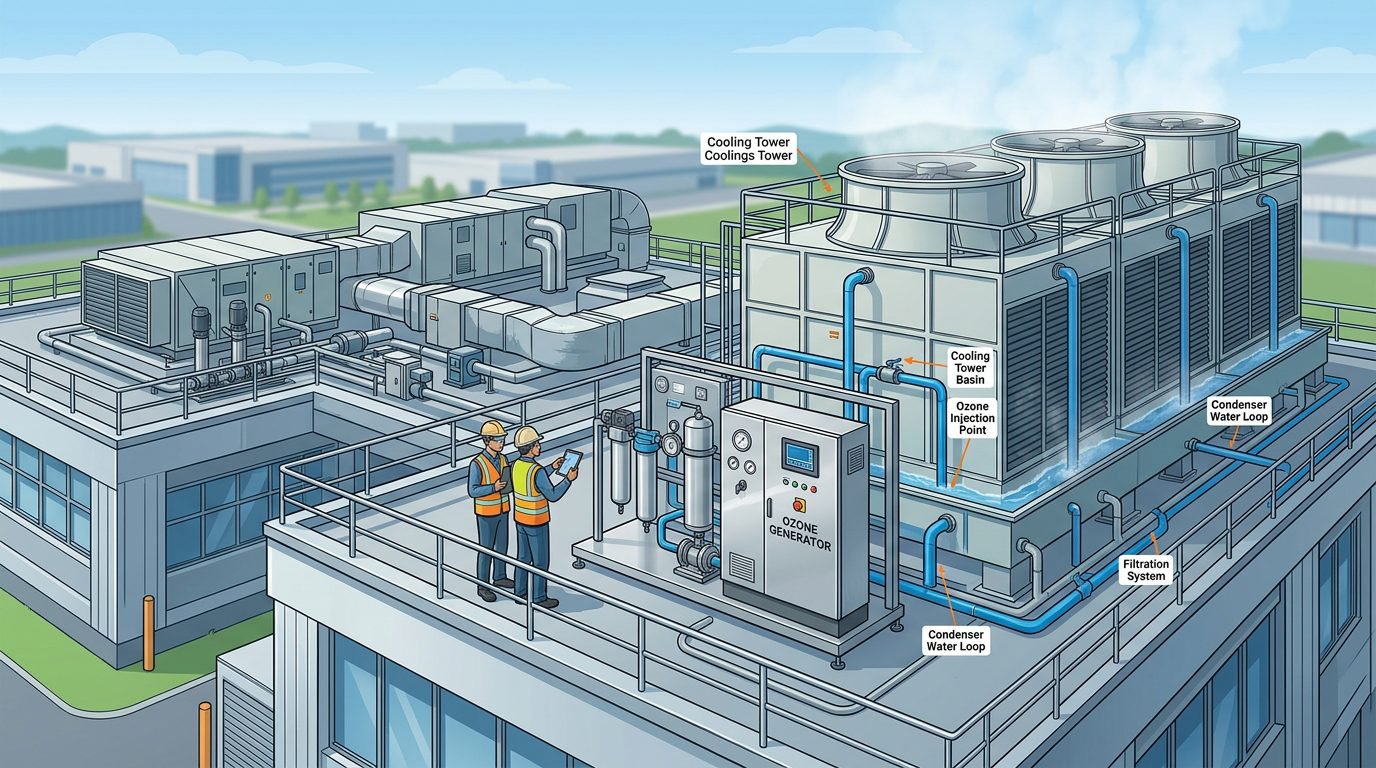
We circulate ozone through cooling tower basins to eradicate Legionella bacteria before they can colonize the system. The oxidizing action destroys the protective biofilm that shelters the microbes, making the environment hostile to their growth.
Field data show a 98% drop in Legionella counts after a single ozone treatment cycle, eliminating the need for continuous biocide dosing. The system also reduces scaling, which improves heat-exchange efficiency.
Legionella outbreaks carry serious legal and public health consequences, making prevention a top priority for facility managers. Ozone provides a proactive defense that addresses both the bacteria and their biofilm habitat simultaneously.
We deploy ozone in HVAC ducts and condensers to break down biofilm and prevent mineral deposits. The gas oxidizes organic matter, while the accompanying oxygen helps dissolve calcium carbonate, reducing scale formation.
In a large office complex, ozone lowered duct fouling by 45% and cut annual maintenance costs by 20%. The cleaner airflow also contributed to modest energy savings by reducing resistance through the ductwork.
Cleaner surfaces, lower maintenance, and higher efficiency — these three outcomes make ozone a compelling alternative to traditional chemical dosing in HVAC systems.
We calculate energy savings by comparing the reduced need for chemical dosing, lower pump loads due to decreased scaling, and fewer filter replacements. Ozone’s rapid action means we can operate at lower flow rates while achieving the same level of disinfection.
Our modeling predicts a 10-15% reduction in overall plant energy consumption when ozone replaces traditional chlorine or UV systems. The savings compound over years, delivering a strong return on investment.
We describe the impact as a ripple effect — one adjustment in treatment creates waves of efficiency throughout the facility.
We use ozone to bleach and soften fabrics without harsh chemicals, preserving fiber strength while achieving consistent color results. The gas reacts with pigments, breaking them down into colorless compounds in a fraction of the time traditional processes require.
In a denim plant, ozone reduced water usage by 60% and eliminated the need for sodium hypochlorite baths. The process also lowered effluent COD, simplifying wastewater compliance. Major fashion brands now require ozone finishing as part of their sustainability commitments.
The environmental case for ozone in textiles is compelling: less water, fewer chemicals, and a cleaner waste stream at every stage of production.
We apply ozone to sterilize equipment, clean rooms, and treat water used in drug synthesis. The molecule’s ability to destroy spores and viruses in seconds makes it ideal for aseptic environments.
Our pilot at a vaccine facility showed a 99.99% reduction in surface bioburden after a 5-minute ozone exposure, allowing the facility to shorten cleaning cycles and increase batch throughput. The validated process also reduced the volume of cleaning chemicals by 30%.
Pharmaceutical manufacturing demands the highest levels of sterility, and ozone meets that standard without leaving chemical residues that could contaminate the product.
We employ ozone to remove organic residues from wafers and circuit boards, preventing defects caused by contamination. The gas reacts at the molecular level, leaving a pristine surface ready for deposition or etching.
In a semiconductor fab, ozone cleaning reduced particle counts by 80% compared with traditional solvent wipes, improving yield and reducing scrap rates. The process also eliminated the need for hazardous solvents, improving workplace safety and reducing disposal costs.
As chip geometries shrink below 5 nm, the demand for contamination-free surfaces grows. Ozone’s ability to clean without physical contact makes it an increasingly attractive option for next-generation fabs.
We assess the required ozone dose by calculating the flow rate of the target medium and the desired concentration. For water treatment, typical doses range from 0.5 mg/L for basic disinfection to 5 mg/L for advanced oxidation.
| Application | Typical Output (g/hr) | Typical Concentration (mg/L) |
|---|---|---|
| Municipal Wastewater | 500-1,200 | 2-4 |
| Industrial Effluent | 800-2,000 | 3-6 |
| Food-Processing Rinse | 200-600 | 0.5-2 |
| Cooling Tower | 300-900 | 1-3 |
| Textile Bleaching | 150-400 | 0.8-2.5 |
Our sizing tool matches the generator’s production rate to the plant’s demand, preventing waste from over-production and efficacy gaps from under-sizing. We recommend a 15-20% safety margin above calculated requirements.
We offer generators that run on pure oxygen, delivering higher ozone concentrations, or on ambient air, which is more economical for large-volume applications. Oxygen-based systems achieve up to 200 g/Nm³, while air-based units typically produce 30-50 g/Nm³.
Choosing oxygen maximizes efficiency for high-strength disinfection, whereas air suffices for bulk water treatment where lower concentrations are acceptable. The decision also influences equipment footprint, energy consumption, and ongoing supply costs.
We compare the two options to choosing between a sprint and a marathon — oxygen gives a burst of concentrated power, air provides steady, cost-effective endurance over high-volume streams.
| Technology | Typical Dose | By-Product Profile | Energy Use |
|---|---|---|---|
| Ozone | 0.5-5 mg/L | None (decomposes to O₂) | Moderate |
| Chlorine | 1-3 mg/L | Chloramines, trihalomethanes | Low |
| UV | 40-80 mJ/cm² | None | High |
We design each system to comply with OSHA’s permissible exposure limit of 0.1 ppm for ozone and EPA guidelines for wastewater discharge. Built-in alarms, automatic venting, and interlocks keep concentrations well below legal thresholds.
We also provide documentation for FDA’s GRAS status when ozone is used in food processing, and we support clients through local permitting and compliance reviews. For related regulatory information, see our article on ozone for commercial aquatics facilities.
We see heavy adoption in water and wastewater treatment, food and beverage processing, cooling tower maintenance, and pharmaceutical manufacturing. Emerging sectors like textiles, semiconductors, and aquaculture are growing rapidly as well.
Capital costs for industrial ozone systems range from $15,000 to over $100,000 depending on output capacity. However, reduced chemical purchases, lower waste disposal fees, and energy savings typically deliver a payback period of 2-4 years.
Ozone provides faster disinfection, leaves no chlorinated by-products, and reduces sludge generation. However, ozone requires on-site generation equipment, while chlorine can be stored and transported. For applications where by-product control matters, ozone is the stronger choice.
We confirm that ozone effectively oxidizes complex organic compounds and residual active pharmaceutical ingredients, often achieving greater than 90% reduction in toxicity. When combined with advanced oxidation processes, it can achieve near-complete mineralization of stubborn compounds.
We install continuous ozone monitors, automatic venting to catalytic destroyers, and interlocked shutdowns. Personnel wear ozone-compatible respirators during maintenance, and training covers leak detection, emergency procedures, and proper ventilation requirements.
Ozone decomposes to oxygen within seconds of application, leaving no chemical residues on food surfaces. The FDA recognizes ozone as Generally Recognized As Safe (GRAS) for direct food contact, making it one of the cleanest sanitization methods available.
Michael Torres is a certified water treatment engineer with over 15 years of experience evaluating ozone and advanced oxidation systems. He reviews commercial and residential pool equipment and reports on system performance across facilities in North America.