Independent buying guides for home air, water and safety.
As an Amazon Associate, Delozone earns from qualifying purchases.
Independent buying guides for home air, water and safety.
As an Amazon Associate, Delozone earns from qualifying purchases.

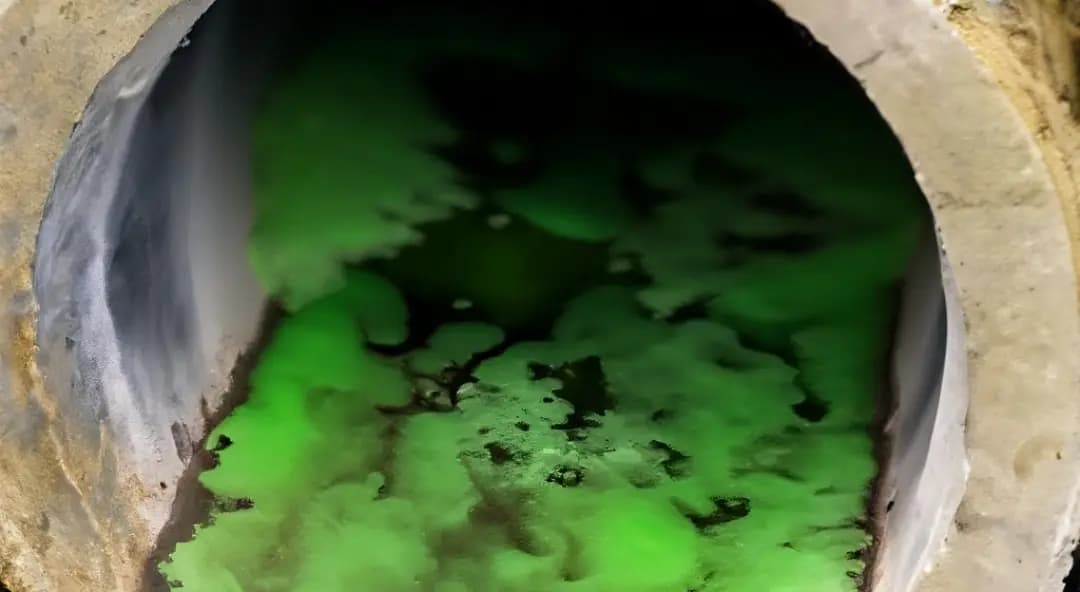

Most homeowners assume that if water looks clear and tastes fine, it must be safe. However, an invisible threat can exist inside plumbing systems even when water appears clean: biofilm. Biofilm is one of the most underestimated risks in residential and commercial plumbing, capable of harboring harmful pathogens, degrading water quality, and reducing the effectiveness of disinfection methods.
Understanding the hidden dangers of biofilm in plumbing is essential for protecting health, maintaining water system performance, and ensuring long-term water safety. This guide explores what biofilm is, why it forms, and why it represents a serious but often overlooked problem.
Biofilm is a complex community of microorganisms that attach to surfaces and surround themselves with a protective, slime-like matrix. In plumbing systems, biofilm forms on the inner walls of pipes, faucets, storage tanks, and filtration equipment.
Unlike free-floating bacteria, biofilm organisms are embedded in a self-produced polymer layer that shields them from environmental stressors. This structure makes biofilm far more resistant to disinfectants than individual microorganisms in water.
Biofilm formation begins when bacteria naturally present in water adhere to pipe surfaces. Over time, these bacteria multiply and secrete extracellular substances that create a sticky matrix. Minerals, organic matter, and sediments further contribute to biofilm growth.
Low water flow, warm temperatures, and stagnant conditions significantly accelerate biofilm development. Once established, biofilm can persist for years unless actively removed or controlled.
One of the most dangerous aspects of biofilm is its invisibility. Biofilm typically forms inside pipes where it cannot be seen, and water may remain clear and odorless despite heavy microbial colonization.
Standard water tests often measure planktonic (free-floating) bacteria, not surface-attached biofilm communities. As a result, plumbing systems can appear compliant while still harboring significant microbial risk.
Biofilm acts as a reservoir for harmful pathogens, including Legionella, Pseudomonas, E. coli, and non-tuberculous mycobacteria. These organisms can detach from the biofilm and enter household water, increasing exposure risk.
Inhalation of aerosols from showers, faucets, or humidifiers can lead to respiratory infections. Immunocompromised individuals, the elderly, and young children are especially vulnerable to biofilm-related pathogens.
Legionella bacteria thrive within biofilms, using them as protection from disinfectants and temperature fluctuations. Biofilm provides nutrients and shelter, allowing Legionella to multiply even in treated water systems.
This relationship explains why Legionella outbreaks can occur in buildings with seemingly adequate water treatment. Eliminating biofilm is a critical step in controlling Legionella risk.
Biofilm can degrade water quality by producing unpleasant tastes and odors. Musty, earthy, or metallic flavors are often linked to microbial activity within pipes rather than the source water itself.
As biofilm grows, it can also release organic compounds and particles that cloud water or discolor fixtures, misleading homeowners into blaming external contamination.
Traditional disinfectants such as chlorine are far less effective against biofilm than against free-floating bacteria. The protective matrix surrounding biofilm organisms can reduce disinfectant penetration by up to 1,000 times.
This resistance allows pathogens to survive and re-enter the water stream even after treatment, creating a false sense of security and ongoing contamination cycles.
While biofilm is often discussed in hospitals and large buildings, residential plumbing is equally vulnerable. Homes with low water usage, long pipe runs, or aging infrastructure are particularly at risk.
Commercial buildings face added challenges due to complex plumbing networks and intermittent use, but the same biological principles apply. Biofilm does not discriminate based on building size.
Certain plumbing materials are more prone to biofilm formation. Plastic pipes, rubber seals, and flexible tubing can provide favorable surfaces for microbial attachment.
Over time, even metal pipes develop biofilm, especially when corrosion creates rough surfaces. Material choice alone cannot eliminate biofilm risk, but it influences how quickly it forms.
Many people believe that flushing pipes removes biofilm. While flushing may reduce loose debris, it rarely removes established biofilm attached to pipe walls.
In fact, high-velocity flushing can dislodge fragments of biofilm, temporarily increasing microbial counts at faucets and showers rather than eliminating the problem.
Beyond health risks, biofilm contributes to infrastructure degradation. It accelerates corrosion, restricts water flow, and reduces heat transfer efficiency in hot water systems.
Over time, this leads to increased maintenance costs, premature equipment failure, and reduced system lifespan.
Modern water treatment strategies focus on biofilm prevention rather than reaction. Technologies such as ozone, UV-C, and advanced oxidation processes (AOP) are increasingly used to disrupt biofilm formation.
Ozone and AOP systems are particularly effective because they penetrate the biofilm matrix and oxidize organic material, weakening microbial defenses.
UV disinfection is highly effective against free-floating microorganisms but has limited impact on established biofilm. However, UV plays an important preventive role by reducing microbial load entering the plumbing system.
When combined with filtration and oxidation technologies, UV helps prevent new biofilm from forming.
Effective biofilm control requires a multi-layered approach. This includes maintaining adequate water flow, minimizing stagnation, controlling temperature, and using appropriate disinfection technologies.
Regular system design reviews and proactive treatment strategies are far more effective than reactive cleaning after contamination occurs.
As water systems become more complex and sustainability-driven, biofilm challenges are growing. Reduced chemical use, lower flow systems, and energy-saving designs can unintentionally favor biofilm growth.
This has led experts to place renewed emphasis on understanding and managing biofilm as a core water safety issue.
The hidden dangers of biofilm in plumbing extend far beyond aesthetics or minor water quality concerns. Biofilm is a resilient, persistent threat that can compromise health, reduce system efficiency, and undermine disinfection efforts.
Addressing biofilm requires awareness, proper system design, and advanced treatment strategies. By understanding how biofilm forms and why it is so dangerous, homeowners and facility managers can take proactive steps to protect both water quality and long-term health.
Biofilm is a layer of microorganisms that attach to pipe surfaces and form a protective matrix inside plumbing systems.
Yes. Biofilm can harbor pathogens that cause respiratory, gastrointestinal, and systemic infections.
No. Biofilm is often invisible and can exist even when water appears clean.
Chlorine alone is often ineffective against established biofilm due to its protective structure.
Prevention involves proper system design, flow management, and advanced treatment methods such as ozone, UV, or AOP.
The Delozone Editorial Team researches water treatment, pool and spa, and indoor air products for independent buying guides. We compare products using manufacturer specifications, certification listings such as NSF/ANSI, UL, AHAM and Energy Star, published third-party test data and verified owner feedback. We do not sell products, and affiliate commissions never decide what we recommend.